
 E-Paper



Mohali’s industry dream falls through policy gaps
Fragmented governance, shoddy infrastructure also arresting city’s industrial growth, complain investors

 Prefer HTon Google


As one looks across the vast 1,100 square km landscape of Mohali district, the development of industry appears to have stagnated for decades, not merely years.
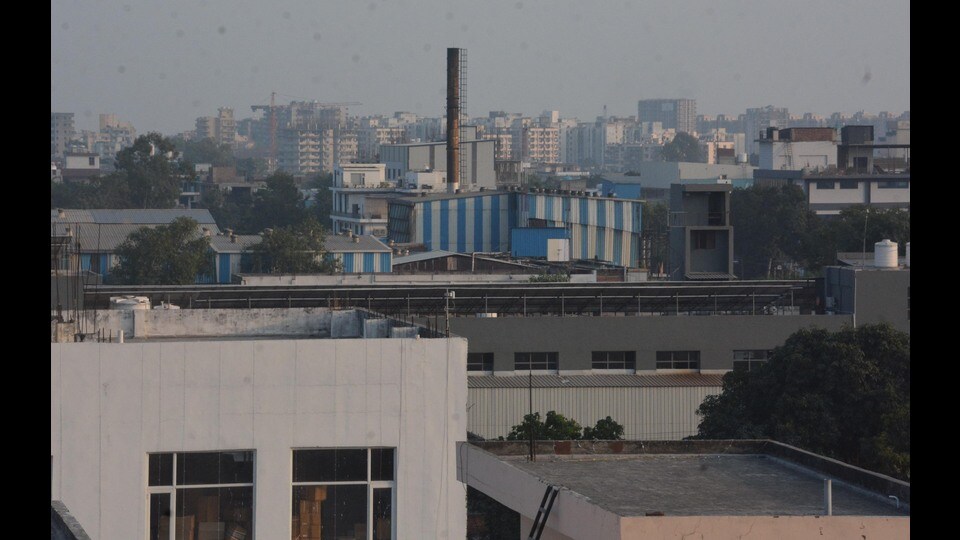
Industrial flight that the district, part of the fabled tricity, took in 1974 when Punjab Tractors Limited rolled out its first indigenously manufactured tractor appears to have run out of steam then and there, with little to show on the ground.
A search for causes lead one to disgruntled and disillusioned investors and entrepreneurs.
They list three major causes of the lack of spark in the industry. These include the lack of a uniform industrial policy, poor infrastructure, and fragmented governance—divided among the Greater Mohali Area Development Authority (GMADA), Punjab Small Industries and Export Corporation (PSIEC), and Punjab Infotech—have hindered growth.
For instance, industrial areas are divided among various agencies: Phases 1 to 4 fall under GMADA, Phases 7, 8-A, and 8-B under PSIEC, and Phase 9 under Punjab Infotech. This fragmented administrative structure has made accountability difficult, often resulting in delays in maintenance and civic works.
Maninder Singh, general manager, Industries, Mohali, admitted that coordination is an issue. “There are different authorities responsible for providing basic amenities. Whenever associations raise complaints, we forward them to the concerned departments,” he said.
Home to over 71k MSMEs & yet industrial potential remains underutilised
Despite being home to over 71,126 micro, small, and medium enterprises (MSMEs), Mohali’s industrial potential remains underutilised with lack of scaling up opportunities hindering business.
The district also houses around 30 large-scale industries with an annual turnover exceeding ₹250 crore, including Verka Milk Plant, Swaraj Tractors, Jal Bath Fittings, Tynor Orthotics Pvt Ltd, Nahar Spinning Mills, Nishikawa Pvt Ltd, and MG Bakers.
Mohali’s major industries include tractors, pharmaceuticals, IT, and engineering goods. The pharmaceutical units, mostly concentrated in Dera Bassi, operate in the red pollution zone and include chemical factories and 26 liquor manufacturing units.
Special package given in 1998 to other states stole edge
The 1980s militancy period (1984–92) in Punjab severely affected industrial growth, and the special industrial package announced for Himachal Pradesh and Jammu and Kashmir in 1998 further diverted investment away from the state. With excise duty exemptions and subsidies, many entrepreneurs shifted to Baddi, leaving Mohali struggling to retain its industrial edge.
Successive govts lagged in policy implementation
Despite major policy announcements by successive governments, there has been virtually no growth. There has been an overreliance on IT in these plans as well, with no emphasis on local skills and talents being used. There is no scheme for apprenticeship to train the hordes of unemployed across the vast district, and even the state.
Trends in Noida, Gurugram and NCR should have been taken into account while deciding industrial policy and targeted approach should have been there, something which is lacking even with the current regime.
Sample this: Over a year ago, Punjab industries and commerce minister Tarunpreet Singh Sond announced an ambitious plan to make Mohali North India’s leading IT hub, the proposed policy is yet to see the light of day. The minister, while speaking at the session “Industry in Punjab: Challenges in Growth” during the “Vision Punjab 2047” event held in November last year, had said the new Information Technology (IT) policy would generate nearly 55,000 job opportunities in the state. However, no concrete action has followed since the announcement.
Social indicators, high land rate a factor
Lack of women safety is also a factor that stops industry from setting up base in Mohali, and of course the higher land rates than in other districts is also a deterrent.
Industrialist and former president of Mohali Industries Association (MIA) Sanjeev Vashisht says, the major issue is lack of international connectivity and poor law and order situation, which has become a major deterrent. “Women employees prefer not to work in Mohali as compared to other big cities,” he said. He also added that over 2,000 units are lying shut or the plots are vacant because the owners have either gone bankrupt or shifted operations elsewhere, leaving Mohali.
Industrialists across Mohali lament that high land costs, inadequate infrastructure, poor connectivity, and unplanned development continue to plague the district’s industrial zones. The absence of decent eateries, recreational spaces, and a proper waste disposal system adds to the woes of those working in the area.
Sarvjeet Singh Virk, managing director of IT firm Finvasia, said he was part of an IT Industry Committee constituted about two months ago to draft recommendations for the upcoming IT policy. “We have shared detailed inputs with the government on how to position Mohali as an IT hub. We are hopeful that a dedicated IT policy will be announced soon,” he said.
Former president of the MIA, Anurag Aggarwal, emphasised the need for better connectivity. “Direct international flights from Chandigarh Airport could attract foreign investors. Besides, the lack of reliable public transport raises safety concerns for women employees working late hours,” he added.
Amit Dhaka, CEO of Invest Punjab, said, “We are formulating a comprehensive and focused plan for industrial sectors, including the IT industry in Mohali, to attract both domestic and global investors. Our goal is to create a conducive and future-ready ecosystem in Mohali that fosters innovation, ease of doing business, and sustainable industrial growth.”
Focal points not yielding desired results
The government has established several industrial focal points in the district—at Chanalon (Kurali), Phases 1 to 9, and Dera Bassi. GMADA maintains focal points in Phases 1 to 6, while PSIEC manages those in Phases 7 to 9, Dera Bassi, and Chanalon. Private focal points like JLPL (Sector 82), GILCO (Sector 102), and Akal Focal Point (near Saneta) are also emerging, though some remain underdeveloped.
A glimmer of hope
The GMADA has now planned world-class landscaping and urban beautification projects to boost the IT City Mohali, spread across 1,722 acres in Sectors 66-B, 82-A, 83-A, and 101-A along Airport Road. The region already hosts over 80 IT companies and Global Capability Centres (GCCs) engaged in AI, cybersecurity, KPO, and software development.
With 80 plots already allotted and a projected 57 lakh sq ft of built-up space, the IT City is expected to generate 1.14 lakh direct jobs and around 5 lakh indirect jobs in the coming years—if the government finally turns its promises into action.


