
 E-Paper



National Health Innovation Summit: Nadda, Saini highlight digital push for accessible healthcare
The summit serves as a premier platform for States and Union Territories to showcase path-breaking innovations and best practices in the health sector, with a focus on advancing inclusive, accessible, and affordable healthcare across the country.


Union health minister JP Nadda and chief minister Nayab Saini, on Thursday, while inaugurating the 10th National Summit on Innovation and Inclusivity: Best Practices Shaping India’s Health Future here, highlighted the Centre’s and state government’s initiatives in strengthening the public health systems.
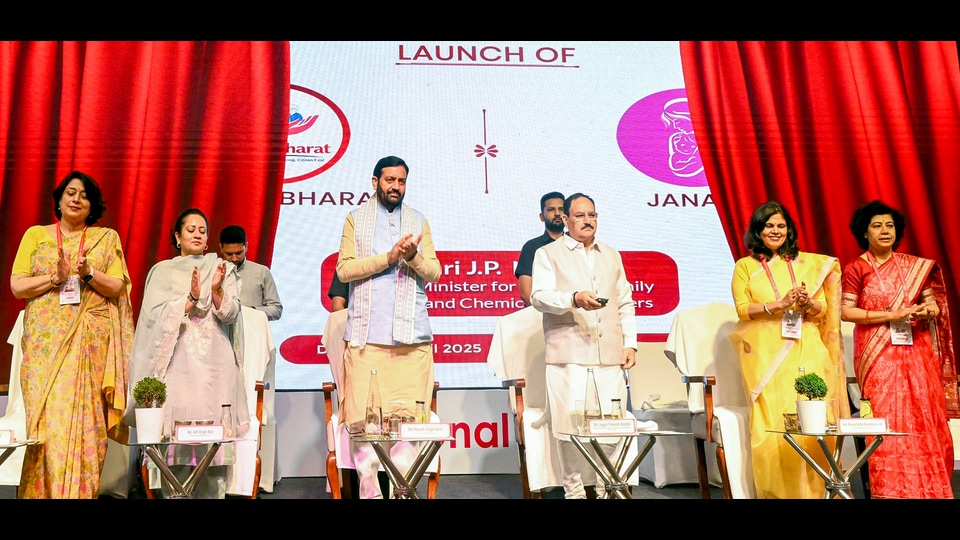
Addressing the gathering, Nadda said the summit reflects how practical, field-driven strategies can collectively shape an effective and responsive public health ecosystem.
“The country has taken a long leap in the last decade, and many new initiatives have been taken to strengthen the health systems in the areas of science, innovation, and technology. A key milestone in this journey has been the shift from a predominantly curative approach to a comprehensive and holistic healthcare framework,” Nadda said, highlighting that while the earlier National Health Policy of 2002 focused largely on curative care, the 2017 policy brought a paradigm shift by incorporating preventive, promotive, curative, and palliative aspects of healthcare, thereby ensuring a more inclusive and people-centric system.
Haryana health minister Arti Singh Rao was also present. The summit serves as a premier platform for States and Union Territories to showcase path-breaking innovations and best practices in the health sector, with a focus on advancing inclusive, accessible, and affordable healthcare across the country.
Nadda also launched Swasth Bharat and Janani portal, compendium on best practices, integrated training modules for primary healthcare team and Rashtriya Bal Swasthya Karyakram (RBSK-2.0).
Speaking on the occasion, Saini said the state government has made a provision of about ₹14,000 crore for the health sector in the current fiscal, a 32.89% increase over 2025-26.
The chief minister said that the Haryana health sector budget has increased from ₹2,646 crore in 2014 to ₹10,500 crore in 2025–26, a 298% increase, adding that the conference would contribute meaningfully towards shaping the future of the country’s public health system.
“The care companion programme is training attendants of the patients. Under the digital health initiative e-Sanjeevani, Ayushman Arogya Mandirs are facilitating more than 2,200 tele-consultations daily, enabling rural patients to directly consult specialists from premier institutions such as PGIMER, Chandigarh,” Saini said, adding that digital platforms such as U-WIN and eVIN have enabled end-to-end digitisation of vaccination and vaccine supply chain management, ensuring and sustaining full immunisation coverage.
The chief minister said that in order to address the shortage of doctors and healthcare personnel, the state government has decided to set up at least one medical college in every district. “The number of medical colleges in Haryana has increased from six in 2014 to 17, while MBBS seats have been increased from 700 to 2,710. As many as 1,479 health facilities have been certified under the National Quality Assurance Standards. The objective is to ensure the availability of world-class healthcare services within close proximity to every citizen,” Saini said.
Saini added that institutional deliveries in the state have reached 98.80%, contributing to a substantial decline in maternal and infant mortality rates. “The full immunisation coverage in the state has reached 105%,’’ the CM added.


