
 E-Paper



NEP 2020: PU course framework calls for CBCS’ implementation
Among other highlights, PU’s new course framework calls for providing multidisciplinary education with experiential component in a four-year UG programme as envisaged in the NEP 2020


With an aim to implement the recommendations of the National Education Policy (NEP 2020), Panjab University (PU) has formulated a suggestive course framework for its departments.
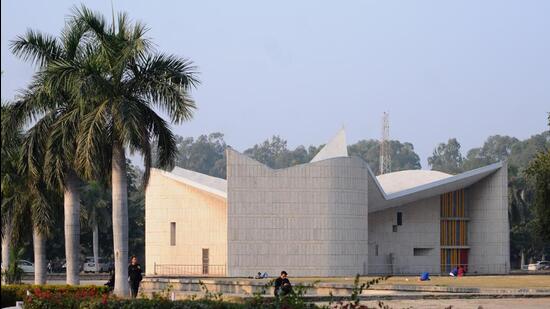
Aimed at providing students multidisciplinary education with skill/experiential component in a four-year UG programme as envisaged in the NEP 2020 and facilitate multiple entry and multiple exit (MEME) to students, the framework outlines implementation of the choice-based credit system (CBCS), which has only been implemented in the varsity’s science and engineering departments.
The framework states that UG and PG courses will be aligned to NEP requirements, while suggesting changes in the already-adopted CBCS including providing multi-disciplinary learning, provision for multimodal curriculum transaction (online, offline, blended mode) and skill-based and experiential learning among others.
Proposed course framework
The proposed framework suggested includes core subjects (face-to-face mode), discipline specific elective subjects (face-to-face or blended), value added courses (minimum 30 hours per semester–any mode), internship/skill-based component (any mode) and research component.
“This is only a suggestive framework and every department has to make changes according to their requirements,” a senior university official said.
The framework also suggests creation of a value-added course basket which can be multi-disciplinary. Departments can develop short-term two-credit courses for the same from courses already being taught or considered attractive by students.
Suggestions for syllabus restructuring
Suggestions have also been provided for restructuring syllabus including total credits, learning or course outcome, units, recommended books and suggested readings.
Speaking of the framework, PU’s dean university instruction (DUI) Renu Vig, said, “This framework is basically for the development of curriculum. CBCS is the first step and the department heads have also been informed that multiple entry and exit is required to be incorporated.


