
 E-Paper



PAU to showcase Punjab’s rich cultural heritage
The Punjab Agricultural University will showcase Punjab's cultural heritage through its agricultural museums at an international event. The university is home to ten unique museums, including the Museum of Social History and Rural Life of Punjab, Green Revolution Museum, and Museum of History of Agriculture. These museums offer a glimpse into the rich heritage and history of Punjab.

 Prefer HTon Google


The Punjab Agricultural University (PAU), is all set to showcase Punjab’s rich cultural heritage at an international event through its unique agricultural museums.
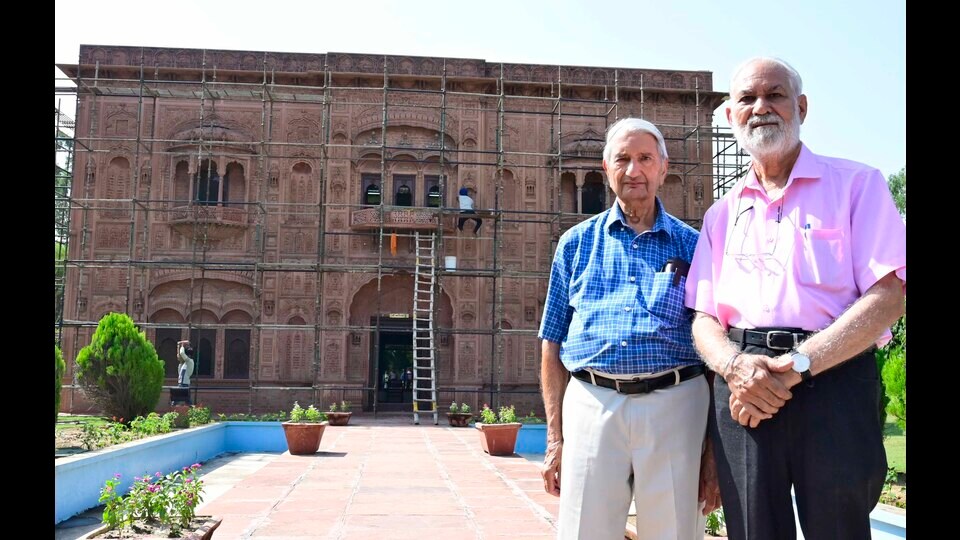
The varsity will host the 20th Congress of International Agricultural Museums from October 16-18.
The institution, renowned for its contributions to agriculture and rural life, is home to a cluster of ten unique museums, including Museum of Social History and Rural Life of Punjab, Green Revolution Museum, Museum of History of Agriculture, each offering a glimpse into the rich heritage and history of Punjab.
The Museum of Social History and Rural Life of Punjab was built half a century ago, under the initiative of the then vice-chancellor MD Randhawa. Chief architect of the museum, Surinder Singh Sekhon, is supervising its first major renovation ahead of the Congress. Built in 1974, the museum is a treasure trove of ancient artifacts, including agricultural tools, bronze utensils, traditional instruments, decorations, saddles, harnesses, and even Harrapan coins. It offers visitors a journey through over 50 years of heritage, immersing them in the practices and lifestyles of yesteryears. The museum’s main door, a 550-year-old relic, was acquired from Jagroan Haveli. Additionally, a 100-year-old cot was donated by a university professor who received it as a dowry gift. Each artifact within the museum holds a unique story.
For those interested in the history of agriculture in Punjab, the Green Revolution Museum offers a deep dive into the pre-Green Revolution era. This museum explores the geographical landscape and agro-climatic zones of Punjab, featuring traditional irrigation methods, ploughing techniques, implements, transportation systems, and marketing practices. It also sheds light on the food crisis and the transformation that led to the “Green Revolution.”
The Dr H L Uppal Museum of Land, Water and Power Resources paints a picture of the physiographical wonders of northwestern India, uncovering the region’s abundant land and water resources. It’s a valuable resource for understanding the natural environment and its potential and limitations.
Punjab’s soils take centre stage in the Soils Museum, revealing soil maps, monoliths of Punjab’s soil profiles, rocks, minerals, and atomic structure models. This museum is essential for anyone interested in soil and water conservation, fertility management, and soil resource inventory.
Within the National PAU Insect Museum, a unique treasure is preserved - a collection of 75,000 insect specimens, displayed in mobile racks and cabinets. This museum is a haven of knowledge for insect taxonomy, showcasing plant samples with insect-induced damage symptoms.
The Museum of Natural History delves into the wonders of animal evolution, distribution, anatomy, and organization, offering a vivid picture of the diverse animal kingdom.
Agriculture enthusiasts will appreciate the Plant Breeding (Crop) Museum, which displays PAU-recommended crop varieties, including several pioneering accomplishments that have made their mark on the world of agriculture.
The Museum of History of Agriculture presents a captivating journey of human evolution through mesmerizing oil paintings. From early hominids to modern-day farmers, the artworks bring to life the journey of agriculture through the ages.
Adjacent to the Museum of History of Agriculture, the Hall of Fame pays homage to eminent scientists and visionaries who have made significant contributions to the field of agriculture. Their portraits tell the story of their achievements and impact on farming and agriculture.
In the Dr Gurdev Singh Khush Museum, visitors can explore the life and legacy of Dr GS Khush, an agricultural luminary whose contributions to rice breeding continue to shape the world of agriculture.


