
 E-Paper





Hillary Victor is a Special Correspondent, with over two decades of experience in impactful, ethical, and public-interest journalism. He works in the Punjab Bureau, covering housing and urban development, transport and civil aviation, environment, science and technology, forests and wildlife, with a strong focus on governance, public policy, infrastructure, and sustainable development. His reporting reflects a deep understanding of Punjab's socio-political landscape and is driven by accuracy, accountability, and a commitment to serving the public interest. Over the course of his career, he has built a reputation for producing high-impact, exclusive stories that have shaped public discourse and prompted policy and administrative action. He has been honoured with six 'Best Journalist Awards' by the Hindustan Times management for his path-breaking reportage. In recognition of his outstanding contribution to journalism, he was also conferred the 'Best Journalist Award' by the Government of Punjab during the 2010 Republic Day celebrations.
Punjab grappling with 42 lakh tonnes of legacy waste
This latest disclosure follows the NGT’s July-2024 direction asking Punjab to pay ₹1,000 crore in environmental compensation to the Central Pollution Control Board for alleged failures in managing legacy waste and untreated sewage


Around 42.76 lakh metric tonnes (MT) of legacy waste is still lying untreated at dumping sites across Punjab, while 409 tonnes of fresh municipal garbage remains unprocessed every day, according to the latest compliance affidavit filed by the state government before the National Green Tribunal (NGT).
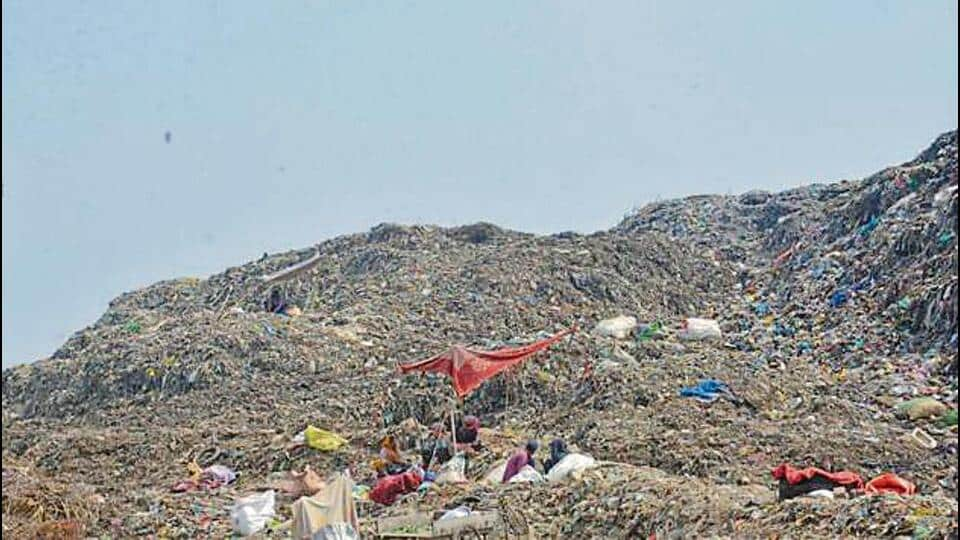
This latest disclosure follows the NGT’s July-2024 direction asking Punjab to pay ₹1,000 crore in environmental compensation to the Central Pollution Control Board for alleged failures in managing legacy waste and untreated sewage. The Supreme Court stayed the tribunal’s order in September 2024.
The affidavit, submitted by Punjab chief secretary KAP Sinha on November 14 and uploaded on the tribunal’s website on November 21, reveals that while Punjab processes nearly 91% of its daily municipal solid waste, the accumulated garbage and inadequate processing capacity continue to pose a serious environmental challenge.
Of the cumulative 95.88 lakh MT of legacy waste at urban local body (ULB) dumping sites, only 53.12 lakh MT has been remediated, leaving 42.76 lakh MT untreated. While 126 of the state’s 166 ULBs have completed remediation, work remains underway in 40 others. The government has set January 2028 as the deadline to clear the remaining dumps.
Legacy waste refers to garbage accumulated over several years at dumping sites. Its prolonged presence poses environmental and public health risks through leachate, landfill fires, foul odour and contamination of soil and groundwater.
The NGT had earlier flagged the disposal of around 403 tonnes per day (TPD) of unprocessed mixed waste at landfill sites. It had identified Tarn Taran, Sangrur, Pathankot, Patiala, Ludhiana and Jalandhar among the urban local bodies contributing to the problem. The latest affidavit acknowledges a processing gap of 409 TPD, indicating that the challenge of managing fresh waste remains unresolved.
Punjab’s 166 ULBs generate approximately 4,309 TPD of municipal solid waste, of which around 3,900 TPD (90.51%) is reportedly being processed. However, large accumulations of legacy waste continue to pose a challenge in Amritsar, Jalandhar, Ludhiana and Kharar, with the government claiming that focused interventions are underway at these sites.
Gaps in biodegradable, recyclable waste management
The affidavit also highlights deficiencies in the management of biodegradable and recyclable waste. Of the 2,291 tonnes of biodegradable waste generated per day, around 1,931 TPD is being processed through composting and other mechanisms.
Similarly, material recovery facilities (MRFs) handle around 1,076 TPD of dry recyclable waste against the generated 1,717 TPD. The government has acknowledged a processing gap of approximately 253 tonnes per day after accounting for material recovered through other channels.
Deputy commissioners and municipal commissioners are being directed to strengthen monitoring of waste collection, segregation and processing and ensure compliance with the tribunal’s directions.
Sewage treatment another challenge
Wastewater management also remains a challenge in Punjab. The state generates around 2,286.91 million litres of sewage per day, but treats only 2,038.80 million litres per day (MLD), leaving a gap of 248.11 MLD.
Of the 172 sewage treatment plants (STPs), 147 are reportedly complying with prescribed quality parameters, four are non-compliant, 19 are undergoing stabilisation, one is under maintenance and another is being upgraded.
The government cited the commissioning of nine STPs, with a combined capacity of 45.50 MLD, between February and October this year. Another 37 plants, with a combined capacity of 206.40 MLD, are under construction, while proposals for 27 additional STPs, with a capacity of 127.73 MLD, are at the tendering or planning stage.


