
 E-Paper



Sunrays | The legend of Veerawati, magic of Karwa Chauth
In ancient times, while women would fast, the men would be away at work and sometimes the day would drag.

 Prefer HTon Google


With Karwa Chauth round the corner, excitement is palpable in the air with married women looking forward to dressing up like brides once again. It is also time to revisit the story of Veerawati, who fainted from hunger on Karwa Chauth.
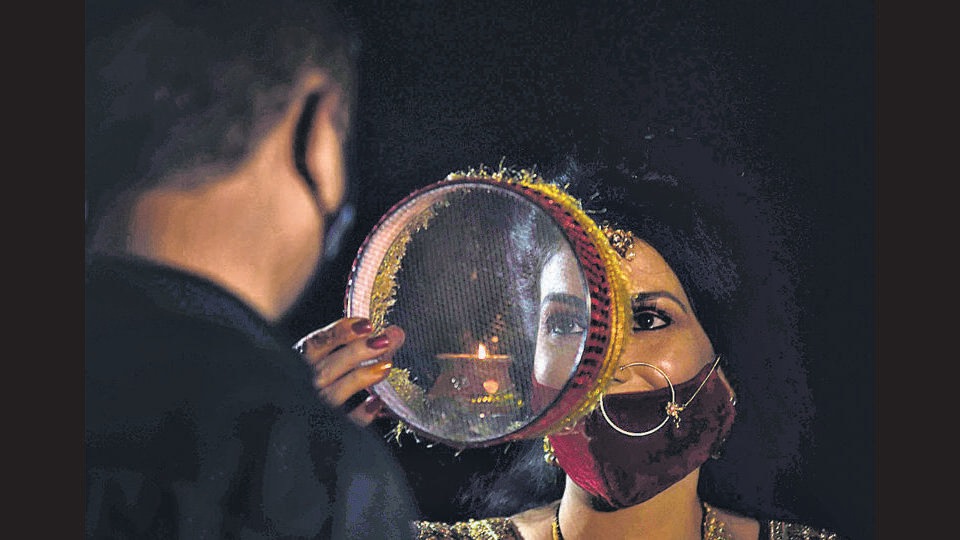
Concerned, her brothers lit a fire behind a tree to give the illusion that the moon had come out, and urged her to end her fast. Legend has it that when Veerawati broke her fast, her husband fell unconscious and his body was riddled with pins and needles. Veerawati prayed to Goddess Parvati, who guided her to fast, pray and keep removing the needles from her husband’s body. Finally, her husband became conscious after a year of loving care. The story has been passed down from word of mouth for ages, and has probably seen several twists and turns.
My father interpreted the story very differently. He said words can be sharper than arrows, and cause immense agony. Often we say nasty things to our spouse, which numbs them with pain. These arrows need to be gently picked out to normalise the relationship. When someone is emotionally hurt, we need to shower love and care on them for the wounds to heal.
Many people question the Karwa story. But, wouldn’t it be nice if people did not nit-pick and just enjoyed the festivities? Why not just get into the groove of Karwa Chauth and drool over mathi, feni, mithai and namkeen? Mothers and mothers-in-law buy these for the young suhagans in their homes and treat them to a feast before the fast. Eating this high-calorie food before dawn, ensures that hunger stays at bay all day. The men folk and children too, enjoy the treat. The idea behind making this ready-to-eat food available is that the women who are fasting are liberated from cooking duty that day.
In ancient times, while women would fast, the men would be away at work and sometimes the day would drag. To divert their minds from hunger, women would enjoy decking up in bride-like clothes, bindis, glass bangles, sindoor, bichhue, payal, maang tikka and apply henna! And while the henna was wet, they were absolved from daily chores! For one day they would abstain from cooking, cleaning, and spinning the wheel. After all, the katha (narrative) says: Katti na ateri naa, ghoom charakhra phaerien naa, vaan pail paayeen naa. They would congregate and pray, listen to the katha, play games, laugh, sing and dance together, till it was time to offer argh (water) to the Moon and end the fast.
Many young girls question why they should fast for their husbands and why the husbands should not fast for them. Well! Karwa Chauth is women’s day to be pampered, so why share the fun? And, is it really difficult to fast after having feasted at dawn? And why miss the fun of dressing up as a bride yet again and the romance of puja on a moonlit night? And isn’t having the first sip of water from your husband’s hands taste like ambrosia?
As for the blessing of the mother-in-law, ‘Akhand Saubhagwati bhav …’, which means my husband shall live longer than me, I wouldn’t want it the other way, because I don’t know how to live without him. I cherish my husband’s presence the most in my life, and am happy to admit it. God made women more sacrificing and loving, but these qualities do not make us weak, they make us stronger!
So let’s cherish our Indian customs without undue questioning and appreciate them. And let’s involve the younger generation too, so that these beautiful traditions that bind us as a society, do not perish with us. Happy Karwa Chauth!
priyatandon65@gmail.com
( The writer is a Chandigarh-based freelance contributor)


