
 E-Paper



System reforms steering Himachal towards financial self-reliance:Sukhvinder Singh Sukhu
Himachal Pradesh CM Sukhu highlights fiscal challenges from the previous BJP government, aims for self-reliance by 2027 through reforms and infrastructure investment.

 Prefer HTon Google


As the Sukhvinder Singh Sukhu-led Congress government in Himachal Pradesh approaches its three-year anniversary on December 11, 2025, the chief minister claimed that the fiscal mess left by the previous BJP government is the administration’s primary challenge.
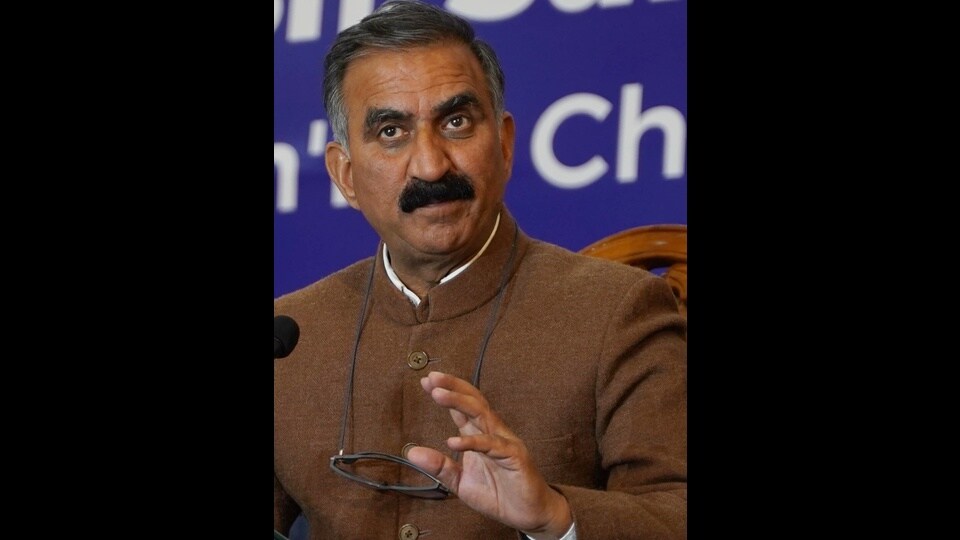
The state is currently grappling with a substantial debt exceeding ₹1 lakh crore, which overshadows the state’s ₹62,387 crore budget for the 2025-2026 fiscal year. In response, Sukhu has initiated reforms, termed “Vyavastha Parivartan” (system change), aimed at steering the state towards financial self-reliance by 2027, the year the next state elections are scheduled to take place. Edited excerpts.
What do you think is your biggest achievement?
Our administration’s core philosophy, rooted in “Vyvastha Parivartan” is to empower the common citizen. We came in with a resolve to fundamentally reform governance by focusing on deregulation and transparency. We reformed the land registry process where previously intekal (mutation) cases languished for years. The time-consuming processes for land demarcation and partition have been streamlined. For the first time, we reduced the number of Indian Administrative Service (IAS) posts and introduced a lateral entry system to bring in specialised expertise. Under the previous BJP government, Himachal ranked 21st in education. As a direct result of our vyvastha parivartan, Himachal has climbed to the 5th position nationally.
What was the biggest challenge you faced in the last three years?
The biggest challenge was the fiscal mess the previous state government had left for us. When Congress came to power, the state government had a debt of ₹75,000 crore. We are spending ₹2,200 crore every month on salaries and pensions in various departments, while the corporations and boards spend ₹800 crore and manage their own expenses. After we implemented OPS, the central government cut our additional borrowing limit by ₹1,600 crore, which strained our financial position.
How do you plan to make the state self-reliant?
We have taken strict action against those involved in any kind of corruption. Around ₹2,500– ₹3,000 crore is now coming into the state treasury. We are fighting for the rights of the state and after the historic victory in court, Himachal became the sole owner of the Wildflower Hall and we managed to recover ₹450 crore in just one year. Apart from this we secured additional annual income of over ₹250 crore from JSW Energy’s Karcham-Wangtoo hydroelectric project and other similar projects.
How much has the state received from the Centre?
Himachal has been witnessing disaster over the last three years and despite our limited resources and not much help coming from the Centre, we have been able to provide relief to our people. In 2023, following a major disaster that caused approximately 500 deaths and damaged 23,000 houses, a central team assessed the losses at ₹9,300 crore. However, after two years, out of the approved amount, only ₹451 crore has been received by Himachal. A more widespread disaster in 2025 prompted a visit from the Prime Minister and an announced special package of ₹1,500 crore, which we have not received so far.
How do you plan to boost tourism in the state?
We are committed to promoting sustainable tourism by engaging private entrepreneurs in developing tourism infrastructure without disturbing the ecological balance. We are boosting tourism by developing infrastructure like wellness centres, ice rinks, and ropeways, alongside promoting eco-tourism via a new policy for 77 sites, expanding Kangra airport, and launching border tourism at Shipki La, all while focusing on sustainable growth, engaging private sector, and connecting religious sites like Baba Balak Nath and Chintpurni, aiming for Kangra as the ‘Tourism Capital’ and creating jobs.
Nearly 9.5 lakh patients leave Himachal each year for better medical care. What is your take?
With 9.5 lakh patients leaving Himachal each year for better medical care is leading to an estimated GDP loss of ₹1,350 crore, so we focussed on improving health infrastructure in the state. The government prioritised upgrading the five medical colleges (Shimla, Kangra, Mandi, Chamba, Hamirpur) to AIIMS Delhi standards. Key upgrades include installing two robotic surgery machines, which have performed approximately 100 successful operations in Shimla. We have increased stipends for senior resident doctors and super-specialists.
How do you plan to tackle drug menace?
We have adopted a stringent, zero-tolerance policy against the drug ‘chitta’, driven by concerns over its impact on society and youth. Authorities are actively enforcing strict laws, utilising the PIT NDPS Act to arrest suppliers and confiscate their assets.
How many guarantees have you fulfilled so far?
We have fulfilled six guarantees. The first guarantee was of providing old pension scheme (OPS) to govt employees, which was fulfilled in the first cabinet meeting after we came to power. In a phased manner we have started giving ₹1,500 per month to women. Other fulfilled guarantees include purchasing of cow dung cakes at ₹2 per kg, opening of English-medium schools, and the launching of the e-taxi scheme under the Rajiv Gandhi self-employment startup scheme.


