
 E-Paper



Testing levels drop by 20% amid raging pandemic in Chandigarh
Even though the weekly Covid-19 cases in the city reached record numbers in the first week of May, the number of tests conducted in the subsequent week showed a decline, as suggested by the data collated from Chandigarh administration’s daily bulletin

 Prefer HTon Google


Even though the weekly Covid-19 cases in the city reached record numbers in the first week of May, the number of tests conducted in the subsequent week showed a decline, as suggested by the data collated from Chandigarh administration’s daily bulletin.
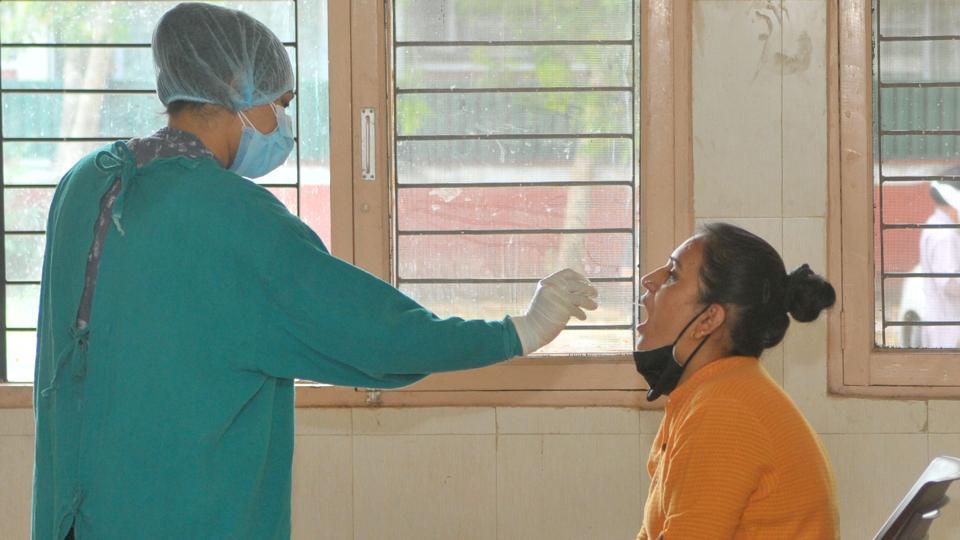
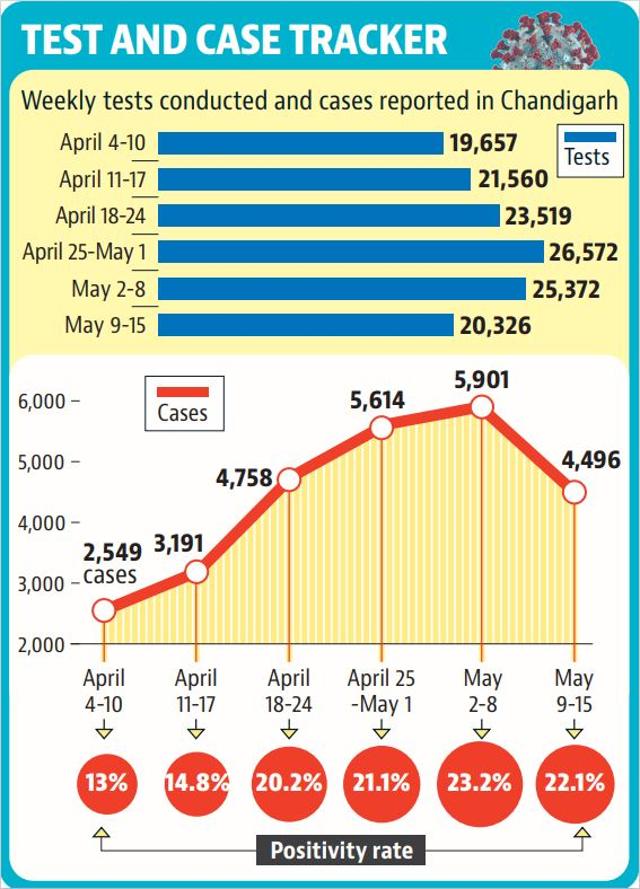
A decrease of around 20% has been witnessed in the number of tests done on a weekly basis even though Chandigarh remains among the worst affected states and union territories (UTs) in the country in terms of test positivity rate.
Between May 2-8, when the city recorded 5,901 cases, 25,372 tests were conducted. Subsequently between May 9-15, with 4,496 cases, the tests dipped to 20,326.
The central government has advised states and UTs with over 10% positivity rate to continue with “stringent containment” even if they are witnessing a declining trend in the pandemic.
Chandigarh’s weekly positivity rate has been above 20% for the last five weeks suggesting that every fifth person being tested has contracted the infection.
Former director of the Post Graduate Institute of Medical Education and Research (PGIMER) and health adviser to the Punjab government, Dr KK Talwar, said, “Fewer tests mean the real number of positive cases will not come to the fore. In Punjab, the positivity rate has declined without any decline in the number of tests. The indicator of positivity rate suitably suggests the manner in which the number of tests should be conducted.”
Former head of the department of community medicine and school of public health at PGIMER, Dr Rajesh Kumar, said, “Testing levels should remain high so that cases are detected and isolated at the earliest. This will stop the infection from spreading and bring the pandemic in control. Even though it appears that the infection spread is being controlled, more contacts should be brought under the ambit of testing. Testing levels should not drop at this crucial juncture.”
Dip in testing due to lockdown restrictions: Admn
Authorities, however, say that the dip in testing levels can be linked to the restrictions owing to the lockdown, which should have resulted in a decreased demand for testing.
UT adviser Manoj Parida said, “The lockdown measures have resulted in control of the infection transmission, which has resulted in lesser testing. However, the testing levels should not drop and we will improve them further.”
UT health secretary Arun Gupta said that the dip, of around 500 tests daily, was from non-targeted testing: “There is no compromise on testing of contacts and those with symptoms. The decrease in tests is from the proportion that is randomly done and no case in which there is a minute suspicion is being denied the facility.”


