
 E-Paper



Urban Pulse | When ageing meets an unsafe city
The measure of a mature city should not be how it protects its elderly by keeping them indoors; it should be whether an older person can still walk to the park, sit on a bench, withdraw money, answer the door, cross the road and return home without having to live every ordinary moment as a calculation of risk

 Prefer HTon Google


The recent murder of an elderly woman in Panchkula’s Sector 21 has disturbed something deeper than one neighbourhood. It has unsettled the assumption that the tricity’s carefully planned sectors, familiar streets and leafy residential colonies automatically make it safe to grow old.
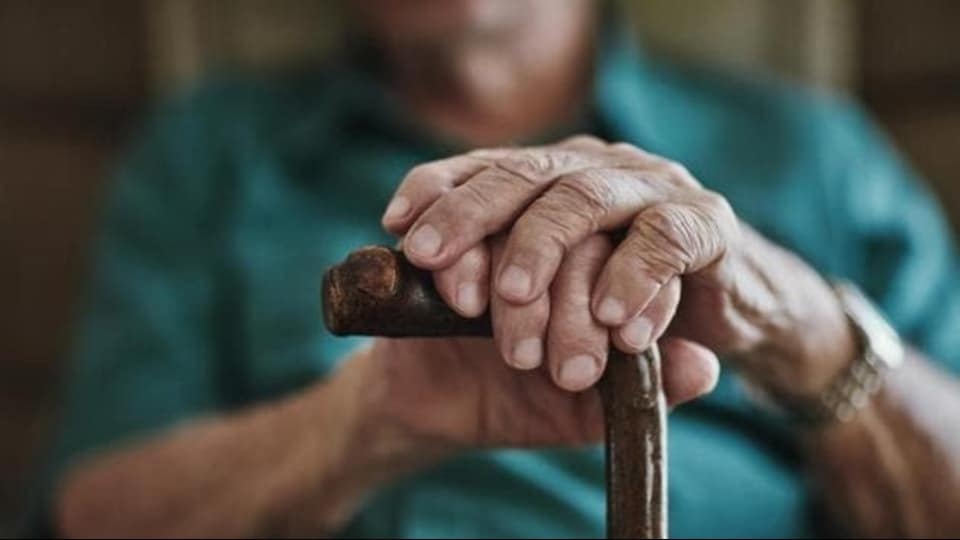
Elderly safety is not confined to what happens behind a front door. It is about an 80-year-old going for an evening walk, a retired couple living alone, someone sitting in a park after sunset, or an elderly person receiving a call from someone pretending to be the police. The tricity needs to ask: are we designing safety around the elderly or asking them to design their lives around danger?
Safety should not end at the gate
With children increasingly living in other cities or countries and families becoming smaller, more senior citizens are living independently. Domestic help verification, emergency
contacts and welfare checks are important safeguards. But security cannot mean turning the elderly into prisoners of their own homes. Parks are not luxuries in Chandigarh, Panchkula or Mohali; they are walking tracks, social spaces and community centres for older residents.
There is a telling local precedent. In 2017, senior journalist KJ Singh and his elderly mother were murdered in their Mohali home. Police later said the accused had been involved in an altercation with Singh after being questioned about his presence in a nearby park. This reminds us that the boundary between “safe public space” and “safe private space” is not always neat.
The new dangers carry no footsteps
There is another dimension to elderly safety that does not require a dark street or an unlocked door: the mobile phone. Senior citizens are increasingly exposed to cyber fraud, impersonation calls, fake investments and “digital arrest” scams. Recent cases in Panchkula have involved elderly residents losing lakhs of rupees to sophisticated frauds.
The answer cannot be to make older citizens suspicious of technology. Digital banking, UPI and online services have made independent living easier.
What is needed is digital preparedness as a civic service. Banks, police, RWAs and senior citizen groups could conduct neighbourhood sessions on recognising scams and reporting fraud. Chandigarh Police lists senior citizen assistance through helpline 1090, while cyber fraud complaints can be reported through 1930.
A city must learn to notice
Perhaps the most overlooked dimension of elderly safety is loneliness. A senior citizen may be surrounded by houses and still live in isolation. A neighbour may not know whether the person next door has gone away or fallen ill. Children may call every evening, but a telephone cannot replace a neighbourhood that notices. This is where the tricity’s planning can become an advantage. Its sectors, markets, parks and community institutions provide the ingredients for social surveillance, the kind that comes from familiarity.
Police can maintain voluntary registers of elderly residents living alone, with emergency contacts and welfare checks. RWAs can create neighbourhood networks. Parks can be assessed for elderly accessibility and safety, while footpaths, crossings and public transport can be assessed for how easily older people can use them. Elderly safety cannot be treated as a policing issue alone. It is a planning problem, a public space problem, a technology problem and a community problem.
The tricity is growing older. Its children are travelling farther, its households are becoming smaller, and its elderly are living longer. The measure of a mature city should not be how it protects its elderly by keeping them indoors. It should be whether an older person can still walk to the park, sit on a bench, withdraw money, answer the door, cross the road and return home without having to live every ordinary moment as a calculation of risk.
aashna.gakhar@gmail.com
(The writer is a Chandigarh-based architect and interior designer)


