E-Paper



Waste-to-energy plants fuelling Haryana’s fight against stubble burning
Haryana currently has 10 power projects that use paddy straw to generate around 84MW electricity. Besides, there are two paddy straw-based biomass power projects in Kurukshetra and Kaithal, owned by Haryana Renewable Energy Development Agency (HAREDA), that consume 3.5 lakh MT of crop waste and generate 15 MW electricity each.

 Prefer HTon Google


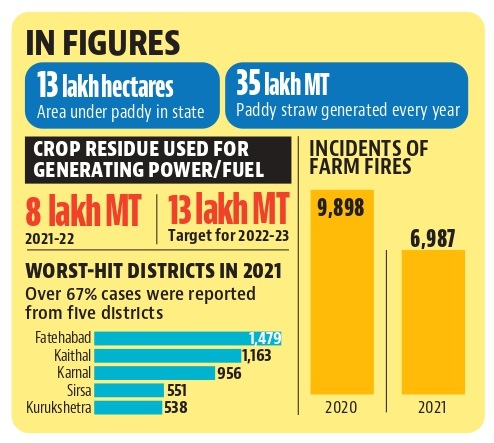
With around 35 lakh metric tonnes (MT) of paddy crop residue generated every year, Haryana faces a mammoth task to dissuade its farmers from stubble burning. But the waste-to-energy plants that have come up in the recent years are proving to be a boon for the state.
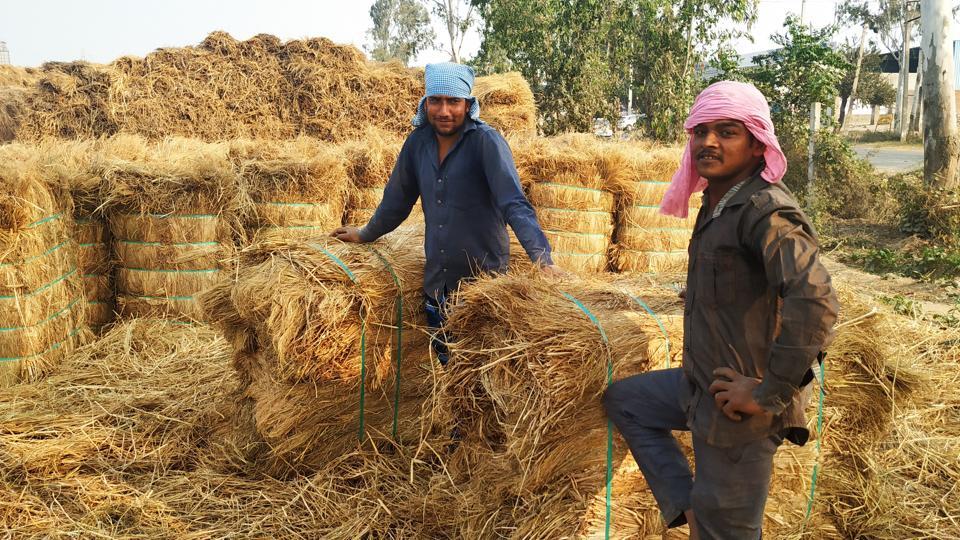
These plants turn crop residue into biofuels, such as bio-ethanol and compressed biogas, or electricity, and offer a sustainable alternative to stubble burning.
Cash over ash
The main draw for farmers here is that they can generate additional income by selling crop residue to these industries that are willing to pay large amounts for these.
Ram Kumar, a farmer from Rewar Jagir of Kaithal district, who started selling crop waste to power plants and cardboard factories in 2011, reveals how he has been making profits over the years. “In 2018, I had set up a custom hiring centre (CHC) and purchased straw balers on 80% subsidy. Now, I have 12 tractors and several straw balers, besides 100 employees at the centre. Every year, I sell crop waste from around 800 acres to power plants and paper mills. Last year, I earned a profit of around ₹40 lakh.”
Making hay
Haryana currently has 10 power projects that use paddy straw to generate around 84MW electricity. Besides, there are two paddy straw-based biomass power projects in Kurukshetra and Kaithal, owned by Haryana Renewable Energy Development Agency (HAREDA), that consume 3.5 lakh MT of crop waste and generate 15 MW electricity each.
Two more power plants -- one in Jind (9.9MW) and the other in Fatehabad (9.9MW) -- will also start procuring 2.20 lakh MT paddy straw from this harvest season.
The newly set up 2G ethanol plant at IOCL’s Panipat refinery is the first such commercial project in the country that will directly produce 100-kilo litres of ethanol a day from 425.5 metric tonnes of dried rice straw. As per its current capacity, this plant will consume about 4,250 quintals of paddy straw from about 212 acres every day and empty about 77,562 acres every year.
Officials claimed that in the year 2021-22, around 8 lakh MT of crop residue was utilised in the industries while for this year, the government has set a target to increase it to around 13 lakh MT.
Even private companies have shown interest in setting up waste-to-energy plants in the state as 65 project developers have taken Letter of Intent (LOI) under SATAT programme for setting up paddy straw-based compressed biogas projects.
Long way to go for zero-burning, need more plants
Haryana state pollution control board (HSPCB) officials say there is marked dip in stubble burning incidents over the last couple of years but the road to zero stubble burning will be a long and cumbersome one.
Date collected by the Haryana Space Application Centre shows that 9,898 farm fires were reported during the paddy harvest season in 2020 while in 2021, it came down to 6,987.
“Haryana has reported a fall in farm fires over the past few years. But putting a complete check on stubble burning is a challenge. We need more waste-to-energy plants so that the entire crop waste generated in the state can be procured,” said a senior official of Haryana agriculture department.
With around 35 lakh MT crop residue being generated on around 7 lakh hectares of paddy every year, the existing plants are not enough.
Virender Singh Lather, a retired scientist from Indian Agricultural Institute, ICAR, New Delhi, says, “Instead of spending large amounts on subsidised machines, the government should focus on an increasing the number of waste-to-energy plants, which will also help to meet the growing demand for ethanol and power.
Govt incentive for farmers
Sumita Misra, additional chief secretary, agriculture and farmers’ welfare department, Haryana, said the state government has taken several initiatives to deal with stubble burning and it has achieved the desired results too.
“Haryana is the only state in the country that provides ₹1,000 per acre to farmers for in-situ and ex-situ management of crop waste, besides subsidies on stubble-management machines,” she said.
Pardeep Kumar, member secretary, Haryana State Pollution Control Board, said, “The waste-to-energy plants are a breakthrough in efforts at cutting down stubble burning. Even farmers are showing interest in the schemes announced by the government for management of crop waste.”