
 E-Paper



What makes Kishtwar a safe haven for terrorists
Backed by network of overground workers, 10 to 12 terrorists, including Hizbul Mujahideen’s longest-surviving commander Jahangir Saroori, active in district

 Prefer HTon Google


The killing of two special police officers (SPOs) Rashpal Kumar, 45, and Babbi Chand, 57, has brought the upper reaches of Marwah-Dachhan in Kishtwar district back into the security spotlight.
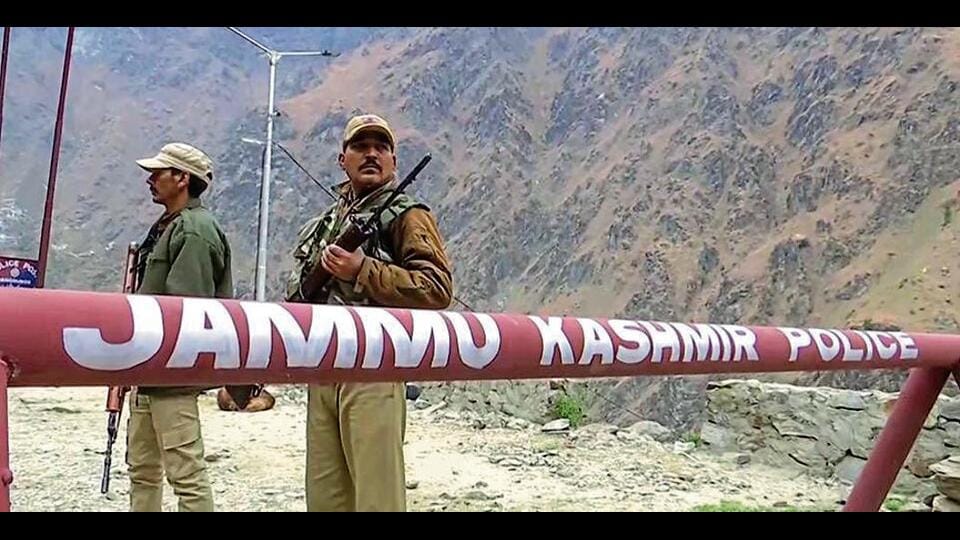
Marked by snow-clad peaks, steep cliffs, dense forests, creeks and natural hideouts, the mountainous terrain—compounded by poor mobile and road connectivity—has long served as a safe haven for terrorists.
According to intelligence assessments, Hizbul Mujahideen’s longest-surviving commander, Jahangir Saroori, along with two accomplices, Riaz Ahmed, alias Hazari, and Mudassir Hussain, remains hidden in the upper reaches of the district.
Saroori, an A++ category terrorist whose real name is Mohammad Amin Butt, joined militancy in 1992 and is believed to be the key figure behind the revival of terrorism in the Chenab Valley.
Targeted killings
Active across Kishtwar, Doda, Ramban and Bhaderwah before going dormant, he resurfaced to mastermind the November 2018 killings of BJP state secretary Anil Parihar and his brother Ajit Parihar in Kishtwar town, followed by the April 2019 assassination of RSS functionary Chandrakant Sharma and his personal security officer.
In October 2018, Jammu and Kashmir Police put up “wanted dead or alive” posters across the region, announcing a ₹30-lakh reward for information leading to his arrest.
According to sources in the security forces, 10 to 12 terrorists—including Saroori, Ahmed and Hussain—are currently active in Kishtwar, backed by a entrenched network of overground workers (OGWs).
Challenge for forces
Reacting to the killings, former Jammu and Kashmir director general of police (DGP) SP Vaid called for swift retaliation and flagged an intelligence lapse. “First, whoever killed the two SPOs must be immediately tracked down with local help and eliminated. Second, if terrorists were present in the area, why did the local police station have no input? It appears the two SPOs were taken by surprise and ambushed,” Vaid said.
Highlighting the operational hurdles, Vaid added: “The Dachhan-Marwah belt has treacherous topography. The lack of a proper communication network, coupled with the need to trek on foot through dense forests, rivers and natural hideouts, makes operations extremely challenging for security forces.”
The district has seen heightened counter-terror activity this year. In January, the army launched ‘Operation Trashi-1’ in Kishtwar’s Chatroo area, during which Special Forces commando Havildar Gajendra Singh of Uttarakhand was killed in action. Security forces subsequently pressed on with the offensive, killing one terrorist on February 4 and three more on February 22.


