
 E-Paper



Wildbuzz | Chuha Babas of Siachen
It is a truism of existence that when faced with uncertainty and circumstances largely out of control, humans increasingly seek shelter in superstition; one incident reveals his sensitivity for wildlife, which had evolved from deepening remorse over his shikar escapades as a young officer


It is a truism of existence that when faced with uncertainty and circumstances largely out of control, humans increasingly seek shelter in superstition. For soldiers deployed on the highest battlefield heights of Siachen-Saltoro ridge, life and death was a slippery slope to be negotiated on a daily basis. So, a deity or weapon or anything or any creature that seemed uncannily to safeguard their lives against all odds was deified as a ‘Baba’ and worshipped. For that matter, once having crossed the Shyok river (known as river of death in Ladakhi/Yarkandi language) in Northern Ladakh, soldiers commence an abstinence from liquor out of superstition.
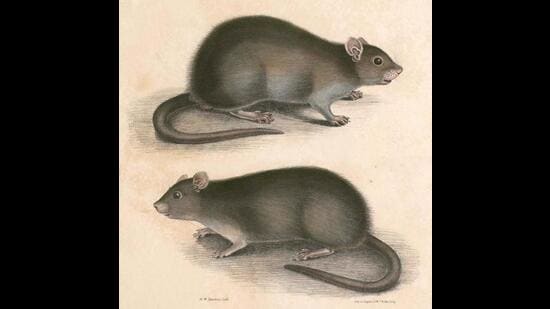
Hence also, the extraordinary reverence for the big, fat rats that dwelled in a South Siachen post at 17,000 feet manned by the 27 Rajput in the shelling-wracked years of 1999-2000. The rats were most likely the Lesser Bandicoot rat species that found such high abodes having got unknowingly transported with soldier rations from lower heights or the plains. Despised elsewhere as vermin and even by soldiers at other places of posting, the rats at the Siachen post were worshipped. They were placed at par with Mortar Baba, Bofors Baba and other such assorted Babas of the Siachen war zone manned by multi-cultural troops seeking refuge in one belief or the other. Beliefs were all they had to stand resolute while deployed under Op Meghdoot, where Yamdoots in the guise of weather, terrain and the enemy reigned in ruthlessness.
Lt Gen Konsam Himalay Singh (retd.), UYSM, YSM, who was then commanding 27 Rajput, climbed to that post besieged by ice and crevasses. Almost immediately, Pakistani artillery opened up as the enemy got an inkling of the CO’s presence. “As shells rained on us, my men who were habituated to it, told me of a unique early-warning system. A couple of seconds before the shells would land, the rats would scatter helter-skelter. Since rodents can discern tremors and sound waves at frequencies inaudible to the human ear, it was likely they sensed the whistle of incoming shells before we did. So, on seeing rats run, we would get one or two seconds of warning to fling ourselves into ice bunkers. When I came down from the post, the troops told me to bring ‘ladoos’ for the rats on my next tour as they wanted to indulge the Chuha Babas. Troops were convinced the rats had somehow been sent by the Almighty to this godforsaken place to save lives,” Lt Gen Singh, military author, the first man from the North-east to rise to the august rank in the Army and ex-chairman, Manipur Public Service Commission, told this writer.
Memorial for an ‘intruder’
In his acclaimed book, Making of a General: A Himalayan Echo, Lt Gen Konsam H Singh (retd) has sprinkled the military memoir with a number of wildlife nuggets starting from the days Dr Salim Ali took the hobby class of “bird-watching” at the NDA in the 1970s.
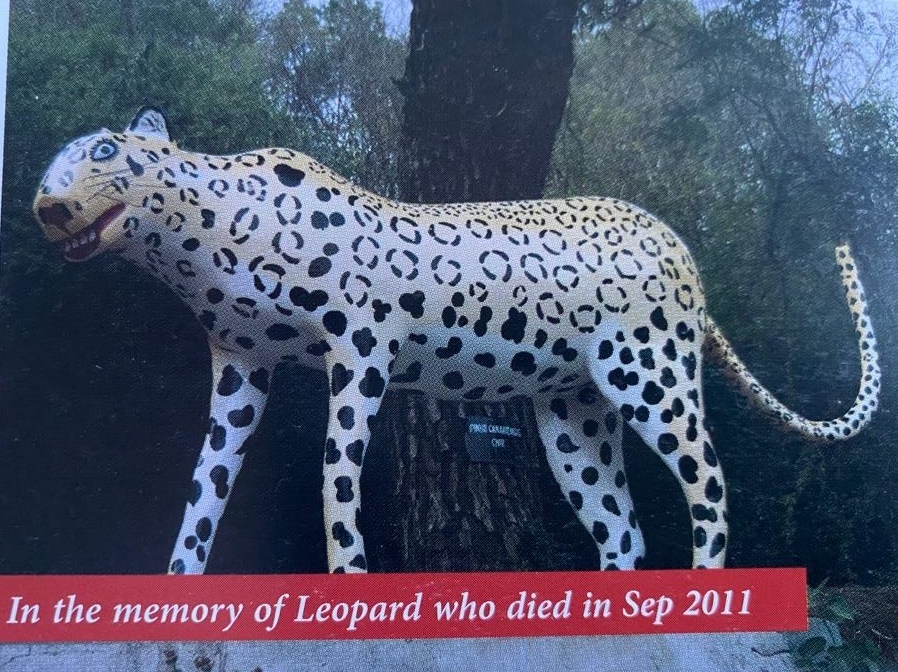
One incident reveals his sensitivity for wildlife, which had evolved from deepening remorse over his shikar escapades as a young officer. While commanding the ‘Ace of Spades’ (25 Infantry Division) from 2011 to 2013 at Rajouri, a female leopard would be spotted after dinner by then Maj Gen Singh above his residence. The GOC’s residence nestled in the aura of the snow-hatted Pir Panjals.
“I saw the leopard for a month. But 10-15 days passed and I did not see her. I asked my ADC to get a check done in the surrounding area. Sure enough, the leopard had got entangled in the concertina wire fence meant to keep terrorists at bay and bled to death in a bunker of ours. I was saddened. I got a cement replica of her constructed at the same spot where I had first spotted her to serve as a memorial of her graceful presence,” Lt Gen Singh told this writer.
vjswild1@gmail.com


