
 E-Paper



Wildbuzz: Boar gatecrashes leopard dinner
Leopards and boars were seen sharing a kill in India's Kalesar National Park, a rare interaction captured on camera trap. The boar stood its ground against the leopard's intimidation, leading to a truce between the two predators. This unusual behavior could be attributed to the risk of the boar mauling or killing the leopard, as has been seen in other instances. The research paper detailing this interaction highlights the adaptability of wildlife in urban landscapes, such as red-naped ibises that have thrived in Rajasthan cities by feeding on discarded food and nesting in unconventional locations.


The wild boar occupies a vaunted space in jungle lore. Really big boars are known to even recklessly take on tigers. Hunters of yore vouch for the boar’s raw, ill-tempered courage: an enraged one peppered with shotgun pellets can charge the shikari and maul, even kill, fierce hunting dogs. Well, more evidence of the boar’s intrepid character comes from unique moments of natural history captured in the Kalesar National Park, Yamunanagar.
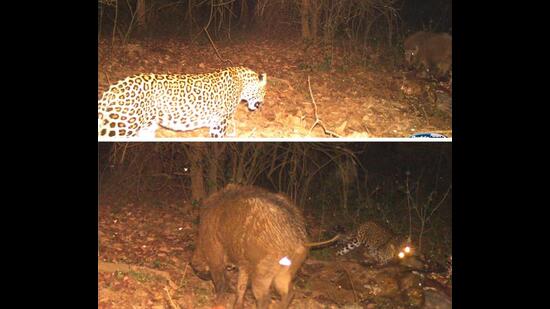
Small boars are listed as a prey species for leopards. Boars, being omnivores, are known to indulge in scavenging of carrion. However, an adult boar was captured on camera trap at night sharing a leopard’s Sambar kill — with that leopard and another one! In this peculiar interaction, the male leopard tried his damnedest to intimidate the plucky boar by staring and growling at the uninvited guest. But the boar stood his ground and ultimately the leopards settled for a truce. Resultantly, the leopard and boar began eating the Sambar from different ends, while keeping a wary eye on the other!
Leopards have been mauled, even killed by large boars, just as lions slain by cape buffaloes, giraffes and gemsbok in Africa. So, the reason why the leopard did not attack the aggressive boar could lie in that hazard. Also, the leopard having already bagged a Sambar, may have thought it prudent to conserve the energies required to down the staunch boar.
This entirely novel record of leopard-boar interaction was revealed in a recent research paper, anchored on sterling field work undertaken by Janam Jai Sehgal and Deepak Kumar and supervised by Rajiv Kalsi and Randeep Singh.
Cities as wildlife spaces
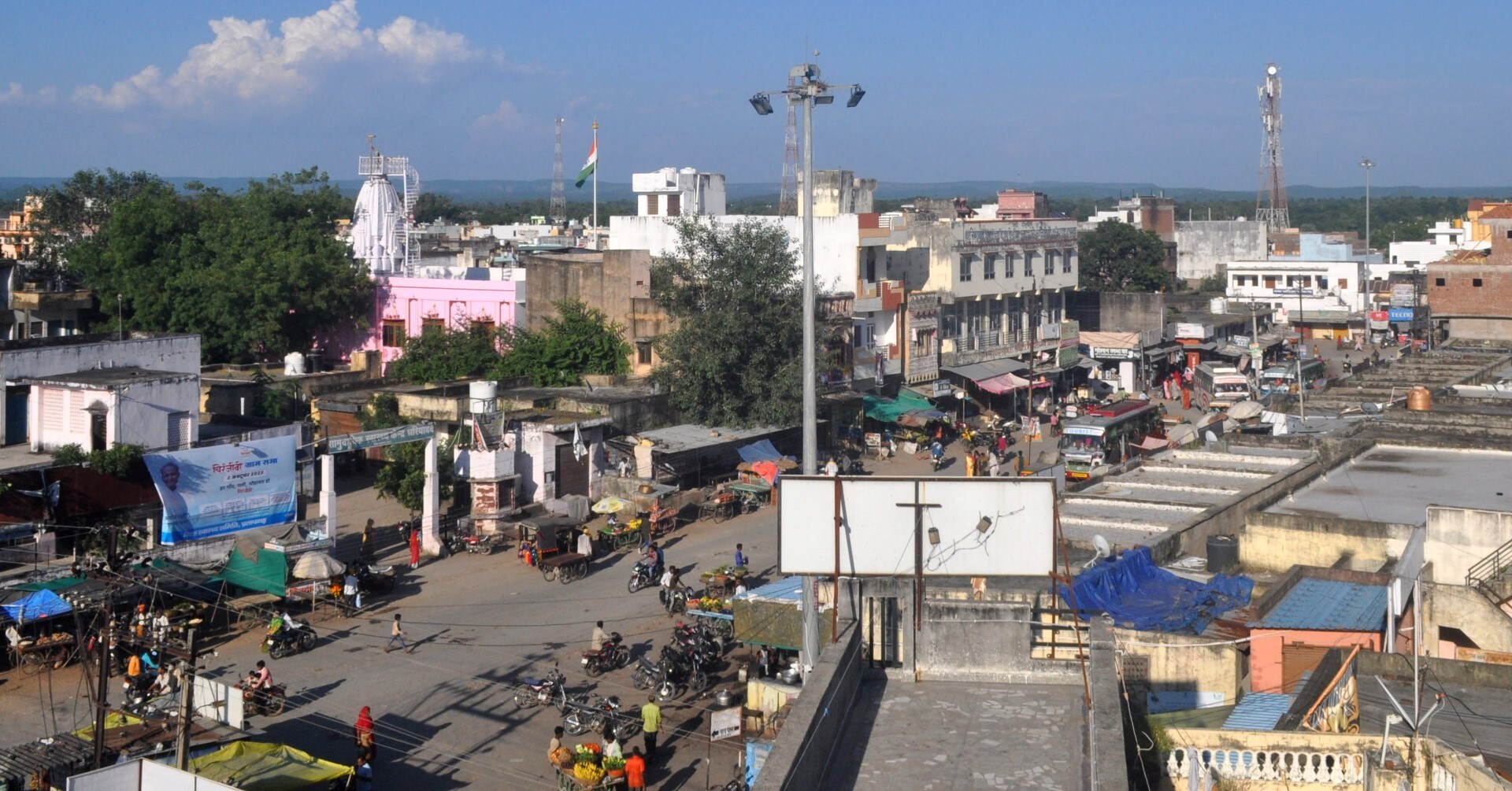
Far too much attention is devoted by wildlife researchers and enthusiasts to lush forests and iconic wetlands. But urban landscapes support a diversity of creatures that have adapted to the human humdrum and chaos. None better an illustration than the case of red-naped ibises flourishing in two Rajasthan cities, far aloof from their typical wetland or flooded field habitats.
Nesting in the middle of the city’s market on light poles, mobile towers and temple poles, the adaptable ibises have virtually turned into “winged” stray dogs, waiting for householders to discard onto the streets dead rodents and food leftovers from “shaadis”! Pigeons nesting on air-conditioners or feeding on grains put out for them on streets sides were another prey source for ibises. Not too fussy about food habits and nesting habitats is a robust evolutionary trait, also displayed vividly in cities by “cheels (black kites)”.
A research paper breaks new ground on urbanisation and wildlife. Titled, Natural history and behavioural observations of red-naped ibis in Dhariawad and Sikar cities, and authored by Manish Singh Charan, Pradeep Sharma, Mahendra Singh, Swati Kittur and KS Gopi Sundar, it brings to light unknown feeding habits of the ibis not listed in standard-reference ornithology tomes.
At the Sikar dump, ibises were feeding on cattle carcasses, dead birds, snakes and rodents. “Two ibises were inserting their bills into the bones of cattle that had died after a vehicle collision on the highway. The ibises were apparently feeding on bone marrow...Ibises (also) fed on small meat pieces and skin parts (of cattle / dog carcasses),’ the study noted. Farmers revealed that ibises fed on white grubs, a pest. The study noted an unknown behaviour: ibises catching fish from shallow reservoir waters.
City folk and farmers observed ibis behaviours keenly and reported a wealth of such detail to researchers. They displayed tolerance for ibises living amidst them and did not poach them for food. “We tend to assume that wildlife gets driven away from cities. Yes, waterbirds such as Sarus cranes will be displaced by urbanisation but some species adapt well. Unlike western urbanisation models, Indian cities are a commingling of older villages, monuments and modern urbanisation and provide habitats for certain species in spaces otherwise teeming with human life,” Sundar, an international award-winning ornithologist, told this writer.
vjswild2@gmail.com


