E-Paper



Rare orchid species found in India for the first time
A research paper on the new addition to Indian flora has been published in Nelumbo, the six-monthly journal of BSI and volumes listing the orchid species of India will soon be updated

 Prefer HTon Google


A rare orchid species -- Cephalanthera erecta var. oblanceolata-- has been found for the first time in India in Uttarakhand’s Chamoli district at an altitude of 1870 metres, said experts from Botanical Survey of India (BSI) and Uttarakhand forest department.
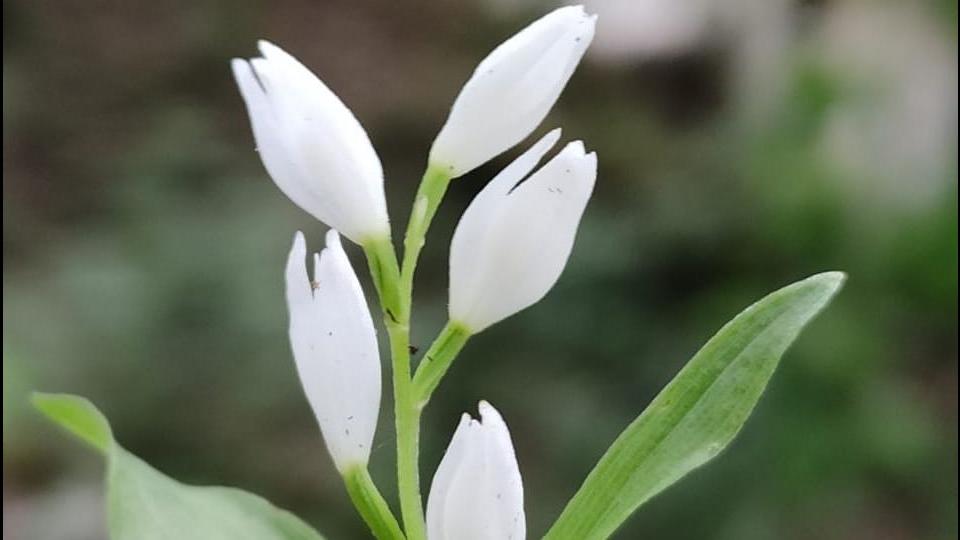
Jeewan Singh Jalal, a senior scientist from BSI Kolkata, who is an expert on orchid species in India, said that forest officials from Uttarakhand had sent him samples of the plant they found growing in the humus-rich soil of Quercus Rhododendron Boreal forest during a floristic exploration earlier this year.
“When I studied them, I found they were very rare orchid species --Cephalanthera erecta var. oblanceolata-- which has never been reported from India so far . So, we studied the existing literature on this species, discussed it with other researchers and finally confirmed that it was being reported for the first time in India,” Jalal said.
Jalal said a research paper on the new addition to Indian flora has been published in Nelumbo, the six-monthly journal of BSI and volumes listing the orchid species of India will soon be updated.
Also Read | Three research scholars discover new plant species in Western Ghats
“Cephalanthera represents a small group of terrestrial orchids with about 19 taxa, mainly distributed in Europe, North America and temperate parts of Asia. So far the genus is represented in India by two species that include Cephalanthera damasonium and Cephalanthera longifolia, which are confined to the Himalayan region,” he said.
The research paper Cephalanthera erecta var. oblanceolata (Orchidaceae): A New Record for the Flora of India has been authored by Jeewan Singh Jalal from BSI Kolkata, Manoj Singh (researcher), Harish Negi (range officer ) from Uttarakhand forest department’s research wing and Dinesh Kumar Agrawal from BSI Sikkim Himalayan Regional Centre, Gangtok.
Manoj Singh said in May this year, a team spotted 20 to 30 individual plants of this species from a small area in Chamoli during their floristic exploration in the higher Himalayan reaches.
Singh said this rare orchid species is endangered according to IUCN. “Their habitat is under direct threat due to anthropogenic activities from tourism and pilgrimage-related activities. The plants are vulnerable to livestock grazing and trampling,” he said.
Singh said the number of matured individuals recorded is not over 30, therefore the species is at a high threat level and as such more intense floristic survey and habitat management is recommended for its conservation.
Sanjiv Chaturvedi, chief conservator of forests (CCF) and in-charge of the state forest research wing, said the department’s research wing has not only been focussing on the conservation of orchid species in the Himalayan state, but also on finding new or lesser known species, which have not been studied thoroughly so far. “This finding has not only enriched the rich flora of Uttarakhand but the flora of India as a whole,” he said.
Uttarakhand has around 250 recorded orchid species. Mandal valley in Chamoli district is particularly rich in orchid species, in view of high rainfall and very rich vegetation cover, said forest officials,
Last year, experts confirmed that after a gap of nearly 124 years, a small and very rare species of orchid Liparis pygmaea had again been found in India, in the alpine meadows of Chamoli district at an altitude of 3800 metres.