E-Paper



16 of 26 sewage plants in Delhi do not meet standards: Study
Some of the STPs that were found wanting include newer facilities that have been inaugurated or made operational within the last two years, including the Coronation Pillar STP, the Kondli STP and the new Keshopur plant.

 Prefer HTon Google


Sixteen of the 26 sewage treatment plants (STPs) in Delhi are currently not meeting the quality parameters set by the Central Pollution Control Board, findings of a report prepared by the Delhi Pollution Control Committee which analysed samples collected in June 2022, shows.
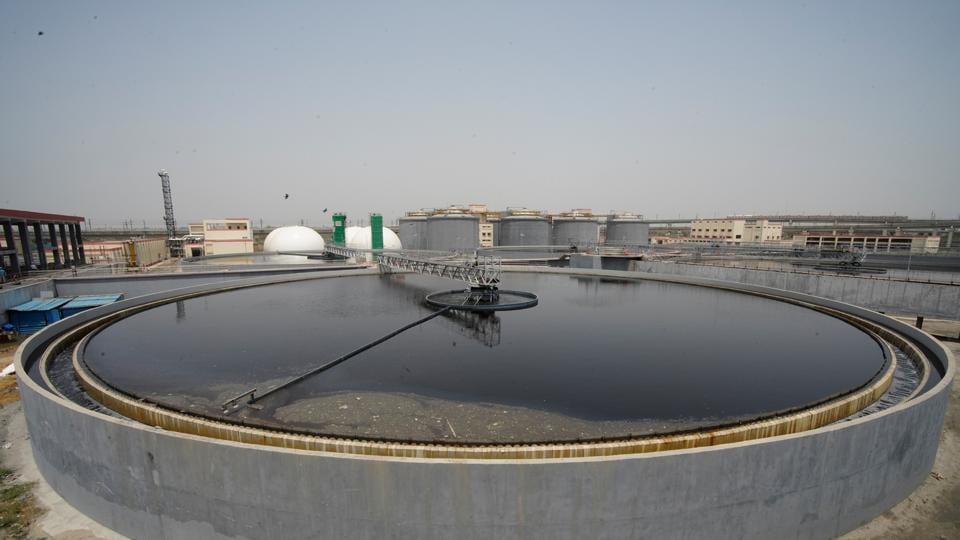
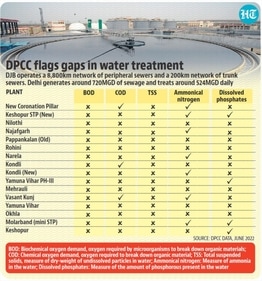
Some of the STPs that were found wanting include newer facilities that have been inaugurated or made operational within the last two years, including the Coronation Pillar STP, the Kondli STP and the new Keshopur plant. Of the seven different parameters tested, most plants failed to meet the standards for Total Suspended Solids (TSS), Biological Oxygen Demand (BOD), Dissolved Phosphate, Chemical Oxygen Demand and Ammonical Nitrogen parameters, the report said.
Water from these STP, which are operated by the Delhi Jal Board (DJB), is either released into the Yamuna or used for reviving water bodies. In both the cases, water with higher levels of toxic elements will further add to the river pollution and pollute groundwater.
The DPCC has been gathering data on Delhi’s STPs every month since July 2019. For the latest survey, samples were collected between June 9 and June 15, finding the Nilothi, Najafgarh and the new Kondli STP to be the worst performers, breaching the standards set for each parameter by 2-6 times, data shows.
According to the standards, the TSS and BOD levels should be 10 mg/l or less, the COD should be 50 mg/l or less and ammonical nitrogen and dissolved phosphate should be below 5 mg/l and 2 mg/l respectively. In addition, DPCC also checks for the oil/grease content (10 mg/l or less) in the outlet readings, along with the PH readings (6.5-9.0) of the water.
For instance at Nilothi, the outlet readings showed TSS concentration to be 60 mg/l compared to the standard of 10 mg/l, a COD concentration of 132 mg/l and the ammonical nitrogen and dissolved phosphate readings of 8.9 mg/l and 7.2 mg/l respectively. At Najafgarh, the BOD levels after treatment were 38 mg/l and COD levels were 108 mg/l. At Kondli, TSS readings after treatment were 82 mg/l, nearly 8 times the limit set.
While BOD and COD are used to determine whether dissolved oxygen can be utilised by microorganisms to break down organic matter or not, TSS are solids in the water that can be trapped by a filter. Ammonical nitrogen is a toxic pollutant often found in landfill leachate and in solid waste products which makes the water more alkaline. High dissolved phosphate is generally released from detergents and can cause excess growth of algae and large aquatic plants.
Delhi Jal Board has a network of branching, peripheral sewers of about 8,800 kms along with a network of 200 kms of trunk sewers. The economic survey of Delhi states that the city generates around 720 MGD of sewage and the treatment capacity is around 597 MGD even as the utilization remains even lower. The government has stated that STPs with a total capacity of 239 MGD will be added to the treatment infrastructure by June 2023.
Delhi government has also announced that the water from STPs will be utilised to revive water bodies under the ‘city of lakes’ project, and once the groundwater levels in the areas surrounding the water bodies becomes high enough, water will be extracted to augment the city water supply. In fact, the water from new Coronation Pillar facility is to be used for government’s ambitious Singapore NEWater model under which water will be further purified and dumped in Yamuna near Palla to increase the raw water availability in the river.
Manoj Misra, convener of the Yamuna Jiye Abhiyaan, said if oxygen content is low and both nitrogen and phosphate levels are high, then the water will not be able to sustain any form of life. “A major portion of the STP water released in the Yamuna has high phosphate and nitrogen levels, and it can lead to frothing or growth of algae. Water from these STPs is also used to revive water bodies, but again over time, the water quality will go down due to these high toxicity. The same water also percolates down to the ground, so it is important that this water which is supposedly treated, is being purified to the correct levels,” he says.
Misra added that what is even more surprising is that even the new plants are failing to meet the norms. “It is a shame that so much money is being pumped into cleaning the Yamuna and still the new plants are found to be failing to meet the standards. This may also prove to be a public health hazard if the treated water from these STPs is being used to revive the wetlands and recharge the groundwater,” he added.
A DPCC official said the reports are shared with the DJB each month, so that corrective action can be taken. “If a plant is repeatedly violating norms, then we can initiate action too, if required,” said the official.
Reacting to the report, a senior Delhi Jal Board officials said the plants operated by the board are designed as per old parameters set at the time of their constructions between 1975 and 2011.
“Their BOD/TSS standards are as 20/30 and 30/50mg/l. Now, DPCC has set stringent parameters for BOD and TSS for which DJB is upgrading its existing STPs in five packages . Letter of Intent for upgradation of two packages has already been given and a third will be approved in upcoming board meeting. Work for the remaining two will be awarded by October 2022, and all existing STP will be upgraded within 18-24months,” the official added. However, the board did not issue a comment on the new STPs failing to meet the norms.
A Delhi government spokesperson did not comment on the findings of the report.