
 E-Paper



35% of Delhi vehicles speed on roads: Study
The report, jointly released by the Delhi government and global public health organisation Vital Strategies, is based on observations under the Bloomberg Philanthropies Initiative for Global Road Safety


New Delhi
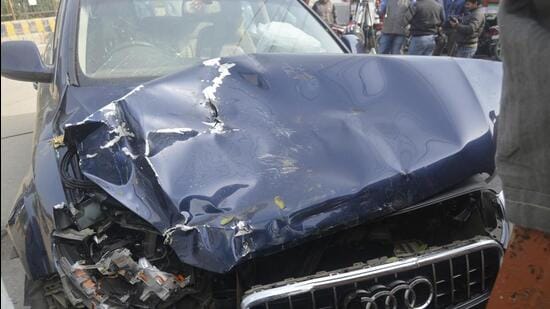
Over a third of vehicles on Delhi roads were found motoring above prescribed speed limits, with heavy and commercial vehicles accounting for the most offences, according to a study on 600,000 roadside observations collated between December 2021 and April 2025.
The report, jointly released by the Delhi government and global public health organisation Vital Strategies, is based on observations under the Bloomberg Philanthropies Initiative for Global Road Safety (BIGRS), officials from the transport department said. The findings state that speeding prevalence in the Capital jumped from 27% in December 2021 to 35% in April 2025.
“An increase of just 1km/hr in average vehicle speed can lead to a 3% rise in injury-causing crashes and up to 5% more fatal crashes,” the report reads, citing World Health Organization (WHO) research.
According to the study, nearly 49% of heavy vehicles, such as buses and trucks, were found driving over limits. Speeding prevalence was 42% among commercial vehicles, including taxis vans and rickshaws. At traffic blackspots—vulnerable points, where most accidents occur—there was 50% speeding prevalence. In contrast, 28% of private vehicles studied were found speeding.
The mean speed at blackspots was 58km/hr, significantly higher than the 43km/hr average among vehicles complying with limits. On expressways, 43% of vehicles were found overspeeding, followed by 41% on arterial roads.
The report, in a section on motorcycle trends, found that two-wheelers were disproportionately involved in fatal crashes worldwide. In Delhi, motorcycles were more likely to breach speed limits during late-night hours. The report found that 47% of motorcycles were found speeding at night, compared to 33% in the day. The mean speed of a speeding motorcycle was 66km/hr, and at blackspots, this jumped to 68km/hr.
Motorcycles, at 33%, accounted for the highest number of speeding vehicles on arterial roads, while it was 28% on local roads and 18% on expressways. There were more speeding instances on weekends, against weekdays, among two-wheelers, it found.
The study tracked five blackspots identified by the Delhi Transport Department and road safety experts. Across these, nearly half or 48% of vehicles observed during weekends were speeding, compared with 45% on weekdays.
“Heavy vehicles have the highest rate at blackspots with 58% found speeding, underscoring the risk they pose in already hazardous zones. Speeding was most common during late night and early morning hours, when enforcement presence is thinner, which peaked in April 2024,” the report read.
Suggested remedies
The report recommends a multipronged approach, involving enforcement, engineering and education to tackle the issue. For the Delhi Traffic Police, it suggests expanding electronic and roadside enforcement across all road types, particularly targeting heavy and commercial vehicles. It calls for reforms to the e-challan system to ensure on-the-spot fines and follow-up, and for steeper penalties, including licence suspension and vehicle impoundment for repeat offenders.
The Delhi transport department has been urged to enforce stricter commercial vehicle inspections, push for mandatory anti-lock braking systems (ABS) on all motorcycles and coordinate mass media campaigns on the dangers of speeding.
For roadowning agencies, such as the Public Works Department (PWD), New Delhi Municipal Council (NDMC), Delhi Development Authority (DDA) and National Highways Authority of India (NHAI), the recommendations include regular road safety audits, structural improvements at blackspots and speed-calming measures.
“Audit and inspect the existing road network and ensure that new infrastructure complies with safety standards. Implement speed-calming infrastructure, such as well-placed speed limit signage, speed humps, raised pedestrian crossings, rumble strips, road narrowing, and chicanes. Incorporate a safe systems approach with interagency collaboration to enhance enforcement and road infrastructure maintenance,” the report read.
While the report notes a 10% drop in road fatalities in Delhi since 2015, the city still lost 1,457 lives in crashes in 2023. Vulnerable road users, which included 38% motorcyclists, 43% pedestrians and 2% cyclists, accounted for 83% of speeding deaths.
Officials said the findings will be used to identify high-risk corridors and schedule targeted enforcement drives, especially on weekends and late nights. Public awareness efforts are also likely to intensify, with messaging tailored for commercial drivers and motorcyclists.

Stay updated with all top Cities including, Bengaluru, Delhi, Mumbai and more across India. Stay informed on the latest happenings in World News along with Delhi Election 2025 and Delhi Election Result 2025 Live, New Delhi Election Result Live, Kalkaji Election Result Live at Hindustan Times.


