
 E-Paper



After two years, panel reviews all parking plans in Delhi
The parking policy, aimed to decongest Delhi and reduce pollution by charging a higher fee for surface/on-street parking and peak-time parking and a lower free for multilevel and off-peak parking, was first proposed in 2017 and notified on September 25, 2019

 Prefer HTon Google


Two years after the Delhi Maintenance and Management of Parking Places Rules were notified in the city, the Apex Monitoring Committee, mandated under the policy, held its first meeting on Friday. The committee reviewed all area parking plans prepared by municipal corporations and discussed new ideas, such as the inclusion of parking spaces for electric vehicles (EVs).
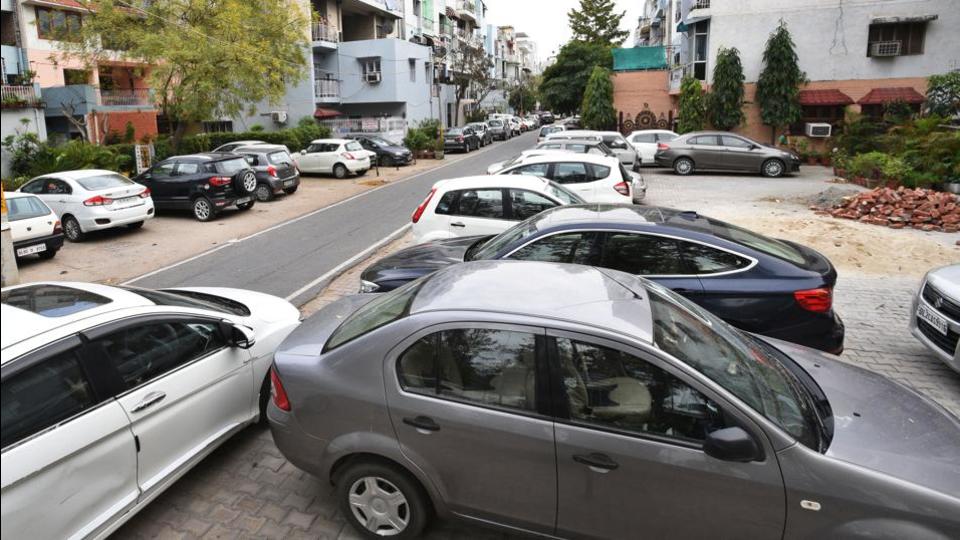
The parking policy, aimed to decongest Delhi and reduce pollution by charging a higher fee for surface/on-street parking and peak-time parking and a lower free for multilevel and off-peak parking, was first proposed in 2017 and notified on September 25, 2019.
The committee is headed by Delhi transport minister Kailash Gahlot.
Senior officials, who attended the meeting, said the government is unlikely to hike the parking fee anytime soon as people are financially hit by the Covid-19 pandemic.
They said the minister advised the transport department and enforcement agencies to be sensitive to the plight of the public due to the pandemic. “It is likely that some amendments will be made to the rules regarding hefty penalties for parking. Overnight parking was also discussed and authorities were directed to share data on major roads to optimise checks and enforcements,” said an official, requesting anonymity.
He said the minister directed authorities to identify parking spaces so that buses and goods vehicles do not park along roads at night and add to the city’s congestion. According to the transport department, there are 7,624 buses and 44,533 goods vehicles with valid permits on Delhi roads.
On Friday, the government, in a statement, said that area parking plans prepared by civic agencies will be notified soon. They will be published on the municipal corporations’ respective websites after the Apex Monitoring Committee approves the plans. A few area parking plans have already been prepared by the MCDs for locations such as Kamala Nagar, Lajpat Nagar markets, and a few other commercial areas. The remaining plans are being prepared based on guidelines from the transport department, in consultation with residents’ welfare associations, and market associations (to take into account last-mile connectivity). Gahlot also directed South Delhi Municipal Corporation (SDMC) to compile all the plans and expedite the process of procuring no-objection certificates (NOCs) from enforcement agencies and the police.
A senior south corporation official said that parking management plans of 16 areas have been prepared and added to the municipal corporation’s website for public feedback. The parking plan for Lajpat Nagar has been implemented, he added.
The official said the pandemic has slowed down the implementation of the parking management plans in some areas and added that the support of local RWAs is crucial for successful implementation. The 16 areas include Anand Lok, Aurobindo Marg, Geetanjali Enclave, Green Park Extension, Gulmohar Park, Kailash Colony, Kailash hills, Malviya Nagar, Neeti Bagh, Nizamuddin, SDA, Soami Nagar and Siddharth Extension. A north corporation official said that the implementation of the plan prepared for Kamla Nagar has been delayed due to lack of financial resources.
In the meeting, Gahlot said area parking plans are not just about parking vehicles, but also about improving the public’s quality of life and making their life easier. “Vendors, non-motorised transport, parks, and recreational spaces find a crucial place in these plans. The focus is on decongesting our roads and increasing walkability, and I’m sure that once all stakeholders start working towards this shared goal, we will have a more breathable Delhi that belongs to motorists, cyclists, and pedestrians alike,” he said.
“I also urge citizens to park responsibly and try to switch to EVs, and most importantly use more public transport, which will address a lot of these issues from the grass-root level,” the minister added.
On Friday, the government decided to tweak parking rules to accommodate more facilities for EVs. It asked authorities to ensure reserved parking for EVs in a push to promote EVs in the Capital. The Delhi EV policy 2020 also mandates that 5% of parking space in all new construction sites will be reserved for electric vehicles.
Another senior official said the government is also considering inserting a provision for the reservation of EV parking spaces in existing buildings.
“The MCDs informed the minister that about 200+ EV charging points at various locations are already being made operational across Delhi. The possibilities of using geospatial data to map EV user coordinates, and plot influence area with owner coordinates to develop private charging clusters was also discussed,” the government said in its statement.


