
 E-Paper



And the air in Delhi was ‘good’ — after 413 days
Residents of Delhi breathed good air after 413 days on Monday as heavy downpours through the day settled down pollutants

 Prefer HTon Google


Residents of Delhi breathed good air after 413 days on Monday as heavy downpours through the day settled down pollutants. It was the first time since 2015 that the air in national capital has been so clean in October.
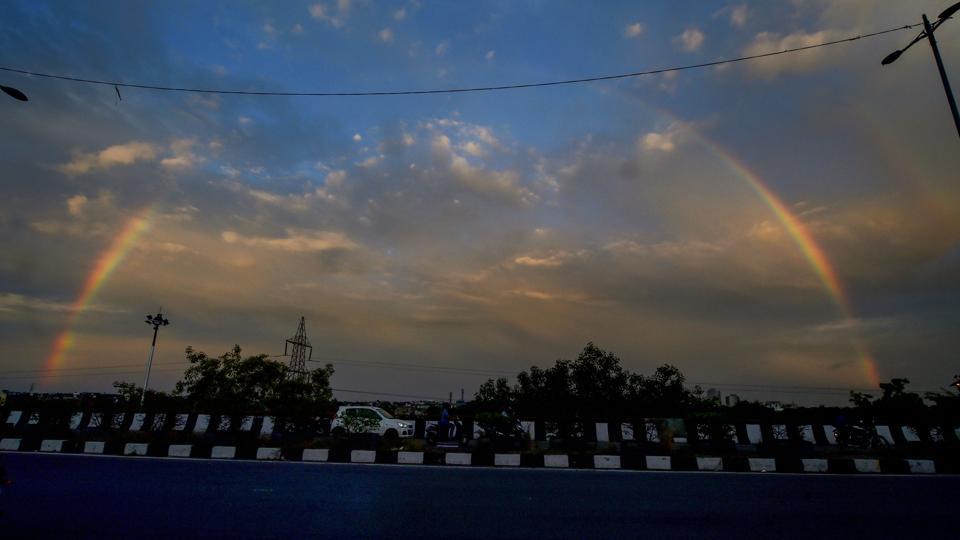
The overall Air Quality Index in Delhi fell to 46, categorised as ‘good’ by the Central Pollution Control Board, a drop of over 250 in just a day. The index on Sunday had shot up to 298 on Sunday, which is categorised as ‘poor’ that leads to breathing discomfort to most people on prolonged exposure.
The relief might be short-lived as winds from the northwest blow in smoke from the farm stubble fires in Haryana and Punjab in the coming days, experts said.
Monday was Delhi’s first spell of good air not just in 2021, but since August 31 last year, data from the federal pollution watchdog showed. Delhi has not breathed good air in October since at least 2015, when the agency started keeping AQI records.
The drastic fall in pollution levels was more due to the duration of the rains, scientists of the Indian weather office said, as well as showers in neighbouring states, potentially negating the effect of smoke from the burning of farm residue.
“Delhi has received some intense rain spells this year, but this time, there was a drastic fall in pollution levels because the rain was widespread throughout Delhi and neighbouring Uttar Pradesh, Haryana and others, and it also lasted for a longer duration,” said VK Soni, head of the environment and research department at the India Meteorological Department.
“We have seen that intense rain spells during monsoon this year were usually shorter spells, which lasted between two and three hours, because of which pollution levels did not drop as drastically as they did on Monday,” Soni said.
Delhi this year saw one of the most erratic monsoons ever, Met department data show. It started off with an unusually delayed arrival. Instead of it normal arrival date of June 27, monsoon this year entered the capital on July 13, 16 days behind schedule. This was the most delayed arrival in 19 years. In 2002, monsoon hit Delhi on July 19.
The city progressively broke a slew of monsoon-related weather records. The rains in Delhi broke records in July, August and September. Most of the city’s rainy days saw showers concentrated into a few hours, battering the city’s infrastructure and throwing normal life off kilter.
The capital’s air quality has steadily dropped all month, a decline that accelerated on Friday, when AQI reached the far end of the ‘moderate’ zone at 198. On Saturday, as winds calmed, air pollution got worse and reached 284, before climbing to 298 the next day.
Delhi in 2020 recorded five good air days, the most since AQI recordings began. This, however, was likely due to curbs on social and economic activities due to the Covid-19 pandemic. The restrictions have largely been lifted now.
In 2015 and 2016, Delhi did not record a single good air day. In 2017, two such days were recorded — July 30 and July 31. After another year of no good air day in 2018, Delhi in 2019 recorded two good air days on August 18 and 19, official data reveal.
This respite from severe air pollution will be short-lived and air quality will start getting worse under the impact of northwesterly winds from October 21, Soni said.
The winds will blow from the northeast on Tuesday and Wednesday but will change to northwesterly from Thursday, when air quality will again deteriorate, Soni said.
Easterly winds on Monday ensured the share of stubble fires in Delhi’s air was only 1%, according to the System of Air Quality and Weather Forecasting and Research (Safar) of the ministry of earth science. The rains also kept local pollutants in check, it said.
“Local land surfaces are wet and so dust re-suspension is minimum; this is also keeping the PM 10 (particulate matter with diameter less than 10 micrometres) levels low. The presence of western disturbance has led to scattered rainfall over north India, leading to low biomass burning. This condition improved the AQI with low PM 2.5 (particulate matter with a diameter less than 2.5 micrometres) levels. Fire counts reduced to 170 and its share was only 1%,” Safar’s air quality analysis read.
“Moist surfaces inhibit re-suspension of dust, which will keep the AQI in ‘good’ range for the next 24 hours and after that it will degrade to the ‘satisfactory’ category,” the analysis predicted.


