
 E-Paper



Bail by default if charge sheet not filed on time, stresses SC
According to section 167 of CrPC, an accused will be entitled to bail by default, if the investigating authority fails to file charge sheet within 60 days from the date of remand.

 Prefer HTon Google


The Supreme Court on Monday stressed that an accused becomes entitled to default bail under the law if the agency fails in presenting its charge sheet within these 60 days, and held that the window starts on the day the accused is remanded to custody and not the day after.
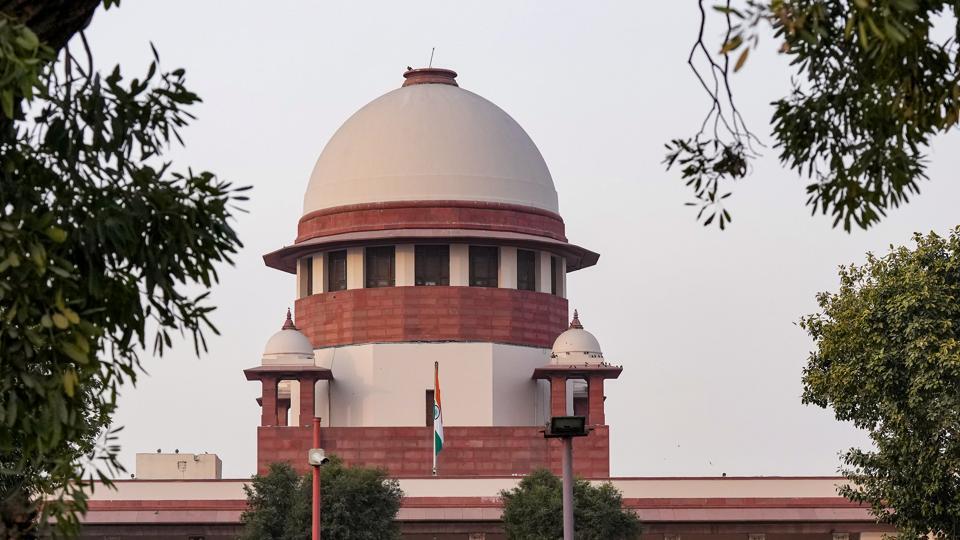
A three-judge bench led by justice KM Joseph delivered the authoritative ruling on the point of law as it dismissed the Enforcement Directorate’s (ED) appeal against the grant of default bail to former Dewan Housing Finance Corporation (DHFL) promoters Kapil Wadhawan and Dheeraj Wadhawan in a money laundering case in connection with the Yes Bank scam.
The bench, which included justices Hrishikesh Roy and BV Nagarathna, declared that for considering a claim for default bail, the day of remand is to be included while computing the period of 60 or 90 days for the agency to conclude its probe and present a charge sheet.
Also Read: 25 years on, SC sets death row convict free as he was minor at time of crime
“The remand period will be calculated from the date when the magistrate remanded the accused... in other words, an accused becomes entitled to default bail if the charge sheet is not filed before the 61st or the 91st day of the remand, as contemplated in Section 167 (2)(a)(ii) of the CrPC,” said justice Roy, reading out the operative part of the verdict. The detailed judgment is yet to be released.
According to section 167 of CrPC, an accused will be entitled to bail by default, if the investigating authority fails to file charge sheet within 60 days from the date of remand. For certain category of offences, the stipulated period can be extended till 90 days.
The three-judge bench answered the point of law referred to it by a two-judge bench in February 2021, and referred the matter back for adjudication on merits. In February 2021, the two-judge bench referred to a few conflicting views taken by the top court regarding the computation of the day of remand. “Because of the conflicting view on the proposition of law for grant of default bail, a judicial conundrum has arisen which is required to be resolved for guidance of the court,” this bench had noted while referring the issue to the larger bench.
Also Read: Centre, Gujarat govt get SC notice on Bilkis Bano plea against 11 convicts' premature release
On August 20, 2020, the Bombay high court granted the bail to the Wadhawan brothers on the ground that ED failed in filing the charge sheet within the 60-day period, making the mandatory default bail applicable. Overturning the trial court’s denial of bail, the high court had then stated that “excluding the first day of remand while computing the period of 60 days cannot be sustained and is liable to be set aside”.
The Wadhawan brothers were arrested by ED on May 14, 2020 and were remanded on the same day. ED submitted its charge sheet in the physical form on July 13 but the Wadhawans had already moved for bail in the morning on that day, arguing the 60-day period ended on July 12. Despite the bail, they were not released from jail since they are also accused in another case registered by the Central Bureau of Investigation (CBI).
Before the top court, ED cited some Supreme Court judgments to contend that the day on which the accused is remanded should be excluded while calculating the 60-day period. However, the Wadhawans’ counsel also harped upon another bundle of apex court judgments to argue that the 60-day period would start from the day on which the accused were remanded to custody.
ED had filed money laundering charges against the Wadhawans in connection with alleged suspicious loans granted by Yes Bank and the “quid pro quo” between its co-promoter Rana Kapoor and the Wadhawans, based on a CBI FIR filed in March.
According to CBI and ED, Yes Bank invested about ₹3,700 crore in short-term non-convertible debentures of DHFL between April and June 2018. In return, DHFL paid a kickback of ₹900 crore to Kapoor in the form of loans to DoIT Urban Ventures, a firm controlled by Kapoor’s wife and daughters, the CBI has alleged.


