
 E-Paper



Bid to check air pollution: SC pushes for remote-sensing technology
EPCA report had said that PUC tests are increasingly not reliable for BS-IV and beyond vehicles as they fail to capture NOx emissions

 Prefer HTon Google


The Supreme Court on Friday mooted the idea of using remote-sensing technology to replace the not-so-reliable Pollution Under Control (PUC) certificates to keep a check on vehicular pollution and asked the Centre to take the first step in this regard by making the new tech a reality in Delhi and the National Capital Region (NCR).
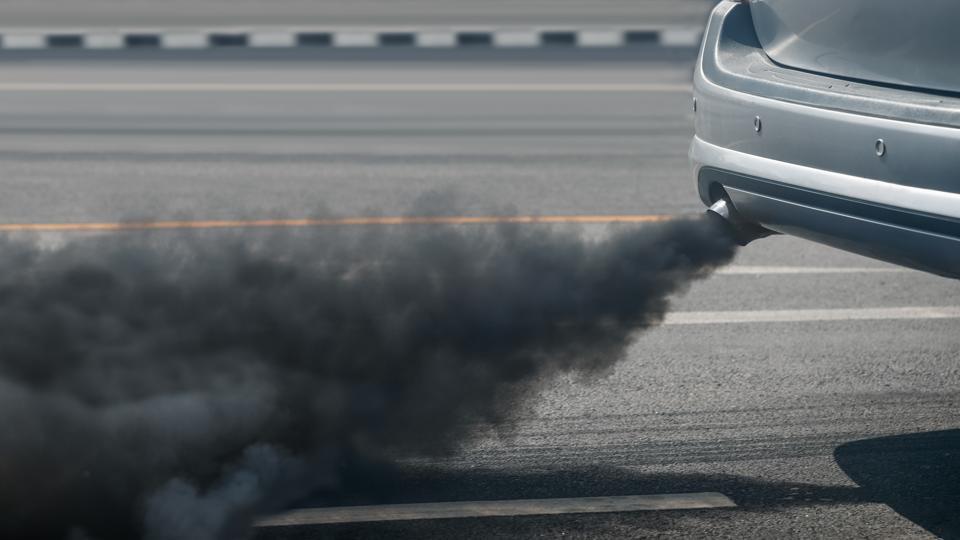
Directing the secretary in the Union ministry of road transport and highways (MoRTH) to convene a meeting with his counterparts in Delhi and NCR states, a bench headed by justice AS Oka said, “Somewhere a beginning has to be made. We are of the view that use of remote sensing technology can commence from NCR areas.”
The proposal for using remote sensing devices (RSD) for on-road emission monitoring had first come in 2019 from an expert body Environment Pollution (Prevention and Control) Authority, or EPCA, assisting the apex court on environment issues. RSDs deploy the use of infrared or ultraviolet light to monitor pollution in the atmosphere as well as locations, which can help authorities identify pollution sources, assess their impact, and improve air quality.
Since the EPCA report of July 2019 was hanging fire for four years, the top court on July 15 this year directed the Centre to give its response to implementing the same.
In a response filed on Thursday (July 25), MoRTH said that the recommendation of EPCA did not appeal to the Centre as several pre-requisites need to be first put in place before embarking on use of technology for on-road pollution monitoring.
Additional solicitor general (ASG) Aishwarya Bhati, who submitted the affidavit, told the court that no original equipment manufacturers had come forward and the plan also required cooperation from states in prescribing accurate threshold emission limits for different vehicle, different emission norms and different fuel types based on authentic data captured during the monitoring phase.
The bench, also comprising justice Augustine George Masih said: “When EPCA has recommended RSD technology, it has not been taken seriously.” The EPCA report had pointed out that remote-sensing test has become necessary as PUC, as the latter a very basic test that lacks quality control and is not appropriate for screening vehicles that adhere to more advanced emissions control standards such as BS-IV and BS-VI.
EPCA report had said that PUC tests are increasingly not reliable for BS-IV and beyond vehicles as they fail to capture NOx emissions which contribute to ozone formation and contribute to secondary particulate matter formation. The PUC programme relies upon idle speed testing mode for petrol/LPG/CNG vehicles and free acceleration mode (FAS) or smoke opacity test for diesel vehicles which measures carbon monoxide (CO), and hydrocarbon (HC) concentration in exhaust.
In March 2021, MoRTH published product specifications and program guidelines with respect to RSD technology, called the Automotive Industry Standard-170 (AIS-170) laying down the minimum technical, design and construction standards for RSD and allied devices.
Senior advocate Aparajita Singh, assisting the court as amicus curiae, was disappointed by the Centre’s affidavit which dismissed EPCA’s suggestion by leaving it to states and Union territories to decide upon implementing the monitoring phase. MoRTH said: “The ministry will issue an appropriate advisory to the state/UT governments to initiate the implementation process. It is after inputs that are received from the state/UT governments, emission thresholds can be established leading to the final enforcement of AIS-170 through the Central Motor Vehicles Rules, 1989.”
The affidavit detailed other requirements such as a GPS-enabled emission module to be installed by placing a camera and a speed acceleration measurement system to communicate real-time data with authorised server(s). Thereafter, calibration for different vehicles has to be done and a monitoring phase must be established in line with the AIS-170, it added.
EPCA was in 2019 tasked to consider the RDS proposal following a report by the International Centre for Automotive Technology (ICAT) which found this technology to be helpful in reducing pollution levels. As per ICAT, the first phase of the programme would focus on identifying gross polluters, with a particular emphasis on heavy vehicles. All vehicles identified as high emitters could be then sent a letter warning the vehicle owner to immediately repair their vehicle or undergo a mandatory test.


