E-Paper



Body calls for 30-minute slabs to fix parking rates in Delhi
Researchers from Center for Sustainable and Equitable Cities (C-SEC) said that these strategies aim to encourage on-street parking for short-term users

 Prefer HTon Google


New Delhi: Based on a case study of the on-street parking management around south Delhi’s Green Park Metro station area, the Center for Sustainable and Equitable Cities (C-SEC)-- an organisation working on integrated transport systems and public space design-- has argued for the overhaul of parking systems around mass rapid transit stations.
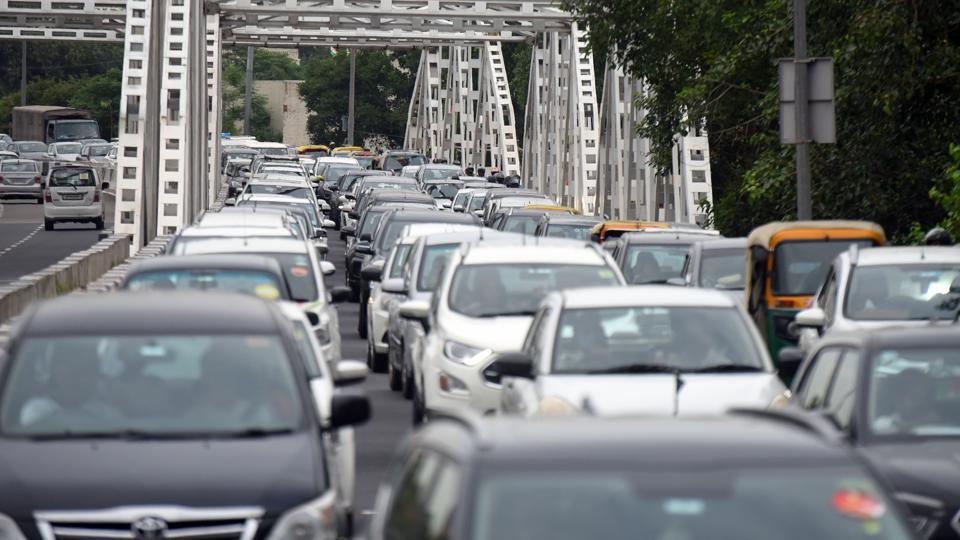
The study, released on Wednesday, found that on-street parking is predominantly short term, with 51% car units parking for less than 30 minutes, while walking remains the main mode of access to the Metro station. While 70% of Metro users were found to walk to and from the station (first and last-mile connectivity), only 20% road space is allocated for pedestrian infrastructure.
The C-SEC has also made several recommendations arguing for smaller parking periods ranging from 30-minute slabs, differential parking rates based on demand in an area, the bundling of various streets to parking contractors to reduce competition and re-investment of 25% of the parking revenue for the upgradation of transportation infrastructure in the neighbourhood.
C-SEC has also proposed a new parking pricing structure based on data that shows a majority of drivers park for less than 30 minutes. “The fee should be charged for half hourly slots for first two hours and hourly thereafter. Roads should be categorised based on high demand (with more than 600 vehicles per day), low demand and arterial roads. Parking fees can be halved for electric vehicles,” the study said, adding that this will lead to an increase in revenue for the Municipal Corporation of Delhi (MCD) from the current ₹13 lakh per year to ₹3.45-6.05 lakh per day.
Researchers said that these strategies aim to encourage on-street parking for short-term users (those who park for less than two hours) and nudge long-term users to shift to off-street parking locations and multilevel car parks.
Sonal Shah, executive director of C-SEC, said they chose Delhi neighbourhood as a case study because the Capital has the largest Metro rail network and the highest number of vehicles per capita in India (643 vehicles per 1,000 residents). “The Metro rail achieved only 52% of its projected daily ridership in 2019-20 according to a Comptroller and Auditor General of India (CAG) report. Within this context, the Delhi government notified the Delhi Maintenance and Management of Parking Rules (DMMPR) in 2019 with the intent to organise parking in the city. Our study builds on the parking rules to use on-street parking management as a tool around mass rapid transit stations to improve walkability and encourage a shift towards public transport,” she said.
The study found that walkability around the Metro station was not up to the mark--while 70% of the Metro users surveyed walked to and from the station, 80-90% of road space was occupied by vehicles. The remaining space did not offer a comfortable walking experience either, with poorly maintained footpaths that were encroached by parked vehicles. “Conversely, parking is very convenient for car and two-wheeler users, 87% of whom spend less than two minutes searching for on-street parking. Moreover, 74% of drivers reported walking less than 100 metres to their destination,” the report said.
There is a 17-floor multilevel automatic car park in Green Park inaugurated by MCD in November 2020 which can accommodate 136 cars. The report said that while 82% cars were parked for less than two hours on the streets around the area, the nearby multi-level car parking facility only achieved an occupancy of 32%. “The Metro rail network in India covers around 753km, with cities such as Delhi and Bengaluru adopting transit-oriented development policies. Managing on-street parking around these stations could be the first step in implementing transit-oriented development in Indian cities,” Shah added.
Meanwhile, experts said parking managements should adopt an area-based approach as compared to simply spot-fixing issues.
“High levels of air pollution had instigated the need for parking interventions back in 2006,” Anumita Roy Chowdhury, executive director, Centre for Science and Environment, said.
Nilesh Rajadhyaksha, an urban policy and planning expert from National Institute of Urban Affairs, also said that mapping public transport accessibility levels in the Master Plan of Delhi 2041 could achieve multiplier effects. “Integrating demand management measures with transport infrastructure can achieve multiplier effects--improve lagging public transport ridership, improve walkability and, most critically, air quality,” he said.
Atul Goyal, president of United Residents Joint Action, a civil society initiative that connects 2,500 residents’ welfare associations in Delhi, emphasised the need to bridge the trust deficient between residents, citizens and the government for effective implementation of parking management plans. Shah emphasised that connecting the mass rapid transit and first and last-mile connectivity along with effective on-street parking management is critical to optimise investments and create better streets, and liveable and healthier cities.