
 E-Paper



CAQM advises NCR govts, PSUs to switch to cleaner-fuel vehicles
A switch to cleaner mobility was looked at as a feasible option in meetings held on measures to curb vehicular pollution, it said in an advisory

 Prefer HTon Google


The Commission for Air Quality Management (CAQM) in NCR, in an advisory, asked state governments, public-sector undertakings and public institutions in the region to transition their vehicular fleet from petrol and diesel to cleaner fuels, such as CNG, or replace them with electric vehicles (EVs). It said policies need to be drafted to ensure all future vehicles procured provide “an accelerated road map” for clean mobility in NCR.
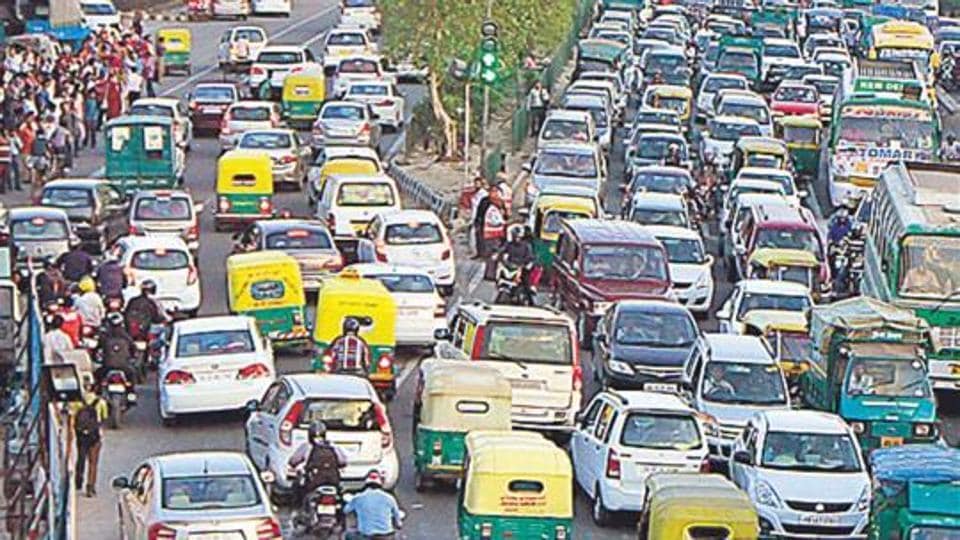
The advisory issued to chief secretaries of Uttar Pradesh, Haryana, Delhi and Rajasthan on May 2, a copy of which was accessed by HT, said that a switch to cleaner mobility was looked at as a feasible option in meetings held on measures to curb vehicular pollution.
“Amongst various measures to curb vehicular pollution, transition to cleaner mobility, preferably towards zero emission vehicles like the Battery Electric Vehicles (BEV) and other such technologies that may develop in future, assumes significant importance and needs to be accorded priority,” read the advisory, issued by CAQM member-secretary Arvind Nautiyal.
“While the concerns of vehicular emissions are universal, considering the ultra-high density of vehicular traffic particularly in Delhi-NCR, there is a need to develop an accelerated roadmap for cleaner mobility, focusing on transition from polluting vehicles, dependent purely on fossil fuels like diesel and petrol,” the advisory read.
It said governments, PSUs and public institutions in Delhi-NCR may take the lead in this context and initiate policy measures which will allow transition to cleaner modes, such as battery electric vehicles (BEVs), compressed natural gas (CNG) cars, compressed biogas (CBG) vehicles, strong hybrid electric vehicles (SHEV), flex-fuel vehicles (FFV) with higher ethanol blending or flex fuel strong hybrid vehicles (FFV-SHEV).
“...they may also mandate future purchase and hiring or leasing of only such cleaner mode vehicles” the advisory read.
Experts said that while state governments in NCR have been looking at cleaner fuel options for some time, the goal should be to focus on zero-tailpipe emissions. “Delhi has been experimenting with CNG for quite some time too, but ideally, we should have zero-emission vehicles to completely reduce pollution from a source. If governments, PSUs and public institutions make a transition, it not only reduces the quantum of polluting vehicles on the roads, but sets a clear example to the public too,” said Amit Bhatt, managing director (India), International Council on Clean Transportation (ICCT).
The vehicular sector remains a key source of pollution in the capital and the area around it. Emission inventory studies for Delhi done by IIT Kanpur in 2015, TERI-ARAI in 2018 and Safar in 2018 pointed out that the transport sector’s contribution to PM2.5 (finer particulate matter) was 20%, 39% and 41%, respectively. Among combustion sources, it was the highest source and overall, the second biggest source behind dust, data showed.


Stay updated with all top Cities including, Bengaluru, Delhi, Mumbai and more across India. Stay informed on the latest happenings in World News along with Delhi Election 2025 and Delhi Election Result 2025 Live, New Delhi Election Result Live, Kalkaji Election Result Live at Hindustan Times.


