
 E-Paper



Centre, Delhi revise TOD policy framework, allow development in 500m zone of rail network
The Centre and Delhi government announced a revised transit-oriented development policy to boost affordable housing and urban mobility near transit corridors.

 Prefer HTon Google


New Delhi
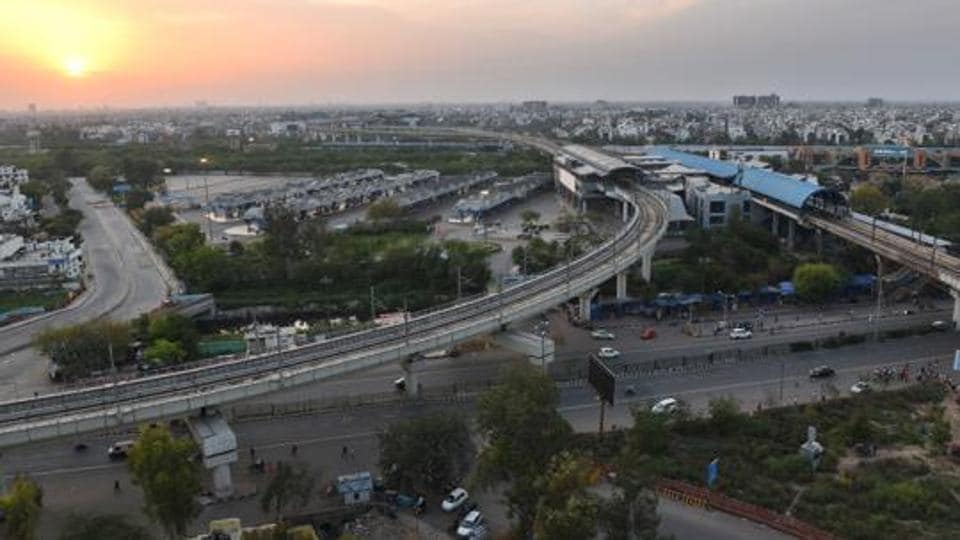
The Centre and Delhi government on Tuesday announced a revised framework for transit-oriented development (TOD) in the national capital, proposing development within a 500-metre influence zone of Metro, railway and RRTS corridors, covering nearly 207 square kilometres. The revision links high-density, mixed-use development with mass transit corridors to boost affordable housing and improve urban mobility, Union minister Manohar Lal said.
Announcing the “Regulations for Transit Oriented Development (TOD) and Charges, 2026”, Khattar said the policy builds on the provisions of the Master Plan of Delhi 2021 and aims to promote “planned, sustainable and transit-linked urban growth” along Metro and regional transit corridors.
“With these changes, TOD norms are being relaxed so that affordable houses can be built along these transit hubs without much restrictions. Previous TOD policies had complicated norms that prevented the private sector from entering the market,” said Lal.
Officials said the corridor-based approach is expected to facilitate planned development and redevelopment with a focus on creating affordable housing stock.
Chief minister Rekha Gupta said the policy is expected to improve connectivity and ease of living, particularly for lower and middle-income groups.
Officials said that about 80 square kilometres of land, previously excluded areas, such as landpooling zones, low-density residential areas and unauthorised colonies, have now been brought under the ambit of the revised TOD framework.
“Under the new regulations, TOD projects can be undertaken along both operational and proposed transit corridors, allowing development to align with upcoming Metro expansions. The policy also enables development on smaller land parcels, with a minimum plot size of 2,000 square metres now eligible under TOD provisions along a minimum 18-metre road with no other restrictions,” said N Saravana Kumar, vice chairman of Delhi Development Authority (DDA).
Until now, the minimum area required for a TOD scheme was eight hectares (1 hectare=10,000 sqm).
The permissible floor-area ratio (FAR) has been increased to up to 400-500 for such plots, subject to road width conditions. Of the total FAR, 65% has been earmarked for residential use, with dwelling units capped at 100 square metres, to support affordable housing objectives. The remaining FAR allows for a mix of commercial, institutional and other uses, including offices and studio apartments.
The policy also provides for improved pedestrian connectivity through underground or elevated walkways linking residential developments to transit stations. In addition, public and semi-public facilities in TOD zones will be allowed enhanced FAR to support infrastructure needs.
The new system also replaces multiple approvals with a single-window clearance mechanism, aimed at streamlining project approvals and improving ease of doing business. The government has also rationalised various charges into a single TOD charge, covering fees related to land use change, additional FAR and services, such as water and sewerage, which were previously levied separately by multiple agencies.
“The fixed charge now will be ₹10,000 per sqm and the amount will only be used for common area facilities of that particular project. A dedicated TOD committee under the DDA, comprising representatives from relevant agencies, will oversee approvals and ensure time-bound clearances for projects within 60 days,” Kumar said.
The revised policy is expected to facilitate compact urban growth, optimise land use and increase transit ridership by aligning housing and infrastructure development with public transport networks, officials said.


Stay updated with all top Cities including, Bengaluru, Delhi, Mumbai and more across India. Stay informed on the latest happenings in World News along with Delhi Election 2025 and Delhi Election Result 2025 Live, New Delhi Election Result Live, Kalkaji Election Result Live at Hindustan Times.


