E-Paper



Days after Diwali, 24 DPCC monitors go dark for eight hours in Delhi
DPCC attributed the glitch to a server error, adding that the problem did not impair data collection

 Prefer HTon Google


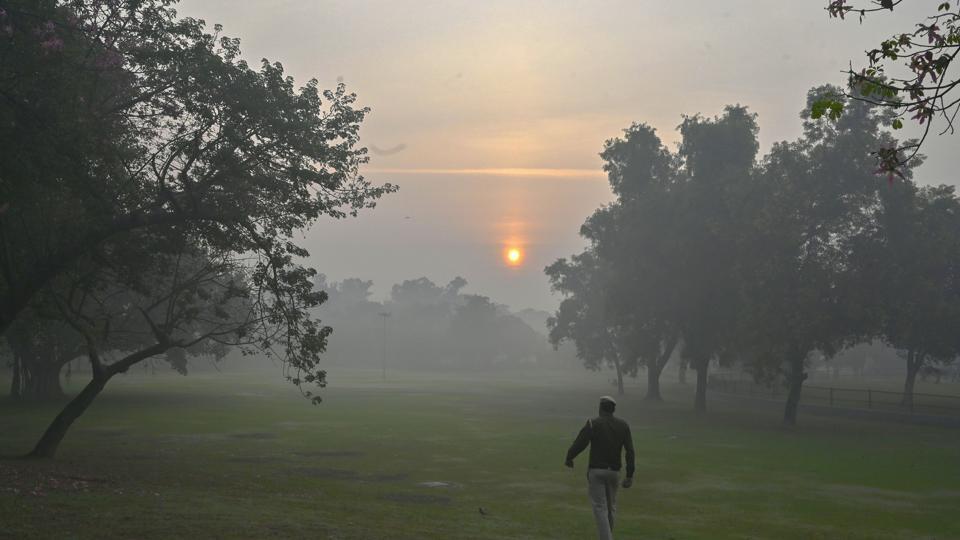
As Delhi grappled with its latest pollution crisis on Tuesday morning and failed to shed the after-effects of the unchecked use of firecrackers on Diwali day, a fresh problem impaired the Capital’s pollution response — 24 of the city’s 35 air quality monitors run by the Delhi Pollution Control Committee (DPCC) went dark and stopped throwing up data. As a result, Delhi’s 24-hour average air quality index (AQI) trended much lower than it actually was throughout the day, catching residents and experts off-guard.
DPCC attributed the glitch to a server error, adding that the problem did not impair data collection. The glitch, which began at 7am, was rectified by 3pm and the Central Pollution Control Board’s (CPCB) 4pm AQI bulletin took into account data from all active stations throughout a 24-hour period, said the agency.
Still, experts said the blackout underlined the importance of accurately measuring pollution levels, especially when the city was neck-deep in yet another air emergency two days after Diwali.
According to the CPCB’s official Sameer app, Delhi’s average pollution levels hovered between 360 and 370 throughout the day. For instance, the reading at 9am on Tuesday was 362 (very poor), inaccurately giving off the impression that the air improved from 403 at 10pm on Friday.
The readings between 7am and 3pm did not take into account any of Delhi’s 13 pollution hot spots, including Anand Vihar, Mundka, Wazirpur, Jahangirpuri and Okhla.
So, Delhi’s average AQI at 9am factored in data from just nine stations — Shadipur (382), DTU (303), ITO (421), North Campus (391), CRRI Mathura Road (329), IGI Airport (425), Dilshad Garden (227), Burari Crossing (353) and New Moti Bagh (423).
Experts said this meant the average AQI was appearing to be better than what it actually was.
“This example shows how missing just a few key stations, the average AQI can appear much cleaner. Therefore it is not only important to have more stations to have an accurate representation of the city, but to also cover many geographical areas, be it industrial zones, commercial places, residential areas and green spaces,” said Sunil Dahiya, analyst, Centre for Research on Energy and Clean Air.
CPCB did not respond to HT’s queries on the data blackout. A Commission for Air Quality Management official said the missing data was due to a technical glitch, which was promptly rectified.
CPCB calculates sub-indices for eight individual pollutants — PM10, PM2. 5, NO2, SO2, CO, O3, NH3, and Pb — at separate locations using its 24-hour average concentration value (it drops to eight hours in case of CO and O3). The worst sub-index is considered the AQI for that location. The overall AQI is calculated only if data is available for a minimum of 16 hours and at least three pollutants, of which one should necessarily be either PM2.5 or PM10. Else, it classifies it as “insufficient data” when it comes to calculating AQI.