
 E-Paper



DDA should make way for private developers to provide housing, say experts
The main land-owning agency in the national Capital has failed to meet the affordable housing needs of the city, which is why it should end its monopoly in the housing sector


New Delhi: In 2014, the Delhi Development Authority (DDA), the main land-owning agency in the national Capital, received over a million applications for its housing scheme offering 25,034 flats.
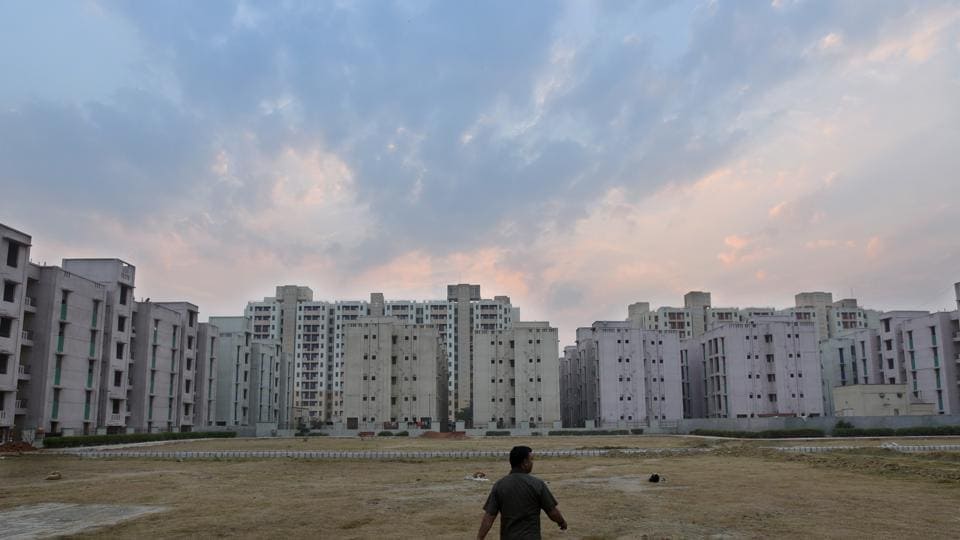
It was the last time the DDA, which since 1967 has been the sole developer in Delhi to provide affordable housing, got such a huge response to its flagship housing scheme.
The excitement was short-lived, as more than 50% of the flats were returned by allottees citing the small size of the flats, poor location, lack of connectivity and so on, marking the beginning of a decline in demand for DDA housing.
Urban development and real estate experts say that the land-owning agency has failed to meet the housing needs of the city and should now allow private players to provide affordable housing.
Ramesh Menon, director of Delhi Consortiums (a Delhi-based consultancy firm) and independent policy analyst of Delhi’s master plans, said, “The supply of DDA flats has not kept pace with the demand for housing in the city. The DDA has been able to provide around 400,000 dwelling units since it started selling flats in the late 60s or early 70s, but the demand has been much higher due to fast-paced urbanisation. This huge demand-supply gap has led to mushrooming of unauthorised colonies etc.”
DDA housing: The current situation
The DDA started housing activity in 1967. Since then, it has come out with 52 housing schemes and provided “more than a million houses to people of Delhi”, as per the information available on its official website.
DDA officials say that apart from constructing housing units, the land-owning agency has provided residential plots and land for group housing societies.
While there was a huge demand for the housing stock developed by DDA till 2014, it has now dropped significantly and the land-owning agency has been struggling to dispose of the flats, especially in Narela.
Since 2014, the land-owning agency has come out with four housing schemes to sell off the flats returned by allottees. Last year, the DDA came out with a special housing scheme offering 18, 335 flats (old inventory) at discounted rates. “But the response has been poor,” said a senior DDA official.
The main land-owning agency, which also regulates the planning and development control norms in the city, today has a cash deficit of ₹9,615 crore mainly due to “unsold housing inventory worth ₹18,000 crore” as per the central government.
In a written response to a question in Rajya Sabha recently, minister of state for housing and urban affairs Kaushal Kishore said, “Delhi Development Authority has a cash deficit of ₹ 9,615 crore as on 31.03.2022 which has been financed through borrowings from Nazul Account. The deficit started from the Financial Year 2016-17, and it is mainly due to unsold housing inventory worth ₹ 18,000 crore approximately.”
The biggest cause of concern is the unsold housing inventory in Narela, one of the three sub-cities planned by the DDA, where a majority of newly constructed flats have been returned by allottees of successive housing schemes mainly due to poor transport connectivity.
About 79% of the total flats returned by allottees of the past four housing schemes are in north Delhi’s Narela. In a written reply to a question in the Rajya Sabha last year, Kishore said that the land-owning agency has put on sale 56,932 flats since 2014.
“…about 15,500 flats have been returned/surrendered and have remained unsold so far. 79% of total surrendered (returned) flats are located in newly developed Narela sub-city,” the junior minister had informed the Upper house of the Parliament.
Narela, where the DDA has planned large-scale housing projects, lacks essential services like transport and water supply.
The junior minister had informed the Rajya Sabha last year that the flats were returned as they are located in remote locations; the cost of the flats is high and size small; and the area has no Metro connectivity.
Change in DDA’s role and the way forward
With the Centre proposing major amendments to the Delhi Development Act of 1957, the role of the DDA is likely to change from that of a developer to a facilitator.
Retired Indian Administrative Services (IAS) officer and former DDA vice-chairman, Balvinder Kumar said, “This is a step in the right direction; it should have happened long back. The DDA should focus on broader aspects such as policy formulation and planning and infrastructure development. Private players should be allowed to provide affordable housing in the city.”
Sabyasachi Das, former planning commissioner in-charge at DDA, said that it was not DDA’s mandate to provide housing. “It was a planning body; the mandate initially was not to develop housing. DDA started housing activities in 1967. DDA has tried to meet the housing requirement, but it has not kept pace with the demand for affordable housing. This has led to unplanned development in the form of unauthorised colonies.”
Real estate developers say that the monopoly of DDA in the housing sector in Delhi and investor-friendly policies of Uttar Pradesh and Haryana are reasons for large-scale housing projects in Noida and Gurugram.
They say that with the introduction of the land pooling policy, which has been hanging fire for nearly a decade, will make Delhi a favoured location for housing and real estate investment. Kumar and Das stressed on the need for swift implementation of a land pooling policy that is aimed at providing 1.7 million dwelling units in urban extension areas of the city.
Gaurav Jain, vice-president of (North) National Real Estate Development Council (NAREDCO), said that land pooling is a good opportunity. “Noida and Gurugram continue to be their favoured destination for housing, even though people want to live in Delhi. We have not added any decent housing stock, especially for the middle class or upper middle class in Delhi. Land pooling is a good opportunity, but we have to let go of this policy paralysis and start its implementation.”

Stay updated with all top Cities including, Bengaluru, Delhi, Mumbai and more across India. Stay informed on the latest happenings in World News along with Delhi Election 2025 and Delhi Election Result 2025 Live, New Delhi Election Result Live, Kalkaji Election Result Live at Hindustan Times.


