
 E-Paper



Delhi agency seeks design changes to Common Central Secretariat buildings
DUAC flagged concerns over the spatial configuration of the project, particularly the treatment of open areas within the complex proposed on plots 23-B and 23-C

 Prefer HTon Google


New Delhi
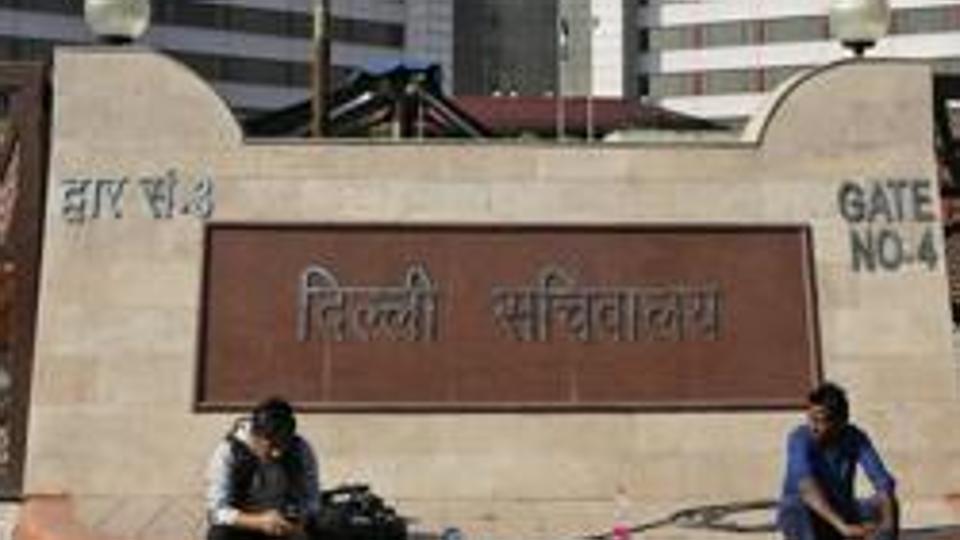
The Delhi Urban Art Commission (DUAC) has sought design modifications to building plan proposals pertaining to the Common Central Secretariat (CCS) buildings 8 and 9 on Maulana Azad Road, after scrutinising the submission at the formal stage, officials aware of the matter said.
According to the minutes of the DUAC meeting, the plan envisages two office blocks with one basement, ground floor and seven upper floors, with a total building height of 36.9 metres. Following a detailed presentation, the DUAC flagged concerns over the spatial configuration of the project, particularly the treatment of open areas within the complex proposed on plots 23-B and 23-C.
“Considering the scale of office projects and its context, the commission pointed out that many small courtyards within the complex lead to the loss of large usable public spaces and long-term maintenance problems,” the minutes stated.
DUAC suggested alternative design approaches to retain openness while ensuring adequate daylight and ventilation. One of the options suggested involves reducing the number of courtyards from four to two in each block. The commission said the width of certain wings on both sides of corridors could be increased to maintain the overall floor space. Such a change, it said, would allow better light penetration and ventilation at lower levels and create scope for larger landscaped public spaces.
The CPWD could not be reached out for a comment.
The Common Central Secretariat project is a key component of the larger Central Vista redevelopment, which aims to consolidate various Union government ministries and departments into a unified administrative precinct. Once complete, the Central Secretariat complex is expected to house thousands of government employees, streamline inter-ministerial coordination and free up other government-owned buildings across the capital for alternative uses.
The commission said that priority parking could continue to be provided at the ground level, with remaining parking accommodated in the basement, which could potentially be expanded to an additional level. As an alternative, the commission proposed a significant redesign of the lower floors.
It recommended converting the horizontal arms on the lower two floors on either side of the central corridor into voids, creating expansive double-height colonnaded spaces.
According to the observations, “This would improve natural lighting and ventilation while enhancing the openness and spatial quality of the lower floors. The colonnades would accentuate the character and formality of the building,” the commission said, adding that such a configuration would also help keep the main floors functionally efficient and visually open.
To offset any potential loss of floor space resulting from a reduced footprint at lower levels, the commission advised that terraces on the upper floors be converted into usable spaces. It also raised concerns over the overall form of the building, stating that offsets on both sides of the projecting blocks reduce the formal character of the structure. The commission recommended removing unnecessary offsets and maintaining a simpler rectangular profile to preserve façade symmetry and formality.
With regard to parking provisions, the commission recommended providing two levels of basement parking to cater to existing and future requirements.
The DUAC emphasised the integration of public art and sustainability features within the complex. It directed that public art of a suitable scale, size and material be installed to impart character and identity to the project, in line with the Criteria for Project Assessment and Approval (CPAA).
In terms of sustainability, the commission suggested installing solar panels on a well-designed structural frame integrated with the building design, subject to feasibility under building bylaws. Such an arrangement, it said, would facilitate maintenance, reduce heat load through shading and improve aesthetics.
“Overall, the proposal received at the formal stage needs design improvement,” the DUAC said, asking the architect to adhere to the observations and submit a point-by-point response, incorporating the suggestions.


Stay updated with all top Cities including, Bengaluru, Delhi, Mumbai and more across India. Stay informed on the latest happenings in World News along with Delhi Election 2025 and Delhi Election Result 2025 Live, New Delhi Election Result Live, Kalkaji Election Result Live at Hindustan Times.


