
 E-Paper



Delhi aims to overhaul 400km of roads this winter
Officials aware of the matter said that both state funds and allocations from the Central Road Fund (CRF) will be utilised for the works

 Prefer HTon Google


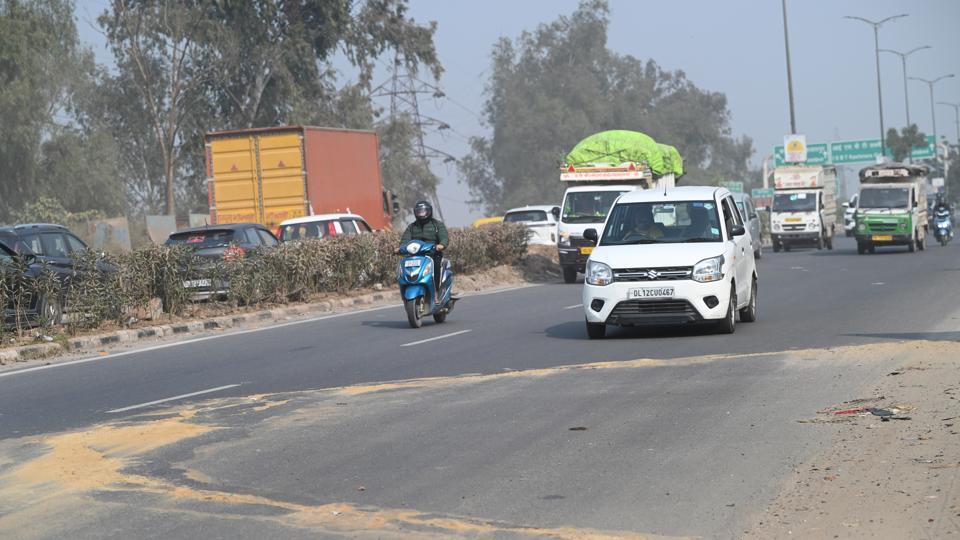
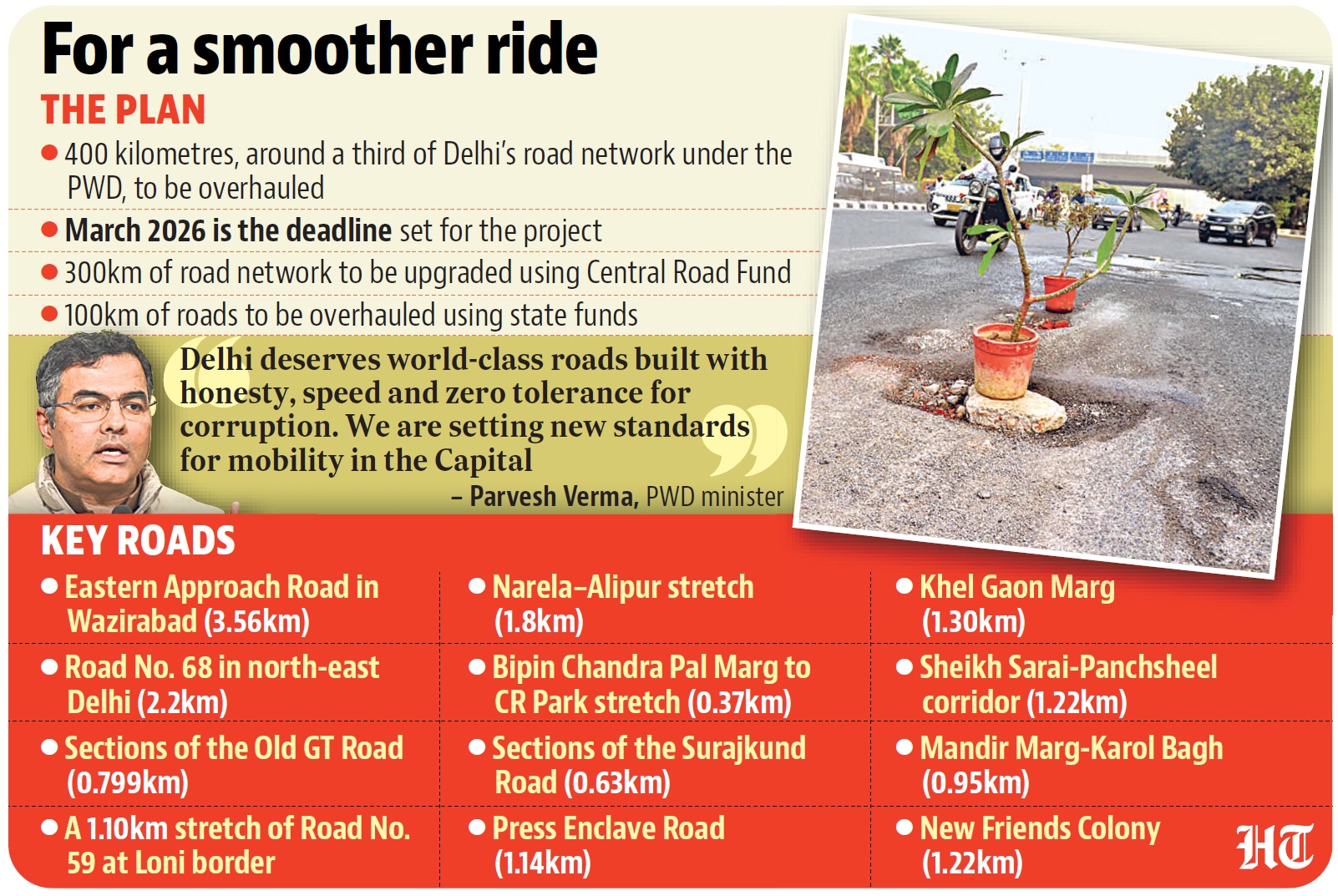
New Delhi: The Delhi government is aiming to redevelop around 400 kilometres of arterial roads, around a third of Delhi’s road network, by March 2026, amid challenges of dropping temperature, fund utilisation deadline and dust pollution.
Officials aware of the matter said that both state funds and allocations from the Central Road Fund (CRF) will be utilised for the works.
“Delhi deserves world-class roads built with honesty, speed and zero tolerance for corruption. We are setting new standards for mobility in the Capital. I have asked officials to ensure that the work is done with minimum traffic disruption and ensure pollution control measures,” Public Works Department (PWD) minister Parvesh Verma said.
While road repairs are allowed under Stage-3 of the Graded Response Action Plan (Grap), the work will be suspended under Stage-4, according to norms.
PWD officials said that once the overhaul is complete, the upgraded corridors will reduce travel times, improve freight mobility and ease maintenance pressure for several years.
Key roads on agenda
The PWD, which maintains around 1,400 kilometres of the Capital’s arterial road network, has been told to rapidly scale up work, even through the winter months, to ensure timelines are met despite technical constraints.
The PWD aims to utilise CRF allocations before they lapse. The redevelopment spans 402km, including 300.917km of stretches financed under the CRF and another 100.944 km under state-funded works.
For overhauls under the CRF, the PWD will focus on some of Delhi’s busiest circulation corridors that facilitate interstate connectivity and heavy commercial movement daily. Among them are the Eastern Approach Road in Wazirabad (3.56 km), Road No. 68 in north-east Delhi (2.2km), sections of the Old GT Road (0.799km), a 1.10-km stretch of Road No. 59 at the Loni border and the Narela–Alipur stretch (1.8 km).
Officials said tenders for several CRF packages have already been floated, with execution expected to accelerate in February and March 2026.
The government has also approved improvements across dense residential belts and institutional zones where damaged roads contribute to delays in daily commutes and add to pollution. These include the Bipin Chandra Pal Marg to CR Park stretch (0.37km), sections of the Surajkund Road (0.63km), Press Enclave Road (1.14km), Khel Gaon Marg (1.30km), and Sheikh Sarai-Panchsheel corridor (1.22km).
Upgrades are also planned in central Delhi, at the Mandir Marg-Karol Bagh (0.95 km), and in southeast Delhi, at New Friends Colony (1.05km).
The plan
Minister Verma said that while this is a dual-funding model, the quality benchmark will remain the same. He instructed PWD to ensure that roads are accompanied by better drainage, pedestrian paths and long-lasting surface strength.
While the target extends to 2026, officials said that a significant portion of work, particularly CRF-funded stretches, needs to begin within days due to compliance deadlines. If funds allocated for this financial year remain unutilised beyond March, the government risks losing crucial allocations.
Adding to the complexity is the winter temperature drop. Road engineering standards require warm conditions for bitumen laying, and night temperatures in December and January fall below 15°C, making material bonding unreliable.
Verma has instructed works to be carried out in the daytime for at least two months, to complete resurfacing within the time frame and ensuring that the required temperature criteria is met. Acknowledging that daytime work may worsen congestion in already choked localities, the minister directed strict coordination with Delhi Traffic Police.
He said that only one lane will be shut at a time, and resurfacing must be completed within 24 hours of scraping the old layer to reduce dust pollution, which is one of the major contributors to pollution in the Capital.
Monitoring teams have been deployed across zones to track work through daily reporting, while PWD has also made compliance with upgraded specifications, including better stormwater drainage, mandatory.
Officials said the focus on drainage is crucial, given that poor water dispersal leads to potholes and structural failure of road overlays in just one monsoon cycle. Verma said the mission’s core objective is to restore public trust in civic infrastructure.


Stay updated with all top Cities including, Bengaluru, Delhi, Mumbai and more across India. Stay informed on the latest happenings in World News along with Delhi Election 2025 and Delhi Election Result 2025 Live, New Delhi Election Result Live, Kalkaji Election Result Live at Hindustan Times.


