E-Paper



Delhi air severe, likely ban on public construction
However, the exempted category of construction activities will continue to include C&D activities related to projects of national importance, defense, hospitals, airport, railways, metro and railways related projects.

 Prefer HTon Google


With the imposition of category-4 restrictions under the Graded Response Action Plan by the Commission for Air Quality Management (CAQM) on Thursday, the ambit of ‘construction activity ban’ in Delhi has increased from only private civil constructions and now construction related to major public transportation infrastructure projects including flyovers, roads and bridges will be halted. The order issued by the CAQM on Thursday mandates a ban on “construction and demolition activities in linear public projects such as highways, roads, flyovers, over-bridges, power transmission lines and pipelines.
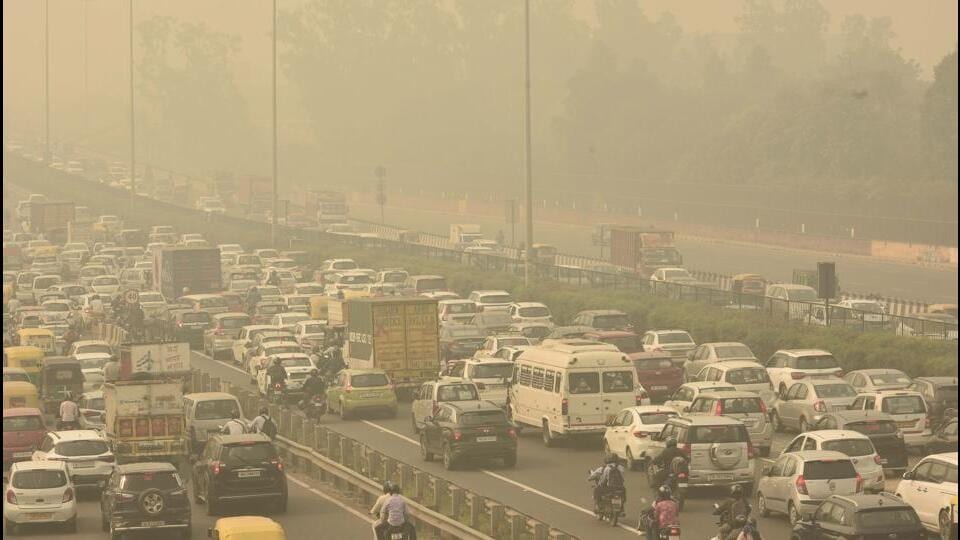
However, the exempted category of construction activities will continue to include C&D activities related to projects of national importance, defense, hospitals, airport, railways, metro and railways related projects. Project managers from the road owning agencies say that depending on the length of the ban period, the timelines of a large number of projects will have to be reworked.
The Public Works Department is currently undertaking construction of Ashram extension flyover connecting DND flyway with the Ashram intersection and the last stated deadline for the project was November 2022. A PWD official said that the deadline may have to be extended depending on how long the construction period lasts. PWD is also in the final stage of construction work of two half-underpasses on Outer Ring Road near Wazirabad to make the Wazirabad to Mukarba Chowk stretch signal free. The project has missed several deadlines over the last year and it was last scheduled to be opened for traffic in November.
Meanwhile, a prolonged ban may also force a change in the timelines for a large number of PWD projects that have been initiated over the last two months, a PWD official said. On 10th October, the PWD had initiated work on a 6-lane 1.5-km flyover being built between Anand Vihar and the Apsara Border in East Delhi with a deadline of 15 months. Similarly, the foundation stone of three underpasses near Mukarba Chowk with one year deadline; the project for corridor development on the West Delhi section of Ring Road by doubling and extension of existing one-way flyovers along the stretch between Punjabi Bagh and Raja Garden with 18 month deadline and a three lane 550meters long flyover at Sarai Kale Khan for traffic moving from ITO towards Ashram which was initiated on 6th September.
Both PWD and MCD officials from engineering departments stated that they have not yet received the construction ban order. “We have not yet received the order but the length of ban will impact completion of many parking projects in places like Chandni Chowk multi-level parking, Qutub road, Shiva market Pitampura, Punjabi Bagh and Greater Kailash-1,” an MCD official said.
The revised GRAP has made further sub-division in the construction and demolition activities instead of adopting a ‘blanket ban’ approach. The revamped Grap states that under the Severe pollution category when the air quality index varies between 401-450 there will be a ban on construction activities but “emergent and essential projects” like railways, metros, airports etc; non-polluting and non-dust generating activities such as plumbing works, electrical works and carpentry related works will be exempted. The ban on activities in public projects such as highways, roads, flyovers, over-bridges and pipelines will now come into force only under Severe+ category when AQI cross 450 mark. Delhi faced such Severe+ AQI category conditions for four days during 2021.
A senior PWD official said that the extended construction bans have become an annual phenomenon in the city and the contractors overseeing several of the projects cites these bans for repeated delays. “Long construction bans in the past have led to migration of laborers and contractors too went to arbitration. The rhythm of the project gets frequently disrupted and idle labor migrates during these bans. Once a construction ban is lifted, the work resumption at normal level takes 1-1.5 months to bring back the hired heavy machinery and labour force. Contractors have repeatedly sought extensions and then went into arbitration citing the government’s construction ban,” the official added.
Construction ban measures are part of GRAP, which was formulated in 2016 and notified in 2017. The construction bans have since become an annual phenomenon in the winter season. As per the Supreme Court-approved graded response action plan (Grap), construction activities need to be stopped if ambient PM2.5 or PM10 concentration values of 300µg/m3 or 500 µg/m3 respectively persist for 48 hours or more. Higher courts have also directed such construction bans in previous years. Delhi has witnessed a 38-day long construction ban period between 13 November and 20 December 2021 last year. An year prior to that a ban on construction activities in city was imposed on November 4, 2019 and finally lifted completely on 14 February 2020.
Experts have been debating over the utility of banning of transportation infrastructure projects in comparison to the relief in terms of vehicular emissions that these projects can bring on timely completion. A 2018 study conducted by The Energy and Resources Institute (Teri), a Delhi-based research institute, showed that vehicle emissions account for 24%-28% of the city’s pollution. Dust, on the other hand, contributed only 18%-38% to the city’s overall pollution.
S Velmurugan, chief scientist, Central Road Research Institute (CRRI) said that the construction bans in Delhi are now annual phenomenon and the road owning agencies will have to incorporate these ban periods at planning stage. “These bans will happen in November-December so agencies should plan accordingly. In case of Ashram flyover for instance the span laying could have been carried out from both ends. On the lines of national highway projects, agencies can award these projects in packages with work undertaken simultaneously,” he said.
Velmurugan added that the pollution levels are too high for an exemption but metro and flyovers must be treated at par. “in many cases pillars and flyovers are being built at same roads. Differentiating between the two makes no sense,” he added.