
 E-Paper



Delhi govt plans two new biomedical waste plants
Delhi's environment minister has ordered the DPCC to establish two new biomedical waste treatment plants to address inadequate current capacity and health risks.


Environment minister Manjinder Singh Sirsa on Friday directed the Delhi Pollution Control Committee (DPCC) to begin work on two new Biomedical Waste (BMW) treatment plants in the city, saying that the existing facilities are grossly inadequate to meet the Capital’s needs.
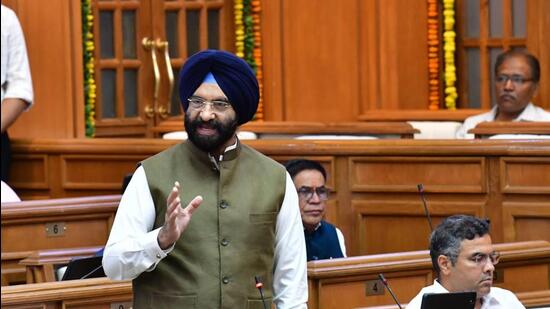
Sirsa said that Delhi currently operates only two half-acre plants that together handle 40 tonnes of biomedical waste daily from nearly 10,000 healthcare establishments.
“Biomedical-waste piles pose a great threat to public health and air quality if left untreated. Our current two units cannot be expected to shoulder the entire city’s 40mt daily load,” the minister said after a series of review meetings with senior officials.
Delhi’s BMW processing capacity has lagged behind demand for years, officials said. The capital, with a population of over 30 million, has only two plants, while Haryana, with a comparable population of 31.6 million, operates 11 such facilities.
“We have inherited significant deficits but this government is committed to microscopic, multi-tiered interventions. The forthcoming plants will not only raise throughput but also introduce modern, environment-friendly technology fully aligned with national emission norms,” Sirsa said.
According to officials, DPCC has been tasked with carrying out a feasibility study covering land availability, transport logistics, technology evaluation and capacity planning. The environment minister asked the agency to fast-track the exercise and identify suitable sites at the earliest.
In a push for accountability, Sirsa has also asked the health department and DPCC to submit daily performance briefs on collection, transport and processing of biomedical waste across the city. “Consistent, data-driven oversight is vital. Daily dashboards will keep every stakeholder accountable and enable real-time course corrections,” he said.
Apart from capacity augmentation, the minister also turned his attention to long-standing irregularities in BMW service charges. At present, non-bedded clinics such as small private practices and diagnostic labs pay the same collection fees as establishments with up to seven beds. Calling the arrangement unfair, Sirsa directed the Directorate General of Health Services (DGHS) to draft a proposal rationalising these charges.
“Clinics generating minimal waste should not subsidise larger establishments. We will correct this without delay,” he said, adding that he would apprise health minister Pankaj Kumar Singh on the issue.
The Delhi government also plans to intensify awareness and compliance drives among hospitals and clinics. DPCC will roll out workshops and training sessions to encourage better segregation, on-site handling and reduction strategies. Twenty hospitals recently recognised for exemplary biomedical-waste practices will be asked to mentor others, Sirsa added.
He said that the fresh initiatives mark a step towards “bridging legacy gaps” and steering the Capital towards a cleaner, healthier future.
“With upgraded infrastructure, rationalised costs and continuous knowledge-sharing, we are moving swiftly to plug this capacity gap with innovative, scalable solutions,” he added.
Stay updated with all top Cities including, Bengaluru, Delhi, Mumbai and more across India. Stay informed on the latest happenings in World News along with Delhi Election 2025 and Delhi Election Result 2025 Live, New Delhi Election Result Live, Kalkaji Election Result Live at Hindustan Times.


