
 E-Paper



Delhi Metro at 20: We, the Metrowale
Secret spots, open spaces, the manager of a CP cake shop, a homemaker from Laxmi Nagar, a poet, a literary critic — in the final part of this series, Delhiwale looks at the places and faces that define the Metro


Secret spots, open spaces, the manager of a CP cake shop, a homemaker from Laxmi Nagar, a poet, a literary critic — in the final part of this series, Delhiwale looks at the places and faces that define the Metro.
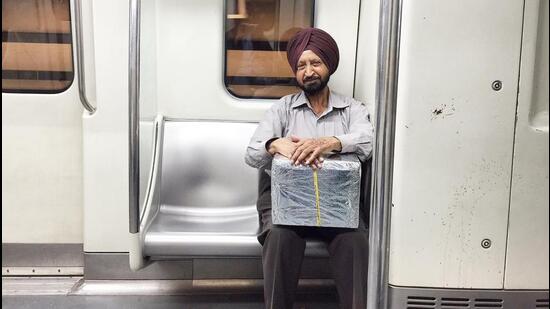
The cool septuagenarian
At 78, the turbaned gentleman must be among very few Delhiites of his age to travel daily on the Metro.
He has a day job to do.
The venerable Charanjeet Singh is the face of Wenger’s, the colonial-era cake shop in colonial-era Connaught Place. As the manager, he is often spotted standing behind the main counter, chatting to customers and booking orders for special cakes. Plus, he often gives chocolates to regulars for free. His calm presence in the crowded shop is magical. One wonders how he always looks so relaxed, for his commute is long enough to exhaust even a man of 20.
Charanjeet Singh lives in Vikas Puri, and boards the Blue Line from Janakpuri West. It takes him 40 minutes to reach his stop. Having retired 12 years ago, he says he continues to work out of choice. What if there were no Delhi Metro? Could he have managed the demanding commute in a bus? The manager mulls over a few moments, and says — “Yes… because my heart lies in the cake shop.”
Until the pandemic, Charanjeet Singh would board the homebound train from Mandi House, and not from Rajiv Chowk, which is much closer to his work. “So many people would get in at Rajiv Chowk that it would be impossible to get a seat,” he says. “So, I would first take the train to Mandi House, and from there I would get into the reverse train.” These days the crowd at Rajiv Chowk never gets too dense, he says. Besides, many commuters offer him their seat “because of my age.”
Masakali on track
A young woman in Old Delhi, or Delhi 6, steps out of her house, with a large stole or dupatta hiding the dress beneath.
She walks along a congested street, or perhaps she sits in a rickshaw. She reaches the underground station at Chawri Bazar, boards the Yellow Line Metro, and some time later, the same woman emerges from the escalators, into the openness of New Delhi, but without the stole.
A somewhat similar scene appeared in the 2009 movie Delhi-6, in the song Masakali, as if to suggest a degree of freedom that can be experienced by a woman outside the limits of Old Delhi. Is it merely a Metro legend, or does it actually happen?
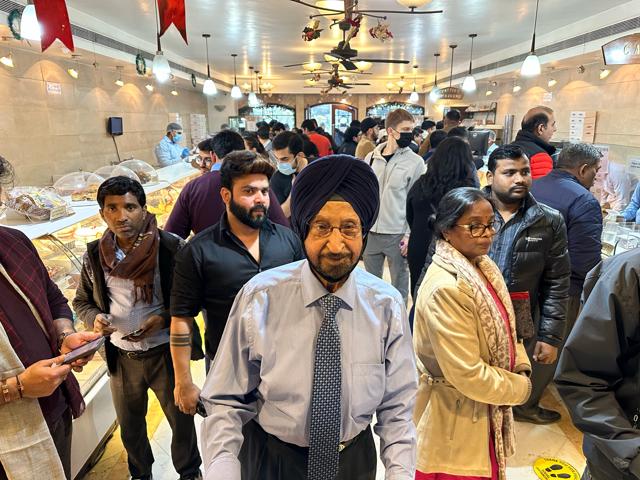
One recent afternoon, this chronicler spent an hour at one of the entrances of the Chawri Bazar station, the area’s first underground subway destination. Many women strode down the winding staircase, most of them in outfits that would be considered modern everywhere. A young woman walked out from the station — in jeans, and an extra-large stole. She confirmed that the legend was true, but politely declined to be snapped.
But the denim-clad Yumna Alvi agreed to openly record this truth (pictured in the same station).
A homemaker in Laxmi Nagar, separated from Old Delhi by a river, she spent all her years at her parents’ home near Jama Masjid until she got marriage a few years ago.
“Many of us Purani Dilli girls cover ourselves with a chaadar on our way to the Metro.” On reaching the station, she says the girls remove the covering and cram it into their handbag. It is re-worn on the journey back, while getting out of the same station. “This is routine,” Yumna says, adding that her college-going cousin Alika, on exiting her Walled City home, always wears a “western dress” but with a burqa over it, which she takes off while entering the station.
“The Old Delhi girls — not all certainly — do this because of the traditions of the place,” Yumna says. “Women who live there are expected to dress very conservatively. If I happen to be out in jeans and top, but minus the chaadar or shawl, I can sense many eyes on me,” she explains. “That gaze is not always vulgar… it is just that people are not used to seeing local women in other kinds of clothes, they become curious.”
And now Yumna reveals what happens once the woman has removed the covering and enters the Metro coach. “We become part of the New Delhi crowd.”
Next stop is… poetry
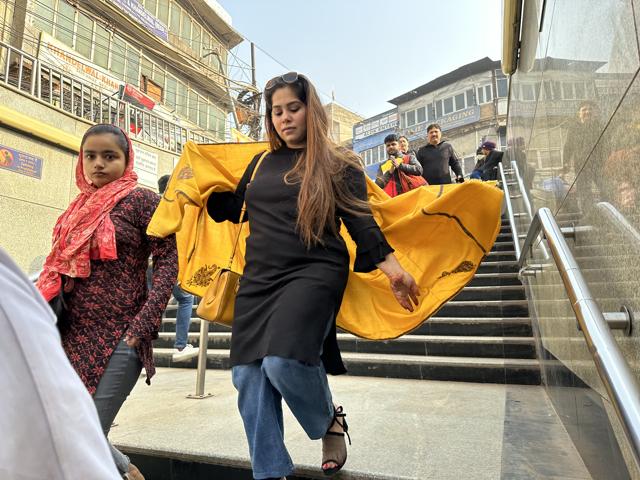
The many lines of the Delhi Metro have stitched our vast, unwieldy, smoggy city into a multicoloured embroidery. It has also rummaged its way into the fabric of our creative lives. The rail figures in films, music videos, novels, blogs, Facebook posts, and Instagram stories. Here’s an artwork by poet-commuter Jonaki Ray, who composed a new poem exclusively for us to mark the network’s 20th. Her first poetry collection, Firefly Memories, is releasing early next year.
The windows of the Yellow Line snapshot history — the temples at Chatarpur, the soaring tower of Qutub that nods later to the new rulers — the MNC buildings, unloading armies of backpacks and blue ID tags.
Taking a turn, at Rajiv Chowk, grey-uniformed children giggle, whiskering and filtering each other’s faces, while mothers balance against straps, their toddlers’ eyes widening in a rhythm matching the city striping on the hide-and-seeking platforms.
The couples defying gravity and knocking against each other like those roses in the pre-90s days are guarded by the women opening their tiffins. They munch their parantha-sabzis, timing their swallows to the stops until their offices.
At the borders — Rithala, Anand Vihar, Badarpur, Seelampur, HUDA, Najafgarh — women board the coaches holding hands, the men clinging to their dusty, rope-tightened bundles, the cracks in their heels testifying to their long journeys past and ahead.
The river trickles, gushes, narrows, disappears alongside like the hero in old Bollywood movies serenading the metro lines while workers continue to drill, laying further tracks and coding the city into new colours.
Two hundred years ago, the poet Ghalib tried to console himself that there are cities other than Dilli, only to return to it, as if predicting all these lives passing from station to station, intersecting for a moment, and returning to this city that they call their home.
Trainspotting in Aastha Kunj
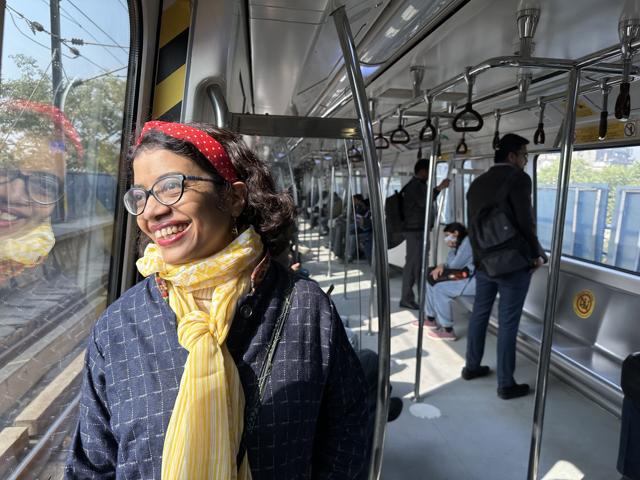
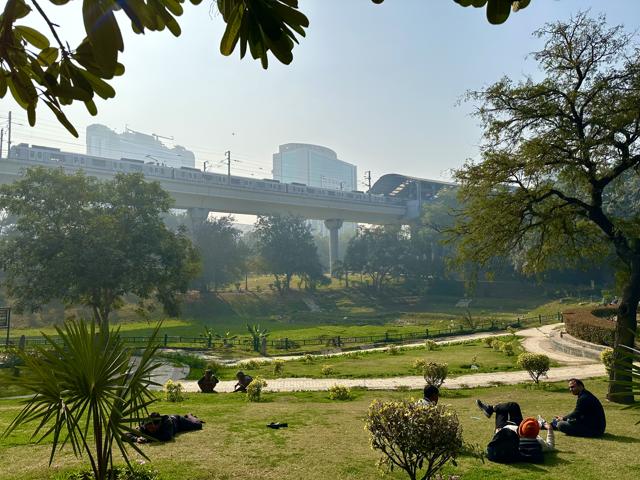
Suddenly the silver-grey coaches of the Violet Line glint into view, far in the horizon (see photo). The train runs past a backdrop of high-rises. But the ground beneath the elevated tracks is a different universe — carpeted with grass, trees, flowers, and with people lolling on the slopes with their mobiles, soaking in the December sun.
This has to be the most ideal spot to watch the millennium-era majesty of Delhi and its Metro. Aastha Kunj Park is a brief walk from Nehru Place Metro station. A new train appears after every two-three minutes. The rail tracks, too, look magical. They resemble a line drawn to keep the business towers from trespassing into the bucolic garden. The scene is all awe. Do we really live in such a cool city?
And yet. Despite its 12 lines, 20 years, 286 stations, 391km of network and millions of users, the Delhi Metro hasn’t created a legion of committed enthusiasts who might feverishly post photo updates on Instagram about Metro routes, sights, coaches, stations, travellers.
Anyhow, tomorrow’s trainspotters might start by checking out these destinations.
The Old Court Compound in north Delhi’s Kashmere Gate is a must-visit. The Red Line goes past the surviving fragments of the Purani Dilli wall. When the Tis Hazari-bound train rushes in, it appears to be running right over these Mughal-era fortifications. The sight is incredible.
An exciting spot exists at Lajpat Rai Marg. As the train exits the Lajpat Nagar station, and before it slopes down into the tunnel that will take it to Jangpura, it smoothly runs alongside the sluggish road traffic. This fraction of a minute speaks of speed and efficiency, making our Delhi look world-class.
Climb to any rooftop or balcony in Mehrauli and watch the Metro train slide smoothly along the elevated tracks of Yellow Line, with the centuries-old Qutub Minar reduced to a beautiful prop in the panorama.
In central Delhi’s Valmiki Sadan, multi-storey flats have their balconies saddled with household laundry. Lanes are peopled with residents doing their usual gupshup. Everything is ordinary. Until you detect, in the gaps between the apartment blocks, Blue Line trains whooshing along the adjacent tracks. The sight is thrilling.
A suitable commuter
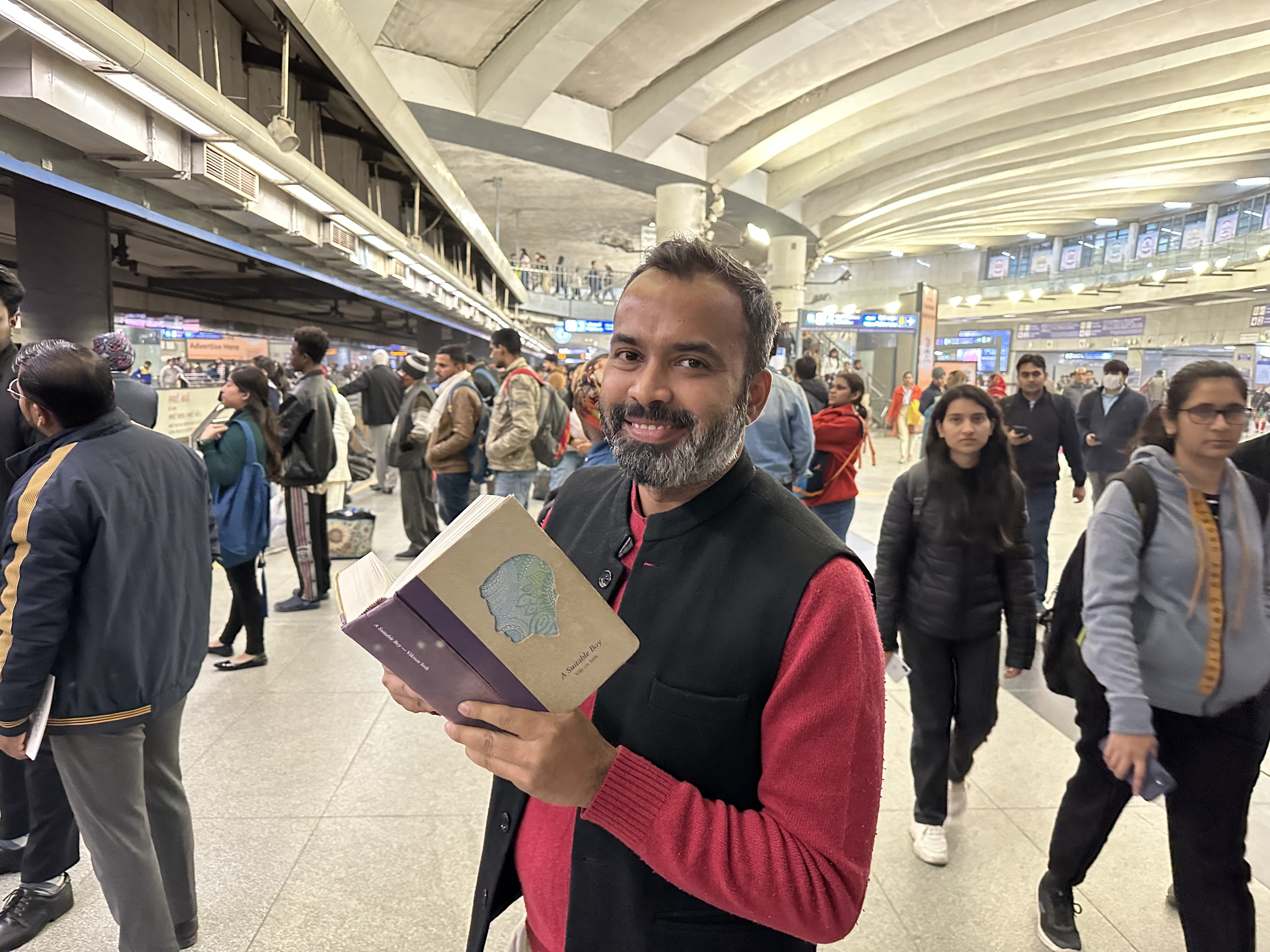
A climate change professional and a literary critic, Nikhil Kumar shares a memorable episode of his reading life on the Metro.
“It took me around a hundred Metro rides, or a month-and-a-half to and fro from home to office, to read Vikram Seth’s A Suitable Boy. All 1,474 pages of it.
I became accustomed to the rhythms of the Metro when the one of the few lines was from C-Sec (Central Secretariat) to Vishwavidyalaya. Initially, I would jostle to find a perch, and after a few stations when one did find it, shrink in the seat — cowering like a sparrow before a gale in a niche — and doze off on the neighbour’s shoulder. Soon, I started reading on the commute. My favourite area for this activity is the wavy vestibule at the end of the bogies. Sometimes it can be jolty, and if you are reading a tome such as A Suitable Boy, it can be hazardous to your wrist and also to the standing neighbour.
The first time I had picked the novel, I didn’t get past a couple of hundred pages. Perhaps I needed the Metro’s munificence to immerse myself in the 1950s of the three-sided love of a young girl, the resonances of mofussil as well as Nehru’s India, the academic, juridical and courtesan’s intrigue in Brahmpur and Calcutta, and the fertile words of Seth. In 2023, the book will turn 30, but the effortless charm, the easy romance, the witty rhymes, and the impersonal comfort of history it has, is ageless. I have returned to its world again for solace and love.
I hope when the genius is ready with A Suitable Girl, I get to read it in the Metro.”
Icing on the Chowk
All across the distance and spaces between us…” An instrumental rendition of Celine Dion’s love song from Titanic is playing from the speakers this evening in Central Park, underneath which lies the harried world of a super-busy Metro station.
In this circular garden, tucked within the heart of circular Connaught Place, a woman is standing by the pool, mesmerised by the cascading fountains (see photo). Some distance away, the sunken stage of the park’s amphitheatre is milling with a group of storytelling people sitting in a circle. The grassy slopes, the walking tracks, and the benches too are occupied.
This park is special — it is a metaphor of the transformation that the Delhi Metro has brought to Delhi.
In the Before Metro era, Central Park was a world of giant unwieldy trees and untrimmed grass. Benches would be littered with bird droppings. The park had a reputation. In the evening, you would rarely spot a woman here. The area would become a cruising joint for lonely homosexual men (this was the time when the Supreme Court still had to legalise gay sex). Other regulars included other society misfits.
A part of this secretive crowd would huddle half-hidden under the trees, some angling for hurried caresses. Others would hover elsewhere, including around the park’s toilet, which was in the centre. Today, it’s the site of the amphitheatre.
Early this century, the park was taken over by the Delhi Metro Rail Corporation. It was thoroughly dug up to make way for an underground rail terminus (hello Rajiv Chowk!). The redeveloped park was returned to the citizens in December, 2006. This reporter was there on the renovated park’s second evening. Its reticent life was gone, it was totally gentrified. Straight couples lounged fearlessly on grassy slopes, smiling multigenerational families posed for digicams (there were then no smartphones!). “It is like walking in a foreign country,” a woman had said, awed by the twinkling lights of the surrounding Connaught Place skyline. She was not exaggerating. The garden looked beautiful, and was spotlessly clean. Nearly 700 trees and 2,750 shrubs had been planted. The new Central Park was a fitting tribute to an ambitious metropolis.
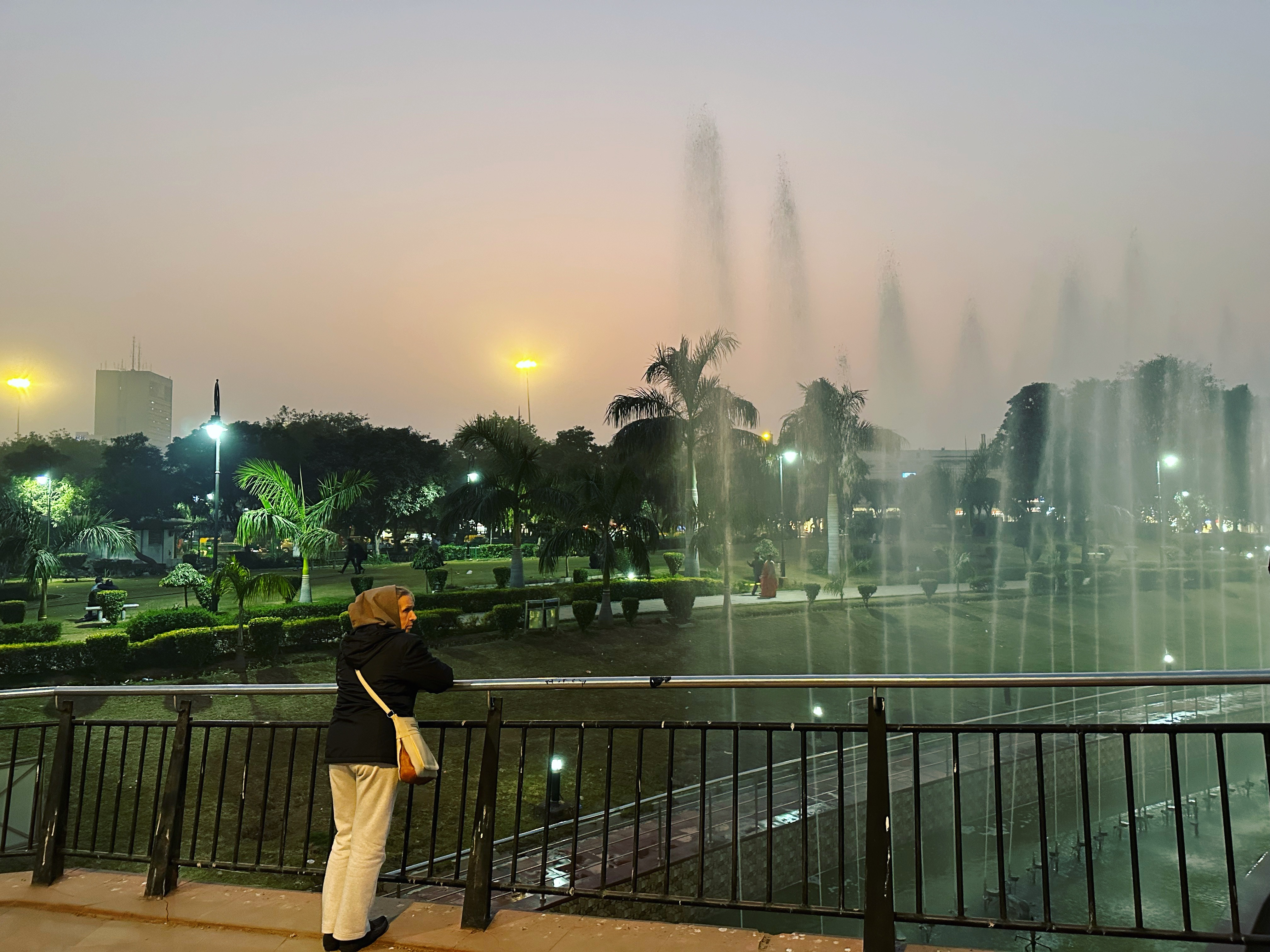
Years later, this evening, the park still looks beautiful, and betrays no hint of its earlier avatar. Its former regulars have been forgotten. The Titanic song concludes: “… You are safe in my heart and my heart will go on and on…” Next song starts: Maa tujhe salaam by AR Rahman. The eyes instinctively gaze up at the Tricolour wavering gently in the park’s cold breeze.

Stay updated with all top Cities including, Bengaluru, Delhi, Mumbai and more across India. Stay informed on the latest happenings in World News along with Delhi Election 2025 and Delhi Election Result 2025 Live, New Delhi Election Result Live, Kalkaji Election Result Live at Hindustan Times.


