E-Paper



Delhi Metro could run flexible coach system in Phase 4
The first Phase 4 Metro station — the Krishna Park Extension Metro station — will likely be operational in August, DMRC said

 Prefer HTon Google


The Delhi Metro Rail Corporation (DMRC) has said it might run a flexible system of coaches under Phase 4 in which coaches will be attached or detached based on factors such as time of day and expected passenger footfall — meaning more coaches will run during peak hours and fewer (only three or four) during off-peak hours.
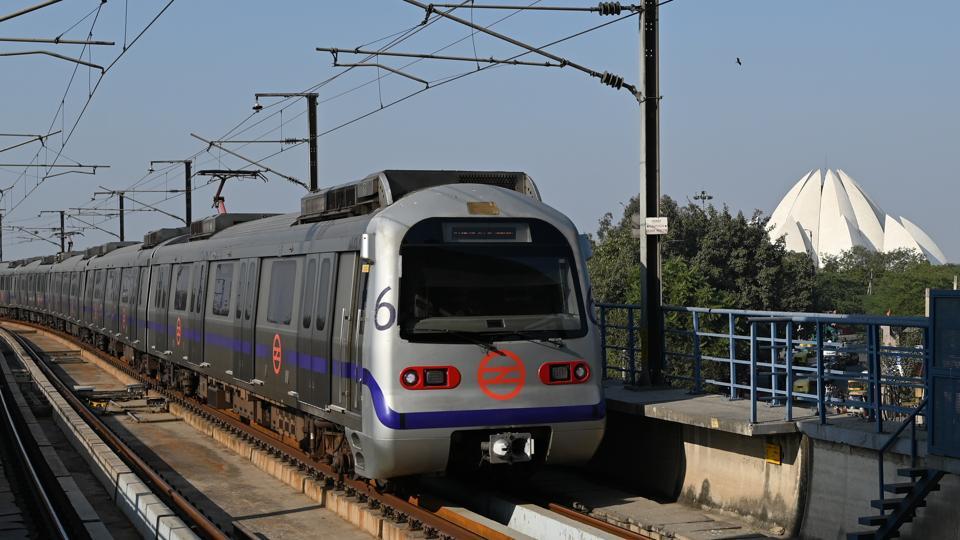
“Delhi Metro is exploring the possibility of running trains with different coach combinations depending on the traffic on that corridor in Phase 4. This will help in optimising the capacities according to requirements. A total of 312 coaches are being procured as part of Phase 4 requirements,” said Anuj Dayal, principal executive director of corporate communications at DMRC.
A DMRC official said the gap between two trains during peak hours could be as little as 90 seconds. “More coaches – to a maximum of six, can be used during peak hours. These can be detached and trains with as few as three coaches could be used if the footfall during a particular period is not too high,” said the official.
The under-construction 65.2km Phase 4 will comprise 45 stations in three corridors — Janakpuri West-RK Ashram Marg (28.92km), Majlis Park-Maujpur (12.55km), which are extensions of the Magenta and Pink lines, and Aerocity-Tughlakabad (23.62km), which is being built as a new Golden Line to connect the Violet Line and the Airport Line from the respective ends. Of these 45 stations, 27 are elevated and 18 are underground.
Last month, DMRC announced it had completed at least 50% work on all three corridors, saying that more than 80% of the work was completed on the Majlis Park-Maujpur corridor, which will be the first to open around mid-2025. The other two corridors – Janakpuri West-RK Ashram and the Aerocity-Tughlakabad (Golden Line), are expected to be completed by mid-2026, officials aware of the matter said. DMRC also said that the first Phase 4 Metro station — the Krishna Park Extension Metro station — will likely be operational in August.
In February, Alstom – the global rolling stock manufacturer, which designs Delhi Metro coaches, announced it would produce new Metropolis coaches for Phase 4 of the Delhi Metro expansion, with 52 train sets – each comprising six cars. These new trains will be able to run at a speed of up to 95 km/hr and will accelerate and decelerate more quickly. Anuj Dayal said that trains in Phase 4 will be compatible with driverless operations similar to the Pink and Magenta Lines under Phase 3.