
 E-Paper



Delhi Metro fares hiked after 8 years; longest journey now ₹64
DMRC said the hike in fares, with immediate effect, has been issued as the corporation is facing financial challenges


The Delhi Metro Rail Corporation (DMRC) on Monday announced a fare revision across its network, raising the passenger fares by up to ₹5 for the Airport Express Line and up to ₹4 across other lines. Prior to this, the last fare revision came in 2017.
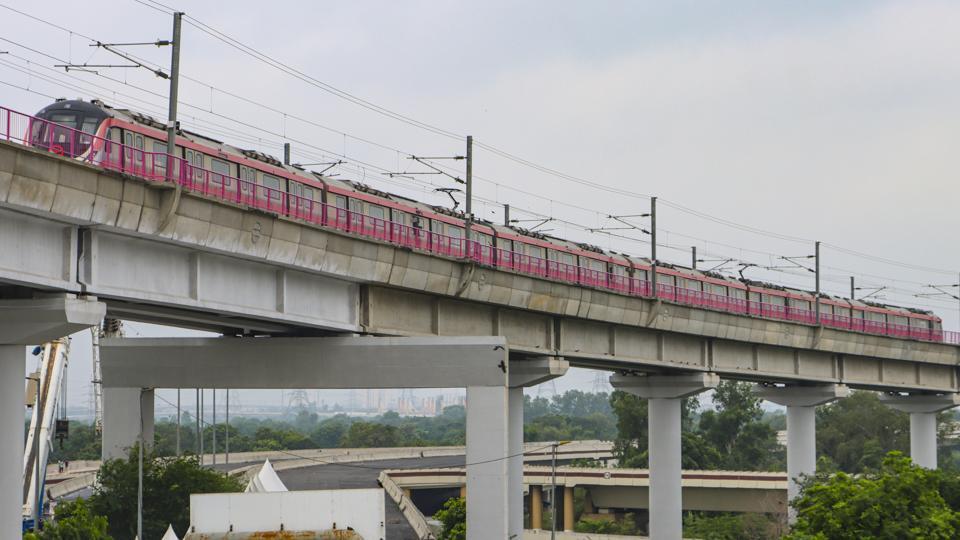
As per the new prices, a commute within 2km will cost ₹11 as compared to ₹10 earlier, while for the longest journey of over 32km, passengers will now pay ₹64, as against ₹60 earlier.
DMRC said the hike in fares, with immediate effect, has been issued as the corporation is facing financial challenges.
“The passenger fares of the Delhi Metro services have been revised with effect from today, i.e. August 25, after a gap of almost eight years. The increase has been minimal, ranging from ₹1 to ₹4 only depending on the distance of travel,” said Anuj Dayal, principal executive director, corporate communications at DMRC.
For the distance of 2-5km, commuters will now pay ₹21, as compared to the previous fare of ₹20; ₹32 as compared to earlier ₹30 for 5-12km and ₹43 as compared to the earlier ₹40 for a distance between 12-21km. To travel between 21-32km, they will now pay ₹54 as compared to ₹50 earlier.
DMRC said this was done as the 4th Fare Fixation Committee (FFC) had recommended a revision of the fares through an automatic fare revision formula. “This revision has now been done in line with the statutory provisions and recommendations of the 4th FFC, as per a decision taken by the Board of Directors of DMRC,” Dayal said.
“The losses incurred during the Covid period and the loan repayment commitments to JICA (Japan International Cooperation Agency) have posed a challenge to DMRC’s resources. The need for midlife refurbishment of the Delhi Metro trains, civil assets, and machinery, the expenditure on general upkeep of the network, and salaries to the human resources have also continued during this period,” he added, stating that without any increase in passenger fares in the last eight years, the financial condition of the corporation was in considerable strain.
Most commuters felt the move was justified. “It is happening after a long gap and it is not too steep, so it is fine. With the metro, you get air conditioning and reliability. In that regard, the fares are still fine,” said 25-year-old Anushka Jamdegni, who teaches Japanese at an institute in Tagore Garden. Her daily commute from Palam usually costs between ₹32 and ₹34. “Even if it increases by a couple of rupees, that seems fine.”
Others said with increased fares, the metro could look at gradually increasing more trains. “We have no problem if there is a slight hike, but in order to beat congestion on roads, we need public transport and the Delhi Metro is the way forward. If fares are increased, we should see more trains gradually being added so that frequency and overall service is better,” said Agam Bakshi, 34, who commutes from Gurugram to south Delhi’s Jor Bagh every day using the Yellow Line. “I find it convenient as the metro helps me beat traffic.”
A DMRC official said additional discounts on passenger journeys will continue to remain in place. “The 10% discount on every journey via smart card and an extra 10% discount during off-peak hours (typically before 8am, between noon to 5pm, and after 9pm) will continue to remain as usual,” the official added.
The Delhi Metro fares were first revised in 2004, and the second revision came into effect in 2005, followed by hikes in 2009, and twice in 2017.
Stay updated with all top Cities including, Bengaluru, Delhi, Mumbai and more across India. Stay informed on the latest happenings in World News along with Delhi Election 2025 and Delhi Election Result 2025 Live, New Delhi Election Result Live, Kalkaji Election Result Live at Hindustan Times.


