E-Paper



Delhi floods: All major crematoria shut in Capital, only small grounds open
The Municipal Corporation of Delhi has been forced to close down all major cremation grounds near the Yamuna river due to floods, leading to increased rush at smaller funeral centers. The closure has resulted in a manifold increase in dead bodies being received at smaller sites, prompting the civic body to increase the stock of wood and other resources to handle the load. Delhi records around 470 deaths daily, according to MCD estimates.

 Prefer HTon Google


The Municipal Corporation of Delhi on Friday was forced to shut down operations at its third largest crematorium on Friday due to the floods.
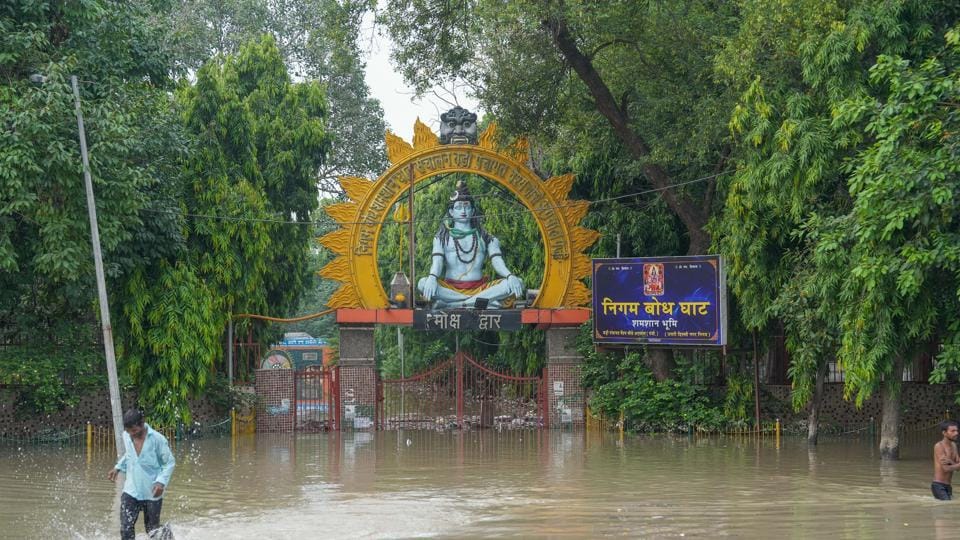
With this, all major cremation grounds located near the Yamuna have been shut, leading to increased rush at the smaller funeral centres.
Delhi’s largest facility Nigam Bodh Ghat, and the Geeta Colony Ghat were closed on Wednesday, while the Wazirabad Ghat was shut on Thursday after water entered the premises.
The civic body on Friday issued orders designating 12 grounds for cremation, including those on Panchkuian road, near Sant Nagar, Inderpuri, Beri Wala Bagh near Netaji Subhash Place, Wazirpur near Kanhaiya Nagar, Haiderpur shamshan near Shalimar Bagh. Other cremation grounds are located in Seemapuri, Ghazipur and Karkardooma, Lodhi Road, Green Park and Kalkaji areas.
Since the closure of the major ghats has translated to manifold increase in dead bodies being received at smaller sites, MCD has also issued circulars to increase the stock of wood and other resources to handle the load.
Sultan Singh, who is funeral manager at Panchkuian road Shamshan Bhumi, said, “The number of cremation platforms was increased during the pandemic so there is not waiting time at our site but the closure of Nigam Bodh Ghat has increased the pressure.”
In East Delhi’s, Karkardooma cremation ground, supervisor Sonu Sharma said that normally the small facility receives just one to two dead bodies but four cremations were undertaken on Thursday and eight on Friday. “For the time being, we have enough wood stock but the ban on entry of heavy vehicles in Delhi and ongoing Kanwar yatra is making it difficult to procure additional wood from purchase sites like Bulandshahr,” he added.
MCD’s public health department oversees the operations of 49 wood-based cremation grounds, eight CNG-based cremation grounds, and one electric crematorium. The city also has six burial grounds, five infant burial grounds, and two cemeteries. Delhi records around 470 deaths daily, according to MCD estimates.