E-Paper



Delhi’s south civic body doubles treatment charges for mosquito breeding on premises
With the revision, the total fine on a large construction site may now go up to ₹1 lakh per violation, municipal officials said.

 Prefer HTon Google


If mosquito larvae is found on premises in south Delhi, the owner will now have to pay at least double the existing remedial charges as the South Delhi Municipal Corporation (SDMC), in a March 10 order, steeply increased the treatment charges for vector control.
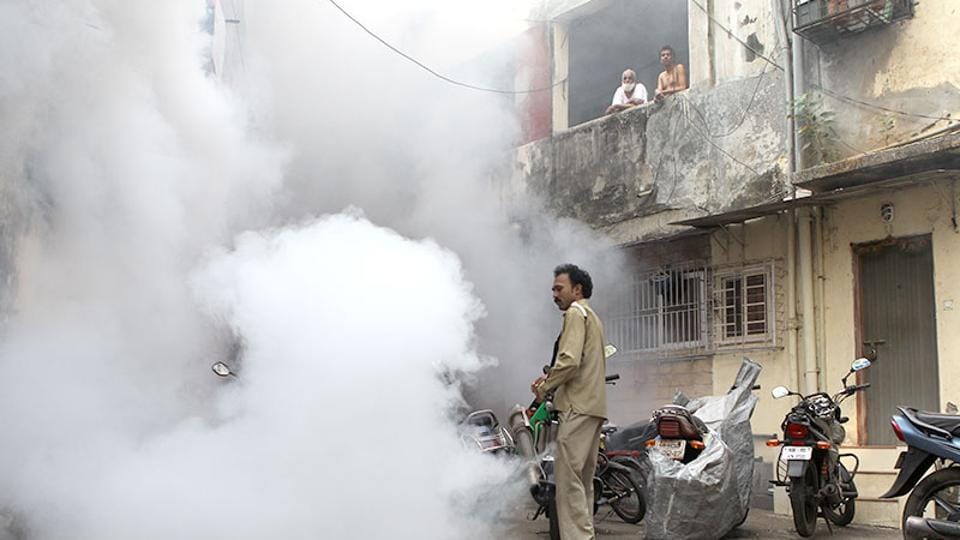
With the revision, the total fine on a large construction site may now go up to ₹1 lakh per violation, municipal officials said. The order issued by the SDMC municipal health officer also directed health officials to file FIRs with the Delhi Police in the case of repeat offenders.
A senior public health official, on condition of anonymity, said under the new provisions, owners of domestic premises will have to pay ₹100 per container in which mosquito larvae are found, instead of ₹50/ container in the old regime. Educational institutions, offices and commercial premises will be required to pay ₹200 per container instead of the earlier ₹100/container.
“The treatment charges for construction sites less than 100 square metres have been increased from existing ₹1,000 to ₹2,000; ₹20,000 for 500-1,000 square metre sites, and ₹1,00,000 for construction sites more than 1,000 square metres in size, instead of the existing ₹50,000,” the order said.
The treatment charges are levied along with a fine of ₹500 for having mosquito larvae on premises.
Hindustan Times had reported in February that the municipal corporations have already moved a proposal to the state government for a 100 times increase in the existing fine of ₹500 for having mosquito larvae on premises.
“The treatment charges were last revised in 2017. This charge is separate from ₹500 fine on detection of larvae. It can be considered to be equivalent to the levying of demolition charges in case of unauthorised construction. We have also incorporated the increase in the procurement cost of insecticides,” the official quoted above said.
The action taken report of the three corporations shows that till March 12, 2022, a total of 2,103 houses with mosquito breeding were found in Delhi, of which 1,500 were in the south corporation areas, 307 in north corporation areas, and 296 in east corporation areas.
The corporations have issued 3,323 legal notices to owners of buildings for having conditions conducive to the breeding of mosquitoes. With the rise in temperature in the city, the instances of mosquito breeding are likely to go up. Last year, corporations had conducted an analysis of mosquito breeding site data from 32 hot spot wards to find that 58.5% aedes aegyptii larvae were found in water storage units such as drums, bucket, jerry cans ; 30.2% in peri domestic units money plant vases, flowerpots, bird pots etc, with smaller contributions from overhead tanks (5.4%), sumps (2.1%) and desert coolers (3.8%).