
 E-Paper



Delhiwale: Blue diamond, conserved
Back in the colonial times, the Brits turned the tomb into a police station. The garden around was razed down to make way for a busy avenue. Subsequently, it withered into a ruin, reduced to a traffic roundabout.

 Prefer HTon Google


It is not just blue, it’s not turquoise, it’s not lapis, it’s not even cerulean. It actually is somewhere between turquoise and lapis. These tiles on the dome of the centuries-old Sabz Burj are looking as fresh as the morning dew.
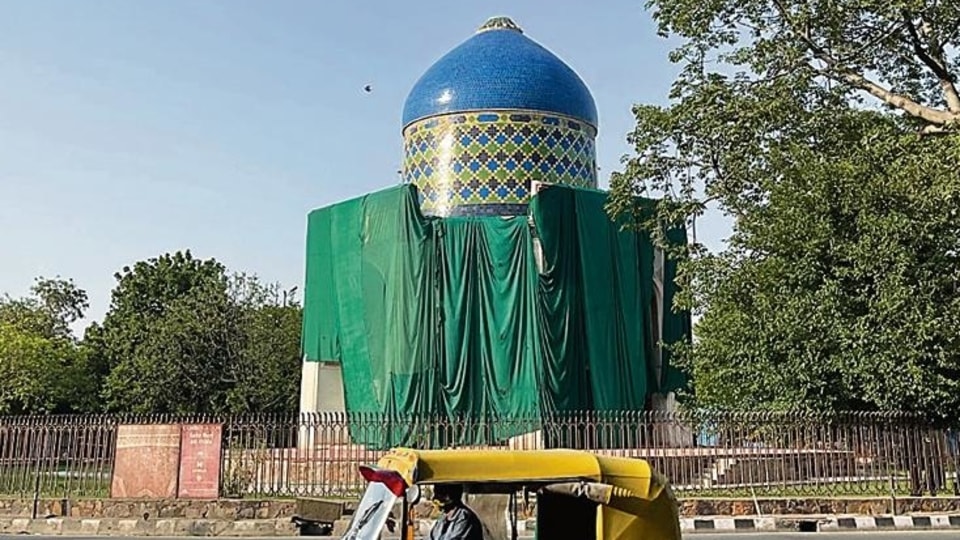
So are the multicoloured patterns on the neck of the dome.
Sabz Burj’s conservation is finishing this month. The project began four years ago by the Aga Khan Trust for Culture in partnership with Havells India.
In the custodianship of the Archaeological Survey of India, the 16th century tomb remains one of Delhi’s most mysterious souvenirs. Who built it for whom? We don’t know yet. The grave is missing. Older than Humayun’s Tomb nearby, it stands at the intersection of Mathura Road and Lodhi Road. Many Delhiwallas mistakenly call it Neela Gumbad —the blue dome. (To deserve its name, Sabz Burj should have looked sabz, or green.)
Back in the colonial times, the Brits turned the tomb into a police station. The garden around was razed down to make way for a busy avenue. Subsequently, it withered into a ruin, reduced to a traffic roundabout.
The retouch will alter that perception. The tomb still is subtly melancholic, just no longer run-down. This afternoon the top half is glistening with restored colours. The facade is draped in a protective green net, swaying like a sultan’s kaftan in the afternoon breeze.
“Master craftsmen restored the facade’s missing ornamentation, conservators unearthed the painted ceiling underneath a later cement layer, stone carvers put back the sandstone lattice screens, handmade glazed tiles were put up where those were missing,” says Ujwala Menon of Aga Khan Trust.
The new tiles on the dome haven’t come at the cost of the original. Those ones had fallen off long time ago, or had lost their glaze, and were replaced by a set of inappropriate blue tiles in the 1980s. In fact, the leftover historic tiles in multicoloured patterns just below the dome weren’t touched, even where they had lost the glaze; only the missing portions were replaced.
Inside, the ceiling with its regained floral drawings—in “pure gold” and lapis—evokes a scene of artists hanging from the scaffolding with brushes in their hands. A bygone era suddenly seems a touch away. Every year the semal trees inside the tomb enclosure briefly bloom with pulpy flowers, lending a shade of red to the monument. That missing colour will be restored in spring.


