
 E-Paper



Delhiwale: Tomorrow's museum
Gole Market in the past, and present.

 Prefer HTon Google


Gole Market is gole. Truly round. An octagonal building is the sun in its solar system. This central edifice has a grimy tin roof but is historic — it was a part of Edwin Lutyen’s design for New Delhi. The building is surrounded by a traffic roundabout, which is surrounded by a colonnaded market.
Closed about a decade ago, following “structural damage” and legal disputes, the barricaded landmark is to be relaunched with a fresh lease of life. New plans were announced this week by the New Delhi Municipal Council (NDMC). It is to become a museum.
Before disappearing behind a purdah some years ago, the building looked like a severely derelict version of what it must have been when it came up in 1921. Stepping in was like entering a rotting world of gloom and decay. The building still had a couple of eating places — Sagar Bar-Be-Que, and Galina (“Established 1962’). Other landmarks included Gujarat Fisheries and Frontier Fish Shop. The first floor had a coaching institute called Keswani New PT College. Mangy dogs were everywhere.
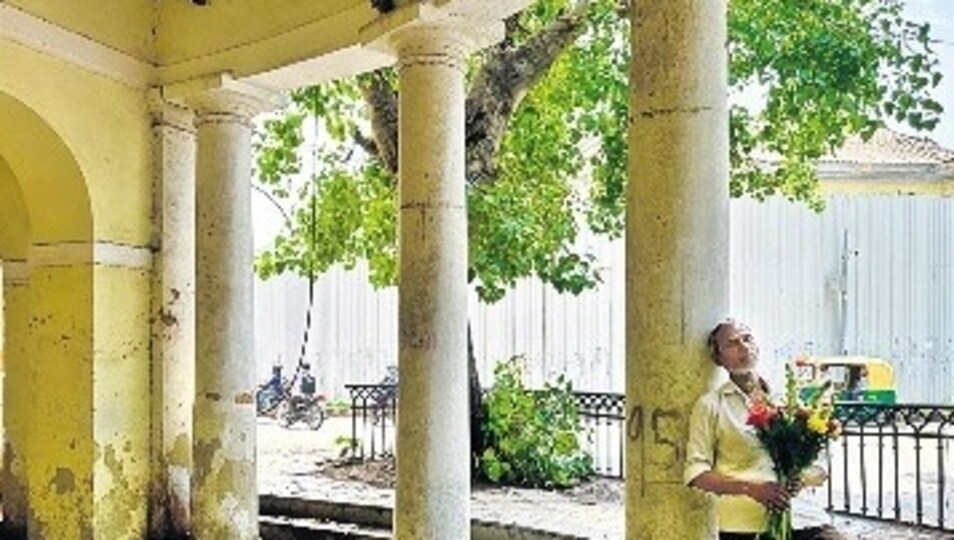
While the building has remained long out of view, the colonnade market is alive with its shops, stalls, and peepal trees. In fact, the corridor and its white columns look like a replica of Connaught Place, nearby, which came up later.
Some of the shops here have become history.
The person manning the Saraswati Book Depot was like a character in Satyajit Ray’s Feluda mysteries. All day long he sat in the interiors of the dimly lit store, crammed with Bengali-language books and journals. Dressed in a white kurta pyjama, he lamented the dwindling strength of the “Gole Market Bengalis.”
Developed by the British, Gole Market area had senior government officials as its earliest occupants. Many happened to be Bengalis. Their heritage is still felt. For instance, the banner of Bengal Silk Trading Co, a handloom sari shop, is in Bengali script and was founded by a bhadralok named Ananda Moy Sinha from Burdwan in West Bengal.
A much-missed icon in the arcade, outside the round building, is the Nirulas restaurant, which shut down permanently during the Covid-triggered lockdown. One afternoon, before the pandemic, two ladies at the corner table were gupshuping over a pizza dripping with extra cheese, while a turbaned customer was busy with paneer makhani. The restaurant’s glass door had a poster of hot chocolate fudge. Today, that glass door is sheeted over with plywoods.
In some ways, Gole Market is already a museum. The series of arches lining the colonnade are engraved with old signages indicating its early life. One arch is marked “poultry and fish.” Another is marked “wine merchants and general stores.” Two others are in Urdu—“doodh, makhan aur roti godam,” and “bakre ka gosht.”
The forthcoming museum must value these signages as Gole Market’s very own Rosetta Stone. They contain clues to its early days; their preciousness transcending this small market, symbols of constancy in our drastically altering megapolis.
PS: The photo shows florist Akram who works across the lane from Gainda Lal Ram Narayan Delhi Sweet House.


