
 E-Paper



Dense fog blankets Delhi; AQI ‘very poor’ at 303
According to IMD, the visibility was the lowest at Palam (150 metres) around 5am, while it was 500 metres at Safdarjung.

 Prefer HTon Google


Dense fog blanketed the national capital in the early hours of Tuesday as visibility dipped to 150 metres, while tremors were felt across Delhi-NCR after a 7.1 magnitude earthquake struck the northern foothills of the Himalayas near Tibet.
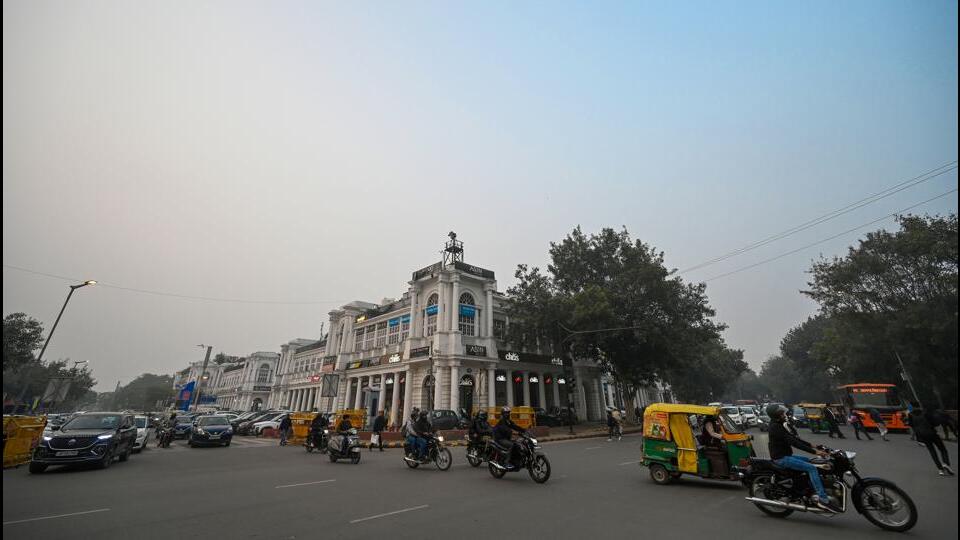
According to the India Meteorological Department (IMD), the visibility was the lowest at Palam (150 metres) around 5am, while it was 500 metres at Safdarjung.
“Dense fog was seen between 5am and 5:30am at Palam. However, visibility improved quickly and was up to 700 metres by 8:30am,” an IMD official said, adding that there was consistent wind of 13 km/hour as well.
The minimum temperature rose marginally and was recorded at 10.5°C, four degrees above normal for this time of the year. It was 9.6°C a day earlier. The IMD has forecast a dip in minimum temperature across the region over the next 72 hours, likely touching 5°C by Friday.
The National Centre for Seismology (NCS) said the earthquake occurred around 6:35am and the epicentre was 93 km northeast of Lobuche in Nepal.
Meanwhile, Delhi’s air quality remained ‘very poor’, as the average AQI at 9 am was recorded at 303. It was 335 (very poor) at 4 pm on Monday. Forecasts show the AQI is expected to improve further by Wednesday.

Stay updated with all top Cities including, Bengaluru, Delhi, Mumbai and more across India. Stay informed on the latest happenings in World News along with Delhi Election 2025 and Delhi Election Result 2025 Live, New Delhi Election Result Live, Kalkaji Election Result Live at Hindustan Times.


