
 E-Paper



Double-decker buses set for comeback in Delhi after 35 years
Transport minister Pankaj Singh on Friday confirmed that the government is examining whether the buses can be operated safely and effectively


After more than three decades, double-decker buses may once again be plying on Delhi’s roads.
The Delhi Transport Corporation (DTC) is preparing a pilot run to test the feasibility of running double-decker buses in the Capital, said at least two senior officials aware of the government’s plans on the matter.
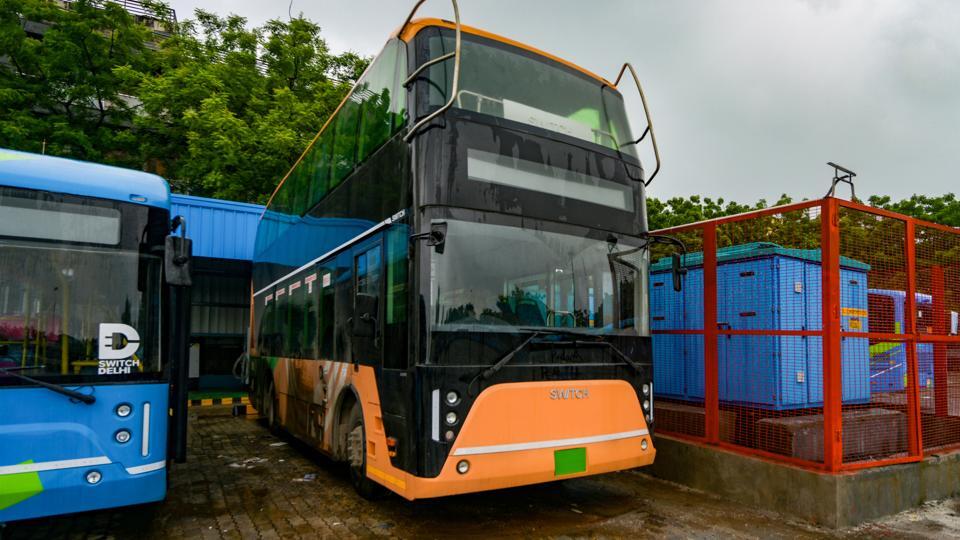
One such electric bus, manufactured and provided by Ashok Leyland under a corporate social responsibility (CSR) initiative, is already parked at the Okhla depot and may soon begin trial runs on select routes, one of the officials cited above said.
Transport minister Pankaj Singh on Friday confirmed that the government is examining whether the buses can be operated safely and effectively in the city.
“We have one bus and may get two more, but they are not operational yet. Officials are working on a route map to see if it is feasible to run these buses in Delhi. There are concerns regarding the height and weight of the bus and how easy or difficult it will be to manoeuvre them in Delhi traffic. Based on the results of the pilot survey, we will move forward,” he said.
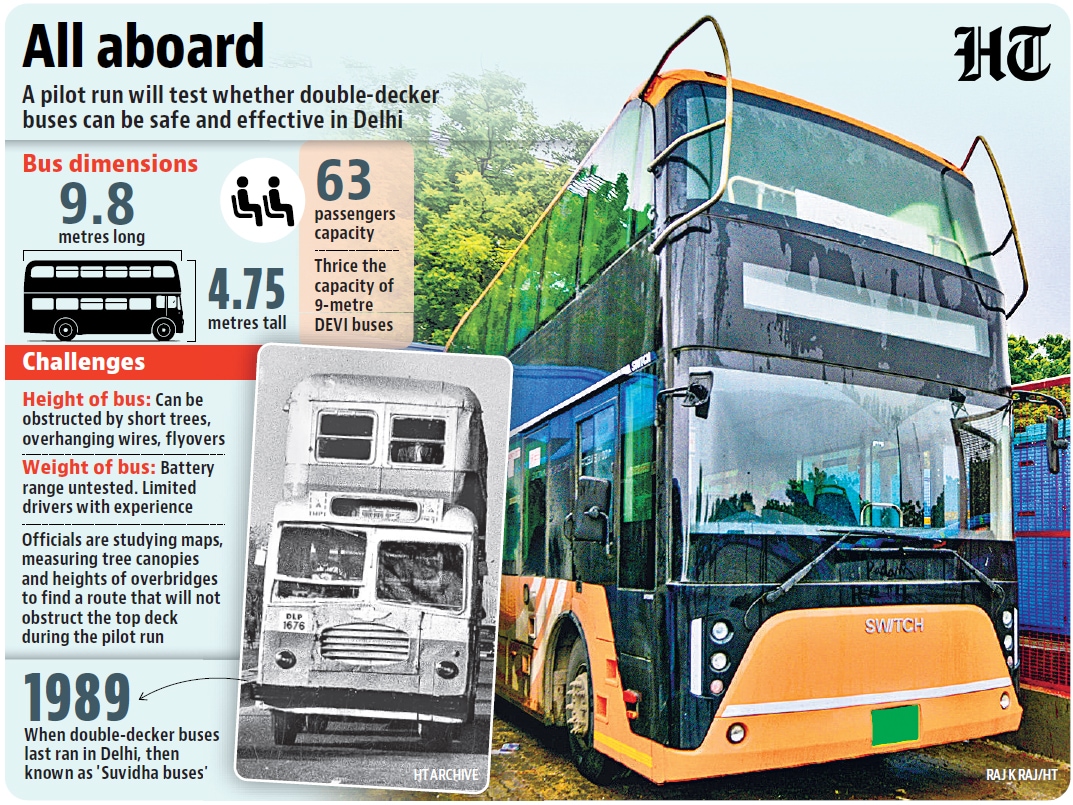
Officials are studying maps, measuring tree canopies and checking the heights of overbridges to find a corridor that will not obstruct the top deck.
The bus, which stands 4.75 metres tall and is 9.8 metres long, will have the seating capacity for over 63 passengers apart from the driver — nearly thrice the capacity of the city’s nine-metre DEVI buses.
While the capacity will be advantageous is transporting a large number of passengers, the height and weight of the bus are challenges, officials said.
“The height of the buses needs to be kept in mind as they cannot be planned in areas with shorter trees, overhanging wires or flyovers where they could get stuck. Since these are relatively heavier, we need to initially test them on shorter routes to check the battery range. The experience with double-decker electric buses is still limited across the country, even with private operators,” Singh added.
“Augmenting public transport is vital for the sustainability of any city, and introducing electric double-decker buses is a welcome step by the Delhi government. One reason some cities prefer articulated buses over double-deckers is that climbing up and down can slow passenger movement and reduce system efficiency. Their success in Delhi will therefore depend on careful route selection - taking into account vertical clearance as well as trip length, since passengers on longer journeys may be more willing to use the upper deck,” said Amit Bhatt, managing director (India) at the International Council on Clean Transportation (ICCT).
Double-decker buses were once a familiar sight in Delhi — run by the DTC as “Suvidha buses” — until they were phased out in 1989 as vehicles aged and the city transitioned to CNG fleets.
Attempts to bring them back for the 2010 Commonwealth Games and again in 2022 ahead of the G20 Summit did not materialise after feasibility studies raised concerns, said DTC officials.
In 2011, the then Delhi government even considered the idea of using open-top double-decker buses on tourist routes in the city under the part of the “Hop On Hop off (HoHo)” buses, which was active then. The HoHo buses were low-floor air-conditioned buses which ferry passengers to and fro 19 tourist spots in the city, allowing people to board on and off from the service at the tourists spots on their convenience.
In 2022, Convergence Energy Services Limited (CESL) had earmarked 1,500 electric buses, including 100 double-deckers, for Delhi in anticipation of an influx of officials and tourists from across the world. However, subsequent feasibility studies found the plan unviable.
At present, DTC operates more than 3,500 electric buses, with the fleet expected to cross 6,000 by the end of the year.
Alongside the double-decker experiment, officials said two new tourist circuit buses will also be launched under the revived “Delhi Darshan” service.


Stay updated with all top Cities including, Bengaluru, Delhi, Mumbai and more across India. Stay informed on the latest happenings in World News along with Delhi Election 2025 and Delhi Election Result 2025 Live, New Delhi Election Result Live, Kalkaji Election Result Live at Hindustan Times.


