
 E-Paper



Draft warehousing policy aims to decongest Delhi
The government has proposed to create three mega “Urban Consolidation and Logistics Distribution Centre” at the periphery of the city


The Delhi government’s draft warehousing policy aims to decongest the Capital through better freight management and also provide state-of-the-art warehousing and logistics, Delhi environment minister Manjinder Singh Sirsa said. It will be tabled before the cabinet after a stakeholder consultation—feedback from Delhi’s fruit and vegetable mandis, industrial associations and those involved in the construction sector—the minister said.
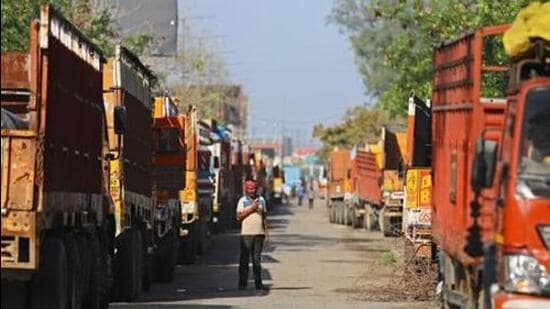
According to a copy of the draft policy accessed by HT, the government has proposed to create three mega “Urban Consolidation and Logistics Distribution Centre” (UCLDCs) at the periphery of the city, each spread across 70 to 80 hectares, to reduce the need for freight and other movement to the heart of the Capital.
“The goal is to create these mega hubs on the city periphery and to create a more dedicated freight route, in addition to state-of-the-art warehousing facilities. Through this policy, we will not only provide adequate logistics for freight and storage, but it will simultaneously bypass freight traffic, which would earlier enter the city,” Sirsa told HT.
According to the draft policy, these hubs will include warehousing, cold storage and sorting facilities. The proposal aims to set up the UCLDCs towards Jaipur in southwest Delhi, towards Meerut in east Delhi and towards Mathura in southeast Delhi, Sirsa said.
Data assessed by the state Industries department shows Delhi records an average footfall of 193,000 vehicles every day, bringing close to 1 million tonnes of freight. Of these, around 21% of the vehicles pass through the city.
In addition, the policy will look to create dedicated spaces for commercial parking through public-private partnership, dedicated freight corridors and relocating wholesale markets to reduce traffic in the city. With UCLDCs planned at the city periphery, such commercial vehicles need not enter the city anymore, Sirsa said.
“A draft is now ready, and we are gathering feedback. It is not likely to be tabled in the next cabinet meeting, but should be finalised and tabled soon,” the minister said.
An industry department official said that in 1993, around 50,000 vehicles were bringing close to 184,000 tonnes of freight daily. “By 2008, this increased to around 100,000 vehicles daily – bringing around 500,000 tonnes of freight daily,” the official said, adding that with increasing cargo passing through the city, the policy will look to ease movement.
The draft also provides a 50% subsidy on investments in logistic infrastructure, including land construction and equipment, a 50% subsidy on electricity duty reimbursement for five years for UCLDCs, commercial parking spaces and warehousing units, and a 50% interest subsidy on loans, among others.
Sirsa said the policy is in line with the Delhi Master Plan 2041, which recommends shifting wholesale storage and warehouse activities to UCLDCs and Integrated Freight Complexes (IFCs), to decongest freight hot spots.
The Capital currently acts as a hub for cargo transport in the city. Delhi’s 46 railway stations handle the arrival of 18,000 tonnes of cargo every day and the export of 11,000 tonnes per day. The Indira Gandhi International (IGI) Airport, meanwhile, is the country’s largest cargo gateway, with two integrated cargo terminals. As per the Delhi airport website, the airport has consecutively handled 1 million metric tonnes in the 2024 and 2025 fiscal years.
Delhi presently has wholesale markets and mandis at Azadpur, Ghazipur, Chandni Chowk, Karol Bagh, Naraina and Keshopur. It has dedicated warehouse estates at Nangloi, Narela, Kirti Nagar, Bamnoli and Okhla. There are two IFCs at Ghazipur and Narela, two Inland Container Depots at Tughlakabad and Patparganj, and Transport Nagar at Sanjay Gandhi Nagar, Azadpur and Punjabi Bagh.
“The goal is to seamlessly integrate our cargo movement and reduce the movement of trucks in the city. Dedicated freight corridors will also ease congestion. In the last 10 years, no such policy or even plans to facilitate warehousing and freight movement have taken place. The previous government has completely failed in that regard,” Sirsa said.
For finalising the policy, the government will also include market players and associations, officials said.

Stay updated with all top Cities including, Bengaluru, Delhi, Mumbai and more across India. Stay informed on the latest happenings in World News along with Delhi Election 2025 and Delhi Election Result 2025 Live, New Delhi Election Result Live, Kalkaji Election Result Live at Hindustan Times.


