E-Paper



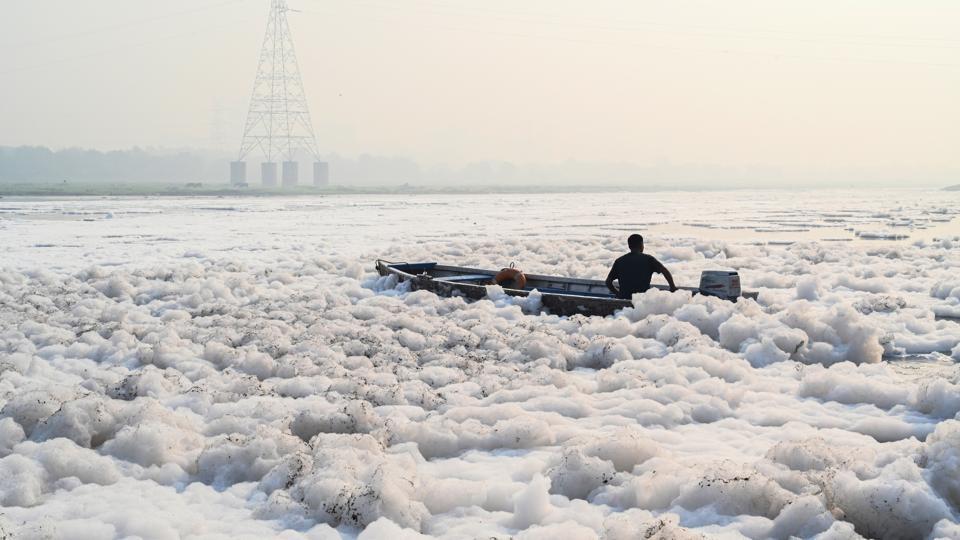
High ammonia levels hit Delhi’s water supply: DJB
DJB’s plants can treat up to 1 part per million (ppm) of ammonia in raw water through chlorine, but chlorination beyond this limit produces toxic chloramine.

 Prefer HTon Google


The water supply to several parts of the Capital was affected on Sunday due to a combination of high ammonia levels in the Yamuna and the temporary closure of the Upper Ganga Canal for maintenance work, Delhi Jal Board (DJB) officials said, which led to shortages in central south, and east Delhi, along with the Lutyens zone.
This latest disruption comes only four days after the water supply to parts of Delhi was hit.
In addition, the water utility in an advisory warned that the supply to parts of Delhi may not normalise till November 1, as two of its major water treatment plants (WTPs) — Bhagirathi and Sonia Vihar WTPs — are operating at only 30% of their capacity.
Also read | Delhi water crisis: AAP blames Haryana for ammonia contamination in Yamuna, BJP hits back
High ammonia levels in the Yamuna are indicative of high industrial load or sewage in its water.
DJB’s plants can treat up to 1 part per million (ppm) of ammonia in raw water through chlorine, but chlorination beyond this limit leads to the production of toxic chloramine compounds. Thus, whenever ammonia levels breach the 1ppm mark, water production at the treatment plants is hit.
Currently, the ammonia in the river has crossed 1.5ppm.
DJB officials said both the Bhagirathi and Sonia Vihar WTPs get raw water from the Upper Ganga Canal. “The Upper Ganga Canal was closed from Haridwar on October 12 at midnight. Some water from Ganga was being received from the canal at both WTPs due to ponding at various online storages, which was closed completely on October 21,” a senior DJB official aware of the matter said, on condition of anonymity.
Also read | Delhi BJP's Virendra Sachdeva takes dip in ‘polluted’ Yamuna, lands in hospital
Ordinarily, when the Uttar Pradesh government shuts this canal for its annual maintenance, these plants are supplied water from the Yamuna. However, this year, the high ammonia levels in the Yamuna mean that it will be difficult for these plants to treat the raw water.
“Hence, the production at Bhagirathi and Sonia Vihar has been curtailed up to 30% of the capacity. Further production would depend entirely upon the quality of raw water and production from these plants shall vary accordingly,” the official said.
As the Upper Ganga Canal is shut till October 31, it is likely that the water supply will not normalise till November 1, the official said, adding that additional water tankers can be sought from central control room by dialling 1916, 23527679, 23634469 and 1800117118.
The development led to residents criticising the authorities for the poorly-planned maintenance work during the festive season.
Also read | BJP, AAP continue to square off over Yamuna pollution in Delhi
Tilak Sahu from New Ashok Nagar said the water supply in his neighbourhood has been irregular over the last 3-4 days. “I have raised many complaints but no resolution has been carried out till date,” he said, adding that residents were not intimated about the impact to water supply in advance.
Gopal Krishna, who heads the federation of New Delhi RWAs, said the water supply in areas around Bengali Market has been hit. “The problem started around 4-5 days ago. This is the festive season, and ensuring water supply is the bare minimum that agencies must ensure. The residential localities around DIZand Gole Market is also hit,” he said.
Rajesh Panwar, who heads Vasant Kunj RWA federation said the area has been facing irregular water supply over the last week, and the government should ensure a steady water supply in the coming days. “Over the last two days many of our sectors did not receive water at all. On Sunday, the main reservoir has received water and we hope that the supply in coming days will improve.”
Meanwhile, AAP legislator Vinay Mishra — the DJB vice chairman — in a post on X in Hindi, said, “After becoming the Vice President of Delhi Jal Board, I inspected the water treatment plant today. Ammonia is increasing in the water due to industrial waste coming from Haryana, Delhi government will soon talk to Haryana government and resolve this issue so that Delhi residents can get clean water. Also, appropriate instructions were given to the officers to ensure that when the quality of water improves, the water treatment plant works at 100% capacity.”
However, the Bharatiya Janata Party (BJP) said the Delhi government has failed to ensure proper water supply for its residents.
“The Delhi government has failed residents in two ways — first, by not ensuring working sewage treatment plants to ensure zero sewer flow into the Yamuna, and by not setting up a sufficient number of ammonia treatment plants at water treatment plants,” Delhi BJP spokesperson Praveen Shankar Kapoor said.