E-Paper



Delhi floods: Pumps deployed to keep animals safe at Delhi Zoo
Flooding caused by damaged drain regulator in Delhi Zoo leads to increase in water levels of moats and drains, but officials prepared with pumps and raised sections in enclosures to manage situation.

 Prefer HTon Google


While the damage to a regulator on drain number 12 along ITO on Thursday evening led to flooding in the area, it also led to an increase in the water levels of the moats and drains flowing through the Delhi Zoo at Mathura Road. Officials say the zoo has been preparing for heavy rain and waterlogging for the past few days, with pumps being deployed along enclosures that are vulnerable to flooding.
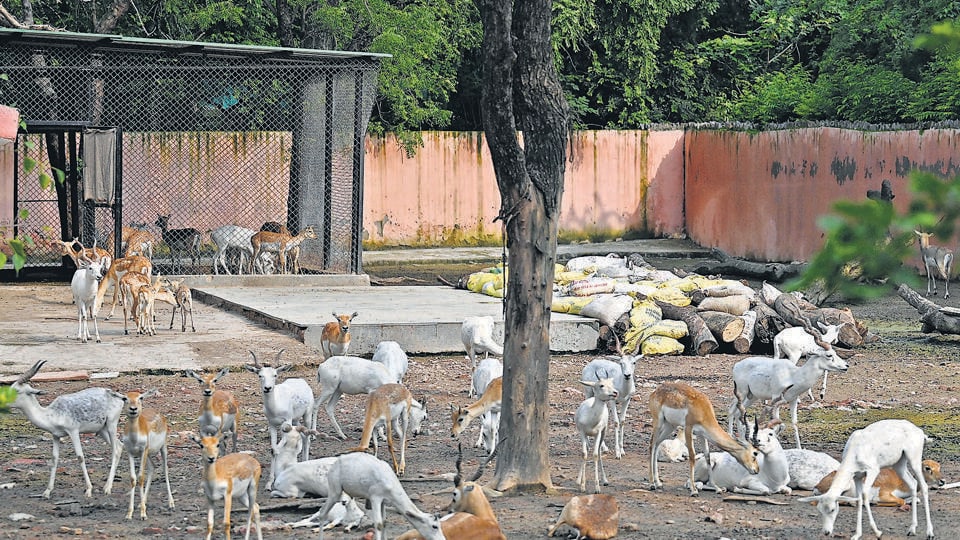
“Even before rains began, the water from the drains and moats was completely removed and we were able to manage the situation even during the heavy rain spell. We are now once again seeing a rise in the water levels of the drains that act as moats in some enclosures, possibly due to backflow of water which is now being simultaneously drained out,” said a Delhi Zoo official.
The official added that water had almost filled up the moat at the rhinoceros, sambar and chital enclosures before it was once again drained out. “Multiple pumps are being put to use.” he added.
Akanksha Mahajan, director of the Delhi Zoo, said besides the water pumps, raised sections were also being built in the enclosures where waterlogging was possible. “We are using wooden logs to create a raised area inside the enclosures such as the deer one. We are monitoring the flow of water and it is simultaneously being drained out. Even in the rhinoceros enclosure, where water levels may rise through the moat, the rhino can be moved to the resting area, which is much higher,” she said.
The Delhi Zoo, inaugurated in 1959, currently houses over 90 different animal species. This includes white tigers, Royal Bengal tigers, rhinoceroses and hippopotamuses among others