
 E-Paper



Intense heat, exploding ACs, single exit hindered rescue during Vivek Vihar fire in Delhi
Fire officials said one family on the fourth floor did not come to the balcony but tried rushing to the rooftop terrace.

 Prefer HTon Google


A massive iron grille covering a major section of the building, a single point of entry and exit, exploding air conditioners, and intense heat and smoke blocking the staircase were among the challenges fire officials listed while battling the blaze at a four-storey residential building in Vivek Vihar that killed nine people, including a one-and-a-half-year-old toddler.
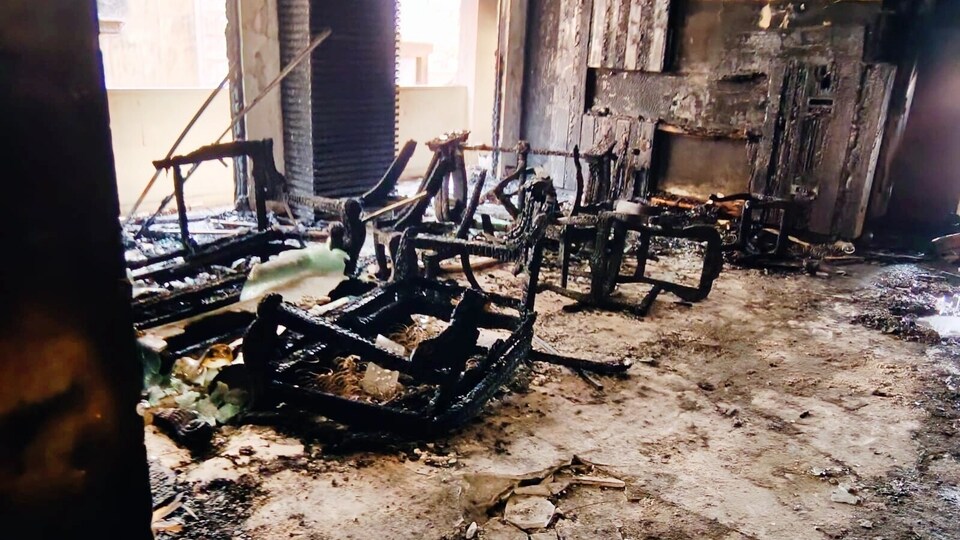
At least 15 people were rescued by 14 teams of the Delhi Fire Services (DFS) on Sunday morning. Officials received a call reporting the blaze on the third floor of an 800-square-yard plot at 3.48am. The fire was triggered on the second floor at the back of the building and gutted all floors above, officials said.
Fire officer Manoj Tyagi, one of the first responders at the scene, said, “There were more than 25 people inside the building, and we were just trying to save everyone. We saved everyone from the front-facing flats, but as soon as we moved the rescue towards the back side, it became a nightmare. There was too much heat and smoke.”
Also read: Vivek Vihar fire: MCD says iron grilles block escape, probes violations
Tyagi explained how a huge iron grille covering the rear facade – became the biggest obstacle.
“We used cutters and angle grinders. It took time to cut through the heavy grille. There was no escape for those residents, but we still managed to take out residents from two flats. While we were able to reach the third floor using the ladder, we had to call for a hydraulic platform for the fourth floor,” he said, adding that the hydraulic ladder took 20 minutes to arrive from Connaught Place, 15km away.
Also read: Vivek Vihar fire: Trapped victims made desperate rescue calls
“We then placed the ladders on top of vehicles to reach the residents. It was tough because the building’s back portion was covered with grille which extended to its side portion as well.”

Fire officials said one family on the fourth floor – Nitin Jain, his wife Shailey, and their son Samyak – did not come to the balcony but tried rushing to the rooftop terrace. “They tried to reach the terrace, but it was locked. The terrace had two doors, and both were locked. The family died on the way. They fainted due to heavy smoke and died soon after,” Tyagi said.
He said that the building had houses with false ceilings, fibreglass, facades, and wooden furniture and pieces on walls, which caused the fire to “spread quickly.”
Narrow staircase, blocked lift
Another fire officer, Anoop Singh, told HT: “We could not take the staircase because it was narrow and there was so much heat and smoke. The lift was obviously blocked. And there was no other way. The grille blocked any chance of a second exit. We used neighbouring buildings to place our ladders and reach the grille to cut it. We also used the houses to throw water. One of the survivors, a house help, stood on the grille and threw water inside to save her employees.”
Mayak Jain, a resident of the first floor, who escaped through the staircase said all the residents of the upper floors were screaming to be saved and ACs were exploding one after another as the fire spread.
Fire officials said the third-floor residents – Arvind Jain (60), his wife Anita (58), their son Nishant (35), Nishant’s wife Anchal (33), and one-and-a-half-year-old Akaay – died due to smoke inhalation. They could not escape because they found out about the fire later than others, DFS said. They neither reached the balcony nor got outside. Seventeen-year-old Namami Jha, an eyewitness who lives in the adjacent building, recalled how the grille posed a major issue.
“We were all sleeping when my mother sensed a burning smell and saw my room was covered in smoke. For a second, we thought our AC was on fire. We came outside the house and heard someone screaming in the balcony. Within minutes, the fire became huge.”
She said she called 112 at 3.50am, but the call connected to a UP control room where the operator asked her about Ghaziabad. “They then gave me three Delhi-based numbers for DFS, but all of them were not available. It took DFS and police 15 minutes to come. Sadly, these 15 minutes were a big problem because by then a major portion of the building was on fire.”
She added that they arranged mattresses, pipes to throw water, and blankets and saved two girls from the second floor. “Despite high heat and smog inside our house, my mother refused to leave and kept throwing water at their building. If my mother had not stayed, our house would also have been gutted.”




Stay updated with all top Cities including, Bengaluru, Delhi, Mumbai and more across India. Stay informed on the latest happenings in World News along with Delhi Election 2025 and Delhi Election Result 2025 Live, New Delhi Election Result Live, Kalkaji Election Result Live at Hindustan Times.


