
 E-Paper



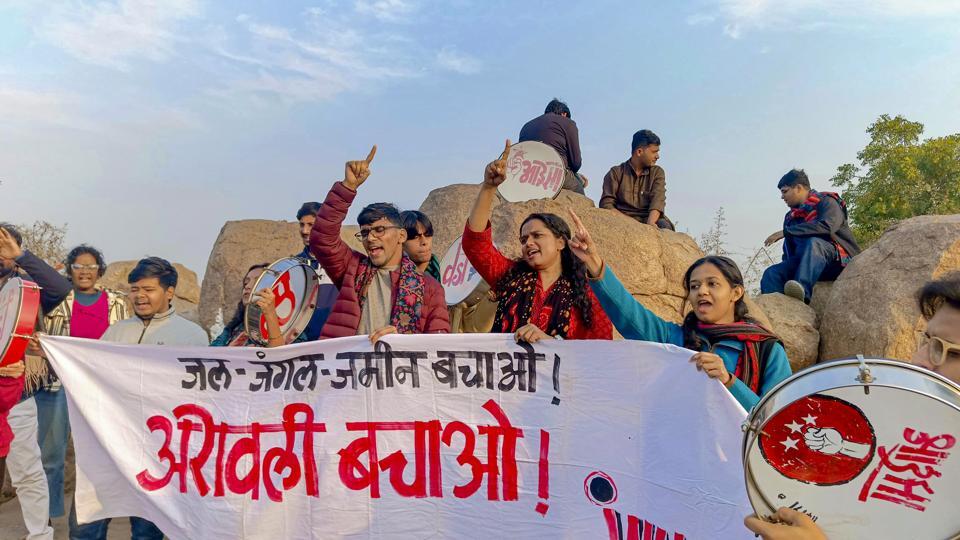
JNU students protest against SC-backed Aravalli definition, call it a blow to environment protection
AISA said JNU is located in the Aravalli range. Parthasarathi Rock, the highest natural point in Delhi, is also part of the range and is one of the most iconic landmarks of this campus.

 Prefer HTon Google


Jawaharlal Nehru University (JNU) students on Saturday rallied with JNU students’ union (JNUSU) in a protest march against the latest decision allowing any point less than 100 metres height from the immediate relief area to not be considered as Aravalli.
The top court, on November 20, 2025, accepted the recommendations of a committee under the Ministry of Environment, Forests and Climate Change on the definition of Aravalli Hills and Ranges.
“It is important to note that JNU is located in the Aravalli range. Parthasarathi Rock (PSR), the highest natural point in Delhi, is also part of the Aravalli and is one of the most iconic landmarks of this campus,” said a statement released by the All India Students’ Association (AISA).
“Forests and hills have been handed over to private players by displacing lakhs of people, snatching natural habitats from birds and animals, and felling trees for private profit and to satiate the greed of the rich,” said Aditi, JNUSU president.
Meanwhile, students who took part in the protest, pointed out concerns regarding the impact this might have on the environment.
“This will have an adverse impact on the western part of the Indo-Gangetic Plain. It will not only increase temperatures in the region, but also expose it to the threats of desertification, pollution, and other major ecological imbalances,” said an AISA member.

Stay updated with all top Cities including, Bengaluru, Delhi, Mumbai and more across India. Stay informed on the latest happenings in World News along with Delhi Election 2025 and Delhi Election Result 2025 Live, New Delhi Election Result Live, Kalkaji Election Result Live at Hindustan Times.


