E-Paper



MCD to create bio-fence around its 3 landfill sites
The process to develop bio-fences was a part of a National Green Tribunal order in October 2022 for the upkeep of the landfill sites

 Prefer HTon Google


The Municipal Corporation of Delhi (MCD) plans to create a bio-fence — a high density of vegetation creating a natural barrier — around the Capital’s three landfills sites at Okhla, Bhalswa and Ghazipur by developing a 5-10 metre wide green belt along the circumference of the three garbage mounds, officials aware of the proposal said on Tuesday.
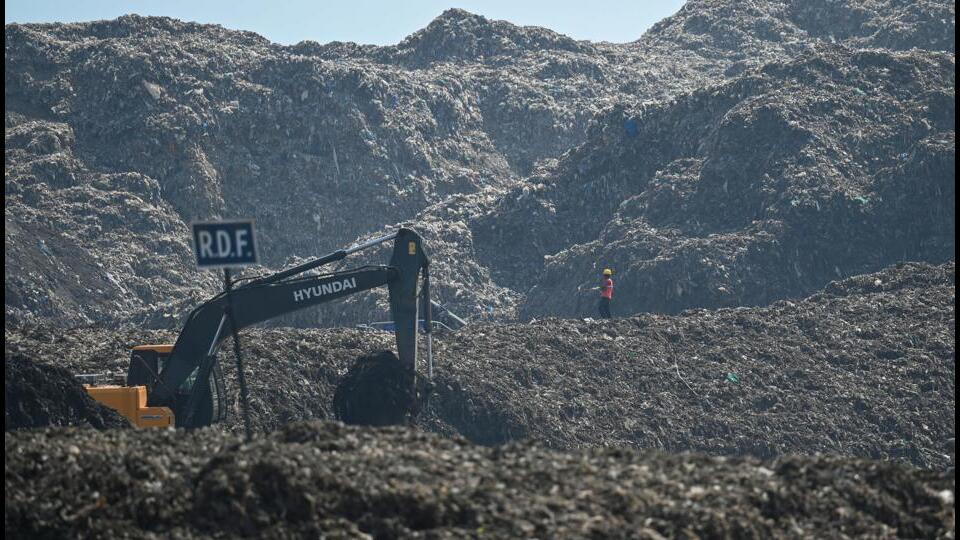
A senior official from MCD’s department of environment management services (DEMS) said the bio-fence around the landfill sites will comprise native trees species such as bamboo, moringa and peepal, along with a host of shrubs.
The official said the horticulture department has been tasked with creating the natural barrier to prevent the outflow of dust and pollutants from the garbage mounds.
“We have already provided patches of land of around 3-4 m along the periphery of the Bhalswa and Okhla sites. The horticulture department has asked for more land, and the width of the bio-fence will be gradually increased as the landfill clearing project proceeds,” the official said.
A horticulture department official said the process to develop bio-fences was a part of a National Green Tribunal order in October 2022 for the upkeep of the landfill sites, and preparations to execute the directions have begun.
“Our key concern has been the leachate runoff from landfill sites, especially during the rainy season. A drain or excavated portion will have to developed before the bio-fence, so that the roots of the trees do not get damaged by leachate,” the official said.
Leachate is generated from water percolating through a solid waste disposal site, that accumulates contaminants and moves into subsurface areas.
Faiyaz Khudsar, scientist-in-charge of the Delhi Development Authority’s Biodiversity Parks Programme, said the development of the bio-fences depends on what objective the agency plan to achieve.
“Bio-fences help cut off an area from factors such as dust, particulate matter, and noise pollution. Simply developing a layer of bamboo will not help. They will have to select tree species which have broad leaves depending on the type of soil proximity to the Yamuna or Aravali ranges. The selection of the kind of trees used for the fence is important,” he said.
MCD also plans to create a 6.33-acre Miyawaki forest site — the city’s largest — near the Bhalswa landfill, the officials said.
Pioneered by Japanese botanist Akira Miyawaki, a Miyawaki forest has thousands of native tree species grown closely together in a small patch of area. Compared to a conventional forest, a Miyawaki forest is not only several times denser, but can also be ready in two to three years.
The 6.33-acre Miyawaki forest patch is not the part of the bio-fence near the landfill site.
“We will plant 56,970 tree saplings and 6,330 shrubs, along with mulch material, so that this patch matures in three years. All of these are native trees This will be largest such Miyawaki site in Delhi,” the horticulture department official said.
Trees being added in these projects include Adhatoda vasica (Malabar nut), Calatropis gigantea (crown flower), Grewia Tenax (phalsa cherry), Vitex Negundo (Chinese chaste tree), Carissa Congesta (kaner), liomonia acidissima (wood apple), moringa, Murraya paniculata (orange jasmine), Saraca Asoca (ashoka), Wendlandia heynei (simtaara), ziziphus mauritiana (Indian jujube), Ficus virens (pilkhan), Madhuca Longifolia (mahua) and tectona grandis (teak), peepal, neem and mango. “We have selected 40 native trees which will be used in these projects,” the official added.
Khudsar said Miyawaki forests can be used to increase green cover, but noted that they are not functional ecosystems.