E-Paper



MCD’s zonal wards committees swing into action on Day 1
The DMC Act mandates that the meeting of wards committee panels should be convened at least twice in 15 days and there is no upper bar

 Prefer HTon Google


New Delhi
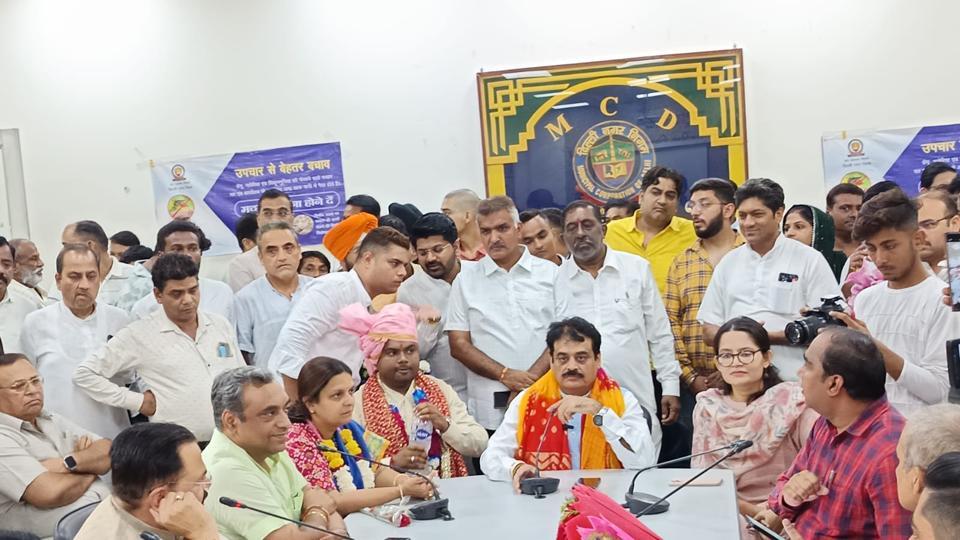
A day after the Municipal Corporation of Delhi’s (MCD) zonal wards committees were elected, the 12 chairpersons took charge of their respective municipal offices, holding meetings to take stock of local civic issues, given that the wards committees can clear projects worth up to ₹1 crore.
Bharatiya Janata Party’s Yogesh Verma, the chair of Keshavpuram zone, said he took charge of the panel in the presence of RWA representatives and other members of the civil society. “After a gap of 20 months, councillors, especially the first-time elected members, can finally start work towards addressing the issues faced by people. We have called the first meeting of the committee next Friday on three subjects — vector-borne diseases, sanitation and stray cattle. Seventy per cent of the issues faced by people are at the zonal level and these panels can play a critical role,” he said.
Verma said the budget has not been allocated to the panels yet. “We will demand that budgets be sanctioned for all 12 wards committees in the next house of councillors meeting,” he said.
Aam Aadmi Party’s Md Sadiq, the chair of City Sadar Paharganj zone, said a meeting of the wards committee covering Shahjahanbad and special areas has been called next week. “Over the past year, the area has seen no progress on various issues. Since the zone covers old Delhi and heritage areas, it needs special attention. We will take up matters related to building department by-laws violations, road repairs, state of old dangerous buildings and conservation of heritage structures.”
BJP’s Sandeep Kapoor, the chair of the Shahdara South zone, said: “We have decided that issue-specific meetings will be held instead of holding general meetings. We will fix a meeting to address each issue, be it on sanitation, horticulture or other departments. No progress can be made in general meetings. We will identify the deficiency and work with headquarters to help people.”
The DMC Act mandates that the meeting of wards committee panels should be convened at least twice in 15 days and there is no upper bar. The act states that for the efficient performance of its functions, there shall be three municipal authorities under the corporation: the standing committee, the wards committee and the commissioner.
“To decentralise municipal services, wards committees have also been incorporated as a municipal authority to deal with all such civic matters which directly affect individual residents and being more readily accessible, they are expected to meet day-to-day needs of public more effectively,” an MCD official said.