
 E-Paper



New cases cross 4k mark in Delhi; most deaths in one day since Jan 1
Experts also flagged the steady increase in the city’s test positivity rate, which is an important metric to gauge the spread of an infection. Of the 86,899 tests conducted as per the Sunday health bulletin, 4.64% samples tested positive, up from 4.48% the previous day.

 Prefer HTon Google


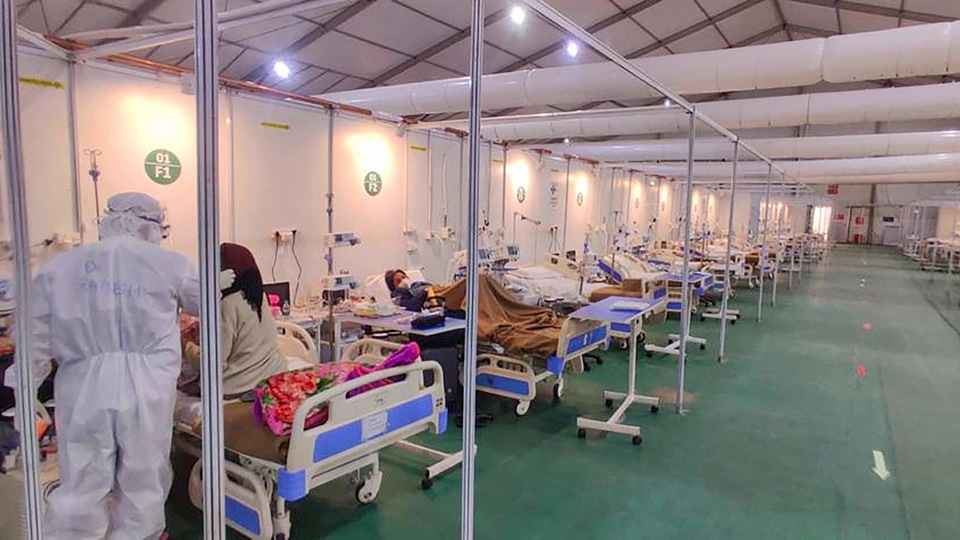
The fourth Covid-19 wave continued to expand its footprint in the Capital, with Delhi adding 4,033 new infections on Sunday, the largest one-day spike in 121 days, even as the disease claimed 21 more lives — the most since January 1 this year. Experts implored the state government to ramp up its containment efforts and increase vaccine coverage to effectively curb the surge.
Experts also flagged the steady increase in the city’s test positivity rate, which is an important metric to gauge the spread of an infection. Of the 86,899 tests conducted as per the Sunday health bulletin, 4.64% samples tested positive, up from 4.48% the previous day.
Delhi chief minister Arvind Kejriwal on Friday said a “fourth wave” of the Covid-19 pandemic was raging in the Capital, but did not impose a lockdown or any curbs to control the spike, even as he asserted that the government will scale up its testing, tracing, containment and vaccination efforts.
However, experts said Delhi’s strategy could fall short of an effective mechanism to stop the pandemic, even as several other parts of the country considered stringent curbs to contain the fresh wave. Experts believe that regions seeing a surge in cases, such as Delhi, need to impose restrictions before it is too late, even as they try to accelerate vaccinations.
Dr Lalit Kant, former head of the division of epidemiology and communicable diseases in the Indian Council of Medical Research (ICMR), said: “The new-case graph is too steep. The positivity rate too is inching towards 5%, which is a greater matter of concern. It clearly indicates the government has to accelerate not only the vaccine drive, but also scale up tests, contact tracing and containment efforts. The state government must impose some restrictions aimed at controlling gatherings in both public and private spaces. Some strategic restrictions are very necessary at this stage.”
The World Health Organization (WHO) recommends a test positivity rate below 5% for an infection to be considered under control in area. The Capital’s test positivity rate has been below this number for 123 days, but is fast approaching the threshold.
Dr Jugal Kishore, head of community medicines department in Safdarjung Hospital: “The government should think about notifying and implementing regulations aimed at controlling gatherings in markets, malls, religious places, and consider further reducing permissible size of gatherings in marriage functions and funerals. A complete lockdown has adverse economic impacts but some strategic restrictions at this stage can go a long way in controlling the spread of the disease. Also, the government has to scale up tests, contact tracing and containment. The government should also start working on scaling up healthcare capacity once again.”
Delhi reported its first wave in June, the second in September and the third in November, which has been the worst so far, with the highest case tally of 8,593 recorded on November 11.
After the third wave in November 2020, Delhi witnessed a period of decline when, for nearly three months, the city recorded a positivity rate lower than 1%. A little over a month ago, Delhi reported 94 cases on February 16. The positivity rate that day was 0.17%. The case trajectory of the city — the seven-day average of new cases — was the lowest for the week ending February 12, when Delhi recorded 125 new cases per day, government records showed.


