
 E-Paper



Nine sewage treatment plants in Delhi fail to meet CPCB standards in April: DPCC report
The worst performers were the Yamuna Vihar Phase-3 and Ghitorni STPs, which failed on five parameters each

 Prefer HTon Google


Nine out of 37 sewage treatment plants (STPs) in Delhi were either non-operational or failed to meet the water treatment parameters set by the Central Pollution Control Board (CPCB), according to the latest monthly report on STP functioning in the capital for April.
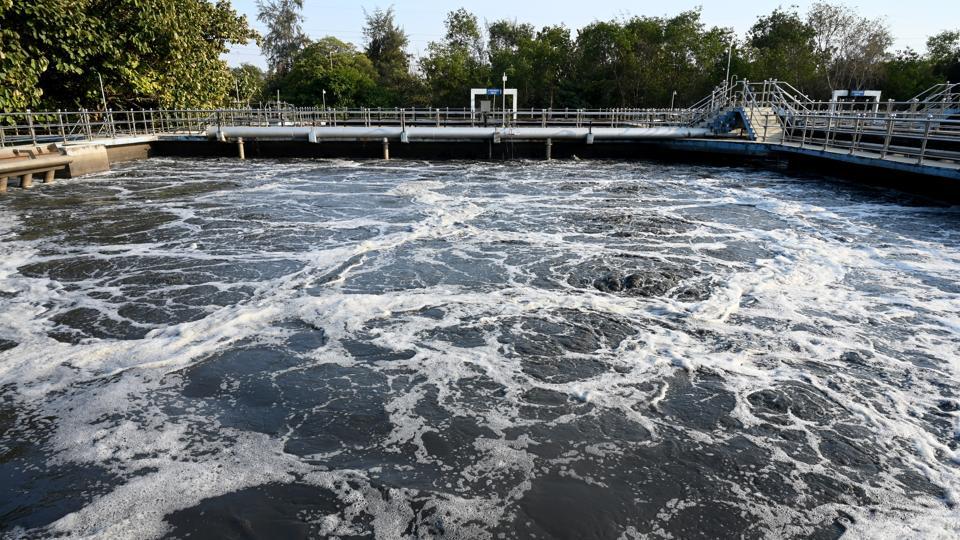
The report, released by the Delhi Pollution Control Committee (DPCC), showed that the figures in April remained unchanged from March, when nine STPs were found to be non-compliant or non-operational. However, the numbers were better than in February, when 14 STPs were either out of operation or failing to meet standards.
The worst performers were the Yamuna Vihar Phase-3 and Ghitorni STPs, which failed on five parameters each. Yamuna Vihar Phase-3 did not meet standards for total suspended solids (TSS), biochemical oxygen demand (BOD), ammoniacal nitrogen, dissolved phosphate and faecal coliform. Ghitorni failed on TSS, BOD, chemical oxygen demand (COD), dissolved phosphate and faecal coliform.
The Yamuna Vihar Phase-2, Mehrauli, Vasant Kunj-1 and Vasant Kunj-2 STPs failed to meet four parameters each, while Delhi Gate (old) Phase-1 and Phase-2 did not meet three standards.
Of the 37 STPs, two were non-operational or undergoing upgrades, the report said.
Faecal coliform, an indicator of sewage contamination, peaked at 18,000 most probable number (MPN) units per 100 ml at Vasant Kunj — nearly 78 times the prescribed standard of 230 MPN units per 100 ml. Ghitorni recorded the second-highest level at 16,000 units.
STPs are a primary tool for cleaning the Yamuna by treating sewage before releasing cleaner water into the river. According to prescribed standards, both TSS and BOD levels should remain below 10 mg/l.
In February, the DPCC informed the National Green Tribunal that it had imposed an environmental compensation of ₹2.89 crore on 15 STPs for failing to meet prescribed standards between July and October 2025.
More recently, on April 17, HT reported that after two decades and more than ₹2,454 crore spent on the Delhi Jal Board’s (DJB) flagship Interceptor Sewage Project (ISP), a significant portion of the investment may have yielded limited results.
An inspection ordered by the Centre found that the project stopped only around 60% of the sewage volume that the DJB claimed to have prevented from entering the Yamuna. While the DJB claimed to have tapped and diverted 238 million gallons per day (MGD) of sewage, only around 142 MGD had actually been intercepted, with over 117 MGD of untreated waste still flowing into the river through drains the board had declared “completed”.
Experts said the Yamuna’s condition is unlikely to improve unless STPs function effectively and meet prescribed standards. “Even functional STPs have been failing to meet standards for months. This means resources and money are being wasted, while the Yamuna’s water quality is seeing little improvement,” said Yamuna activist Pankaj Kumar.


Stay updated with all top Cities including, Bengaluru, Delhi, Mumbai and more across India. Stay informed on the latest happenings in World News along with Delhi Election 2025 and Delhi Election Result 2025 Live, New Delhi Election Result Live, Kalkaji Election Result Live at Hindustan Times.


