
 E-Paper



Nithari killings: SC acquits Koli in last case, paves way for release
The CJI-led bench said that retaining one conviction while all others based on the same confession and recoveries had been set aside would be anomalous.

 Prefer HTon Google


The Supreme Court on Tuesday acquitted Surendra Koli in the last of 13 cases pertaining to the Nithari killings incident, holding that the 2011 verdict upholding his guilt could not be sustained when he had already been acquitted in 12 other connected cases arising from the same set of facts and evidentiary material. Koli was previously convicted and sentenced to life imprisonment in this particular case.
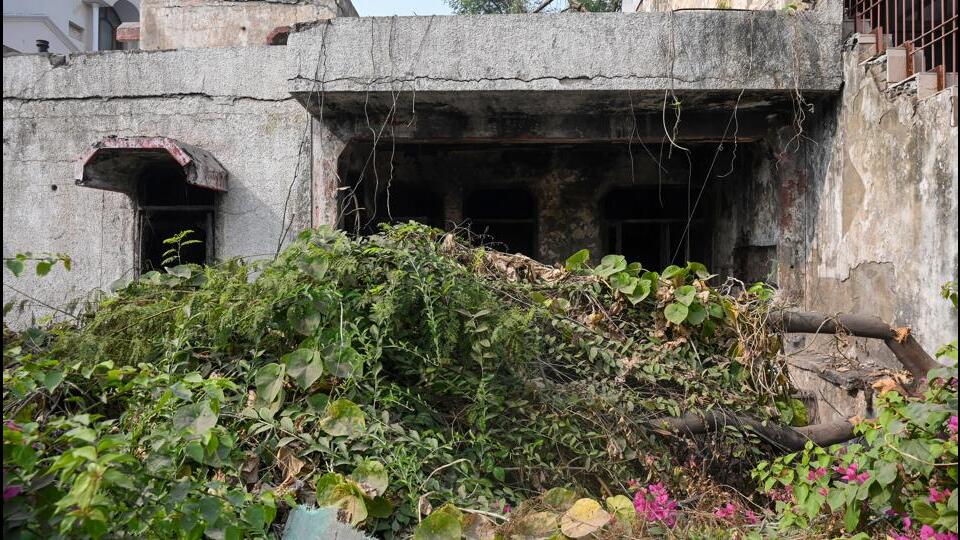
The Nithari killings, which came to light in 2006, shocked the country after skeletal remains of several children were recovered from a drain behind the Noida house of businessman Moninder Singh Pandher, where Koli worked as a domestic help. Koli and Pandher were arrested after the revelations triggered nationwide outrage. Koli had initially been convicted in 13 cases; his employer, Pandher, in two. But beginning October 2023, the Allahabad High Court and later, the Supreme Court, set aside convictions in 12 cases, citing structural infirmities in the investigation and evidentiary proof. Tuesday’s judgment now erases the last remaining conviction for Koli.
A bench of Chief Justice of India Bhushan R Gavai and justices Surya Kant and Vikram Nath said that retaining one conviction while all others based on the same confession and recoveries had been set aside would be anomalous and “inimical to the integrity of adjudication.” The court ordered that Koli “be released forthwith, if not wanted in any other case.”
In a strongly worded judgment authored by justice Nath, the bench observed that “when final orders of this court speak with discordant voices on an identical record, the integrity of adjudication is imperilled, and public confidence is shaken.” In such circumstances, it said, intervention “is not an act of discretion but a constitutional duty,” invoking the extraordinary curative jurisdiction to correct a “manifest miscarriage of justice.”
The court held that the evidentiary basis of the surviving conviction, Koli’s purported confession recorded under Section 164 of the Criminal Procedure Code and certain recoveries under Section 27 of the Evidence Act, had already been judicially discredited in the companion matters.
“We find no principled basis on which the same statement can be treated as voluntary and reliable in this case when it has been judicially discredited in all others,” held the bench, adding that the supposed discoveries were similarly vitiated by contradictions, absence of contemporaneous disclosure memos, and prior knowledge among police and locals.
The court further underscored that the prolonged police custody, lack of effective legal aid, and the investigating officer’s presence during the confession process “compromised the environment of voluntariness,” rendering the confession inadmissible in law.
“The conviction cannot be sustained without departing from principles that now stand authoritatively applied to indistinguishable prosecutions arising out of the same occurrence,” the judgment stated, adding that allowing it to stand would offend Article 14’s guarantee of equal treatment and Article 21’s requirement of fair procedure.
“Arbitrary disparity in outcomes on an identical record is inimical to equality before the law. The curative jurisdiction exists to prevent precisely such anomalies from hardening into precedent,” underlined the bench, while bringing to a close nearly two decades of litigation in one of the most disturbing criminal cases to reach the country’s criminal justice system.
The court had, on October 7, indicated that such a result would amount to a “travesty of justice,” before reserving its verdict on Koli’s curative petition, his last judicial remedy. Koli was represented in the court by senior counsel Yug Mohit Chaudhary and advocate Payoshi Roy.
The judgment also marked a rare instance of the Supreme Court overturning its own previous decision through the extraordinary curative jurisdiction. A curative petition, typically heard in chambers, is considered only in exceptional circumstances, such as denial of a fair hearing, judicial bias, or manifest abuse of the court’s process resulting in grave injustice.
The bench acknowledged the “heinous” nature of the crimes and the “immeasurable suffering” of the victims’ families but stressed that criminal law cannot abandon the core requirement of proof beyond reasonable doubt. “Suspicion, however grave, cannot replace proof. Courts cannot prefer expediency over legality,” it said.
Significantly, the court noted with “deep regret” that despite years of investigation, “the identity of the actual perpetrator has not been established in a manner that meets the legal standards.” It added that “negligence and delay corroded the fact-finding process and foreclosed avenues that might have identified the true offender,” including the failure to pursue leads, such as the organ trade angle flagged by an official committee.
With this verdict, both Koli and Pandher now stand acquitted of all criminal charges arising from the Nithari prosecutions. Koli was represented in the court by advocates Yug Mohit Chaudhry, Payoshi Roy and Siddhartha Sharma.
The Supreme Court had, in July, affirmed Koli’s acquittal in 12 of the 13 cases linked to the Nithari killings, citing grave procedural lapses, unreliable evidence, and faulty recoveries unsupported by a valid disclosure statement under Section 27 of the Evidence Act. The Central Bureau of Investigation’s (CBI’s) appeals against the Allahabad High Court’s 2023 judgments were dismissed then.
Koli’s curative petition concerned the only case in which his conviction and death sentence had been affirmed by the Supreme Court in 2011. The review petition in the case was dismissed by the top court in 2014. Both these orders were overturned by the bench on Tuesday while allowing Koli’s curative plea. The Allahabad High Court had later commuted the death sentence to life imprisonment in 2015 on the grounds of undue delay in the disposal of his mercy petition.
The CBI, which probed the case, had alleged that Koli lured girls to the house, sexually assaulted, and murdered them, even accusing him of cannibalism. Between 2005 and 2007, 16 cases of rape and murder were registered; trial courts convicted Koli in 13, and Pandher in two.
Over time, higher courts overturned these convictions. The Allahabad High Court, in October 2023, acquitted Koli in 12 cases, raising doubts over the investigation and even hinting at the possibility of an unexplored organ trade angle. The CBI’s appeals were dismissed by the Supreme Court on July 30, when it ruled that the prosecution had failed to prove guilt beyond reasonable doubt.


Stay updated with all top Cities including, Bengaluru, Delhi, Mumbai and more across India. Stay informed on the latest happenings in World News along with Delhi Election 2025 and Delhi Election Result 2025 Live, New Delhi Election Result Live, Kalkaji Election Result Live at Hindustan Times.


