
 E-Paper



One million formal jobs added in one year, says govt survey
A sample of nearly 11000 establishments in nine sectors was surveyed, said labour economist and statistician Prof. SP Mukherjee, who is chairman of an expert group in the labour bureau that oversees QES.

 Prefer HTon Google


Employment in formal sector establishments with 10 or more workers increased from 30.8 million to an estimated 31.8 million between January 1, 2021 and January 1, 2022, a growth of 3.2%, Union labour minister Bhupender Yadav said on Tuesday, releasing findings of the government’s fourth round (January-March 2022) of the quarterly employment survey (QES).
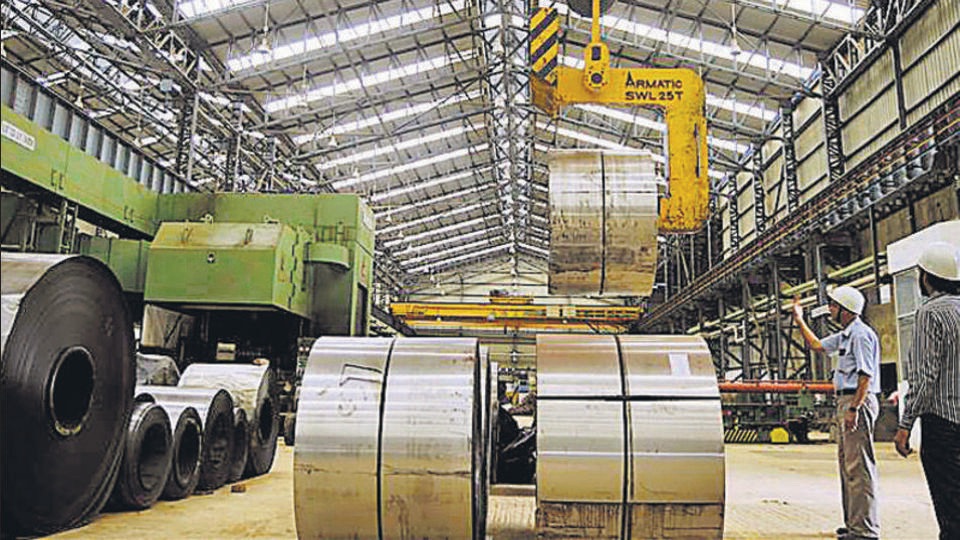
Roughly one million jobs were created during the period cited above and employment in the manufacturing sector was showing an increasing trend, the minister said, referring to the QES.
A sample of nearly 11000 establishments in nine sectors was surveyed, said labour economist and statistician Prof. SP Mukherjee, who is chairman of an expert group in the labour bureau that oversees QES. Of the total jobs created, manufacturing accounted for 38%. The education sector made up 22%, followed by IT-BPOs and health sector at 12% and 11%, Mukherjee said.
“There are unofficial employment surveys which provide monthly employment and unemployment data. There is also the Periodic Labour Force Survey of the ministry of statistics. And there is the QES. These surveys are not compatible and comparable because of the differences in definition and approach,” Mukherjee said.
The PLFS is a household-level employment survey, while the QES is based on survey of hirings done by firms.
The labour bureau has taken data from the 6th Economic Census (2013-14) as its base because the 7th Economic Census data is not yet out in public yet.
Private data on jobs have consistently showed high unemployment rates and a fall in the labour force participation rate (LFPS), especially among women. LFPS is the share of working-age population who are either employed or looking for work.
The country’s unemployment rate in August stood at 8.3%, a one-year high, as employment sequentially fell by 2 million to 394.6 million, according to data from the Centre for Monitoring Indian Economy (CMIE).
“I think the LFPS rate for women should go down. Women between 15-22 years, for example, should be in education and not looking to work,” Mukherjee said. The female workers’ participation reported a marginal increase from 31.6% in the QES third quarter to 31.8% in the fourth quarter QES report.
The QES is one part of what is known as the all-India quarterly establishment-based employment survey (AQEES). The second part, known as ‘area frame establishment survey’, will be launched soon and will cover establishments employing 9 or less workers.
Yadav said while other surveys assessed the supply side data, the QES covered the demand side of the job market. According to data on the National Career Service portal, the country recorded 482,000 active vacancies on September 26. The active vacancy figure is dynamic and changes daily.
“There has been a recovery for sure. But one shouldn’t merely calculate simple growth rates in job creation for very short periods. One should see if the net addition of new jobs is maintained over a 12-month period,” said KR Shyam Sundar, a labour economist with the Jamshedpur-based Xavier School of Management.


