
 E-Paper



Paddy straw formation to be higher than last year: CAQM
During the meeting, the CAQM informed the standing committee that Punjab recorded 1,238 stubble fires between September 15 and October 15 compared to 1,946 fires in 2021

 Prefer HTon Google


The area under paddy cultivation in both Haryana and Punjab has increased this year and hence the generation of paddy straw is also expected to be higher than last year; however, the number of stubble fires during the past one month has been lower than the number during the same period last year, the Commission for Air Quality Management in NCR and Adjoining Areas (CAQM) informed the Parliamentary standing committee on science and technology, environment, forests and climate change headed by Congress leader and former union environment minister Jairam Ramesh, which held its first meeting to review air pollution control measures in Delhi-NCR on Monday.
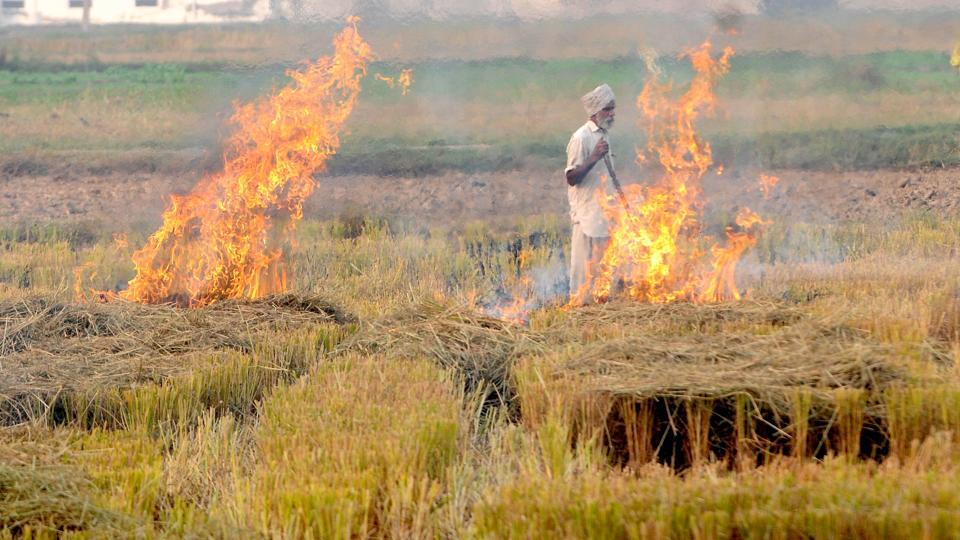
During the meeting, the CAQM informed the standing committee that Punjab recorded 1,238 stubble fires between September 15 and October 15 compared to 1,946 fires in 2021. Haryana has recorded only 168 stubble fires during the period compared to 850 incidents last year. Paddy area however has increased from 29.61 lakh ha to 31.44 lakh ha in Punjab and the area under non-Basmati paddy has increased 24.72 lakh ha to 27.08 lakh ha. In Haryana, the area under paddy has increased from 13.64 lakh ha to 13.90 lakh ha. The increase in non-Basmati paddy is 5.84 lakh ha to 6.58 lakh ha. Total paddy straw generation in Punjab has increased from 18.74 million tonnes to 19.99 million tonnes, and from 6.8 million tonnes to 7 million tonnes in Haryana.
CAQM also told the committee that over 200,000 stubble management machines are available this year (90,422 in Punjab; 72,777 in Haryana; 7,482 in NCR of Uttar Pradesh and 39,967 in the rest of Uttar Pradesh. They are working to procure more machines (already sanctioned for 2022-23).
Officials said they have planned a staggered harvesting schedule to improve machinery utilisation by farmers. They added the PUSA bio-decomposer for in-situ management of stubble will be used over 5 lakh acres in Haryana, 2.58 lakh acres in Punjab, 1.38 lakh acres in UP (NCR) and 4,000 acres in Delhi. There are also plans for the ex-situ utilisation of paddy straw as well, including augmenting storage facilities for paddy straw.
CAQM officials also told the committee they have issued directions to 11 thermal power plants within 300km of Delhi to co-fire up to 5-10% biomass with coal; co-firing of paddy stubble biomass has started in 10 thermal power plants, they said.
In Punjab, 23 biomass-based power plants are expected to consume 13.54 lakh tonnes of paddy stubble annually and in Haryana, 26 biomass-based power plants are expected to consume 7.8 lakh tonnes of paddy stubble annually.
Meanwhile, experts said the number of stubble fires is yet to peak this season and has been delayed mainly due to heavy continuous rain for 2-3 days in October over several parts of northwest India. VK Sehgal, professor and principal scientist at Indian Agricultural Research Institute said the figures will gradually start increasing as the harvest gathers pace. “The peak stubble season normally starts around October 26-27 and continues till November 10. The wind direction may become favourable by this Friday or Saturday and it may begin to adversely impact Delhi’s air after that,” Sehgal said, adding there is hope that with the measures taken by the state governments, the figures will continue to remain lower than previous years.
CAQM officials also informed the committee about actions taken for other sources of air pollution. For vehicular emissions for example, 5,162 overaged vehicles have been impounded between April and September. Around 1,19,875 challans have been issued for PUC violation including visibly polluting and over loaded vehicles. NCR governments have been advised to intensify drives against old vehicles, visibly polluting, over-loaded and vehicles without PUC. About 200 junctions / locations were identified for decongestion in Delhi.


